
Mind Over Matter in Your Immigration Case
Why an Immigration Mental Health Evaluation Can Change the Outcome of Your Case

An immigration mental health evaluation is a formal written assessment by a licensed mental health professional that documents your psychological state, trauma history, and emotional suffering for use in immigration court or USCIS proceedings.
Here is what you need to know quickly:
- What it is: A clinical report prepared by a licensed evaluator (LCSW, LMFT, or psychologist) that documents mental health symptoms and their impact on you and your family
- Who needs it: People applying for hardship waivers, asylum, U-Visa, T-Visa, VAWA, or cancellation of removal
- What it covers: PTSD, depression, anxiety, trauma history, family separation impact, and functional impairment
- How long it takes: Typically a 90-120 minute session, with a written report delivered within about 10 days
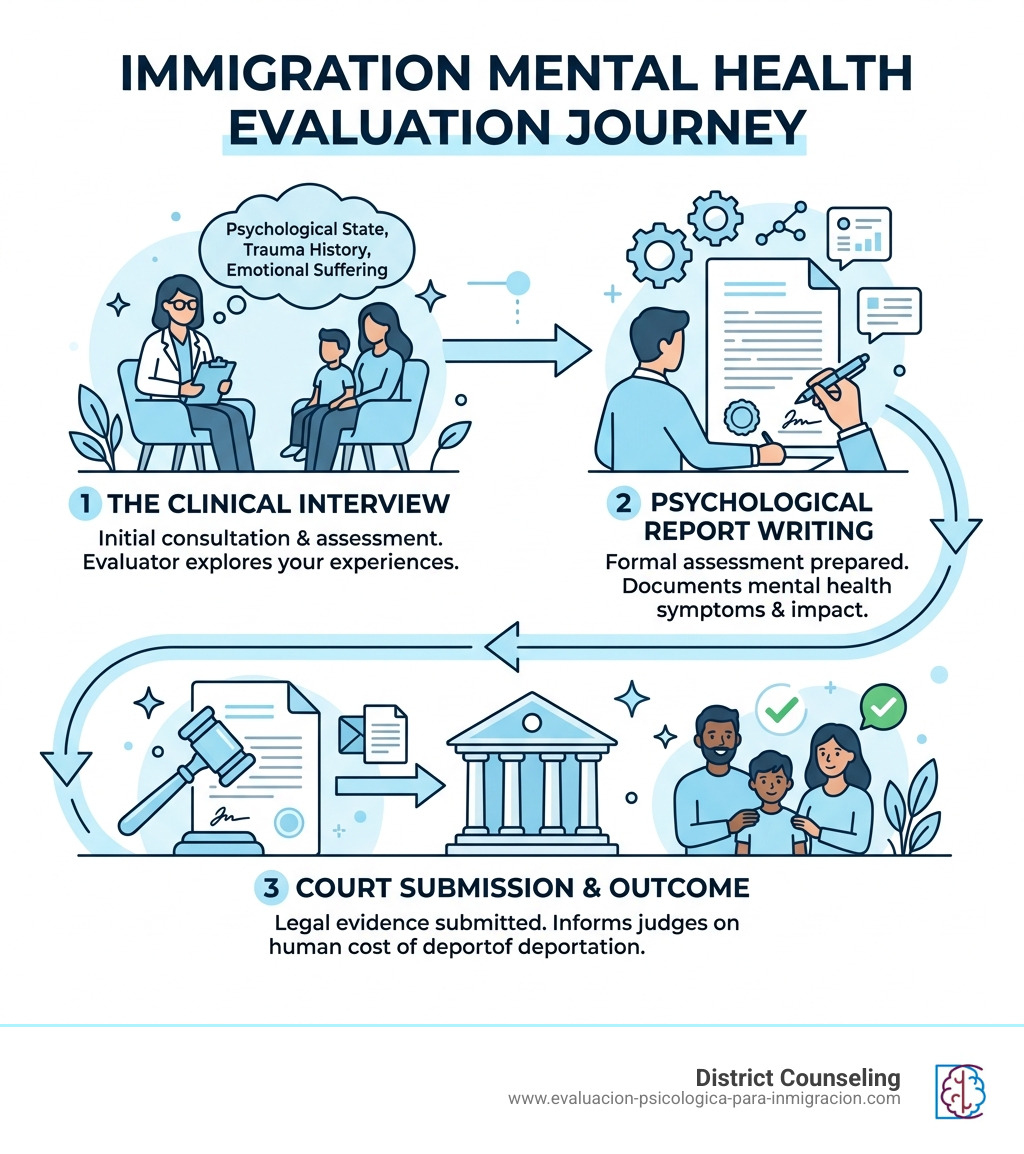
- How it helps: It gives immigration judges and USCIS officers concrete, professional evidence of the human cost of deportation or denial
If you are facing deportation and have a U.S. citizen spouse or child, this evaluation can be the difference between your family staying together and being torn apart.
Your immigration attorney may have already told you that you need one. But understanding what happens in the evaluation — and why it matters — can help you walk in prepared and confident.
I'm Francisco Ortiz, Lead Forensic Mental Health Evaluator at District Counseling PLLC and a Certified Forensic Mental Health Evaluator (CFMHE), with specialized training in hardship waiver evaluations, asylum cases, and U-Visa and T-Visa proceedings — all core components of the immigration mental health evaluation process. In this guide, I'll walk you through exactly what to expect, what qualifies you, and how to get the documentation your case needs.
Understanding the Immigration Mental Health Evaluation
At its core, an immigration mental health evaluation is a specialized forensic assessment. While it feels like a standard therapy session, its purpose is different. Instead of focusing solely on long-term treatment, we are focusing on documenting the "here and now"—the psychological evidence required for your legal case.
When we conduct an Evaluacion Psicologica Para Inmigracion, we are looking for clinical proof of conditions like Post-Traumatic Stress Disorder (PTSD), Major Depressive Disorder, or Generalized Anxiety Disorder. This process involves a deep dive into your psychosocial history, often utilizing standardized testing tools to measure the severity of your symptoms.
According to the CDC's domestic mental health screening guidelines, many immigrants and refugees arrive with significant psychiatric symptoms that may not be immediately visible. Our job is to bridge the gap between your personal experience and the legal requirements of USCIS by providing a comprehensive clinical report that serves as expert testimony on paper.
Key Cases Requiring a Psychological Assessment
Not every immigration case requires a mental health component, but for those that do, the evaluation is often the cornerstone of the evidence. Whether you are in Houston, San Antonio, or Austin, your attorney will likely recommend an evaluation for the following case types:
| Case Type | Purpose of Evaluation | Key Focus Areas |
|---|---|---|
| Asylum | Prove fear of persecution | Past trauma, PTSD, risk of future harm |
| VAWA | Document domestic abuse | Emotional/physical battery, power & control |
| Hardship (I-601/A) | Show impact on US relatives | Financial, medical, and emotional suffering |
| U-Visa / T-Visa | Victim of crime/trafficking | Mental harm, cooperation with law enforcement |
| Cancellation of Removal | Prevent deportation | "Exceptional and extremely unusual" hardship |
The Role of Trauma in an Immigration Mental Health Evaluation
Trauma is a frequent thread in many immigration stories. For an Evaluacion Psicologica Para Caso De Asilo, we must document the psychological scars left by persecution based on race, religion, nationality, or political opinion. We often see symptoms of PTSD, such as nightmares, hypervigilance, and emotional numbing, which provide objective evidence that the trauma occurred.
Similarly, an Evaluacion Psicologica Para Caso De Vawa focuses on the "extreme cruelty" or battery suffered by a spouse, child, or parent of a U.S. citizen or permanent resident. We help survivors document the psychological impact of domestic violence, which is crucial for those petitioning independently for legal status.
For victims of human trafficking or qualifying crimes, an Evaluacion Psicologica Para Caso De Tvisa or U-Visa evaluation documents the substantial mental harm suffered. This documentation supports the applicant's claim and reinforces their willingness to assist law enforcement.

Documenting Extreme Hardship for Waivers
The I-601 and I-601A hardship waivers are all about the "qualifying relative"—usually a U.S. citizen spouse or parent. In an Evaluacion Psicologica Para Caso De Un Perdon, we examine how your absence would devastate your family.
This isn't just about being sad that a loved one is gone; it’s about "extreme hardship." We look at:
- Medical Necessity: Is the U.S. relative dependent on the applicant for care due to a physical or mental disability?
- Financial Impact: Would the family fall into poverty without the applicant's income?
- Emotional Suffering: Would the separation trigger a major depressive episode or severe anxiety in the U.S. citizen?
In cases involving an Evaluacion Psicologica Para Caso De Una Cancelacion De Deportacion, the standard is even higher. We must demonstrate "exceptional and extremely unusual hardship" to U.S. citizen or LPR relatives to help prevent a person's removal from the country.
The Evaluation Process: What to Expect in 2026
As we move through 2026, the process for an immigration mental health evaluation has become more streamlined but remains incredibly thorough. At District Counseling, we ensure the process is as comfortable as possible.
- The Clinical Interview: This is the heart of the Evaluacion Forense De Inmigracion. Expect to spend 90 to 120 minutes talking with us. We will discuss your family background, your journey to the U.S., any history of trauma, and your current emotional state.
- Mental Status Exam: We observe your mood, affect, thought processes, and orientation. This helps us provide a professional diagnosis based on the DSM-5.
- Review of Documentation: We look at medical records, police reports (for U-Visas or VAWA), and school records to build a complete picture. This aligns with CDC Technical Instructions, which emphasize a thorough history review.
- Report Preparation: After the interview, we spend several hours analyzing the data and writing a 10- to 15-page report. This report includes our professional opinion, diagnoses, and recommendations for future treatment.
Preparing for Your Immigration Mental Health Evaluation
Walking into a room to discuss your deepest fears and traumas is a big step. To prepare:
- Gather your papers: Bring any relevant medical or legal documents.
- Be honest: You don't need to "perform" or exaggerate. Your real story is powerful enough.
- Consider Telehealth: If you live in Virginia, Idaho, or Utah, we offer Evaluaciones Psicolgicas De Inmigracin Por Telehealth. These secure video sessions allow you to complete your evaluation from the safety and privacy of your home.
- Language and Culture: We offer bilingual services (Spanish/English). We understand the cultural nuances of the "machismo" or "marianismo" dynamics that can sometimes make it hard for Latino clients to open up about mental health.
Frequently Asked Questions about Immigration Assessments
Who is qualified to conduct these evaluations?
It is vital to work with a licensed professional. You might see acronyms like LCSW (Licensed Clinical Social Worker), LMFT (Licensed Marriage and Family Therapist), or PhD (Psychologist). All of these professionals are qualified to conduct evaluations, provided they have the proper forensic training.
At District Counseling, we pride ourselves on our cultural competence. Being a "qualified" evaluator means more than just having a license; it means understanding the specific legal standards required by immigration judges and knowing how to document trauma in a way that the court respects.
How much does an evaluation cost and how long does it take?
Cost and speed are common concerns. In the industry, evaluations typically range from $700 to $1,200 depending on the complexity of the case.
- Time in session: 90–120 minutes.
- Turnaround time: At District Counseling, we aim for a 10-day delivery for the final report.
- Expedited services: We understand that sometimes court dates are moved up, and we can often provide expedited reports for an additional fee.
- Payment: These are generally out-of-pocket expenses, as health insurance rarely covers forensic legal evaluations.
What are the CDC technical instructions for civil surgeons?
While we focus on the psychological side for your legal case, you may also encounter a "civil surgeon" for your medical exam. The CDC Technical Instructions require these doctors to screen for:
- Class A Conditions: These are "inadmissible" conditions, such as a mental disorder with associated "harmful behavior" (like a history of violence or suicide attempts) or current substance abuse.
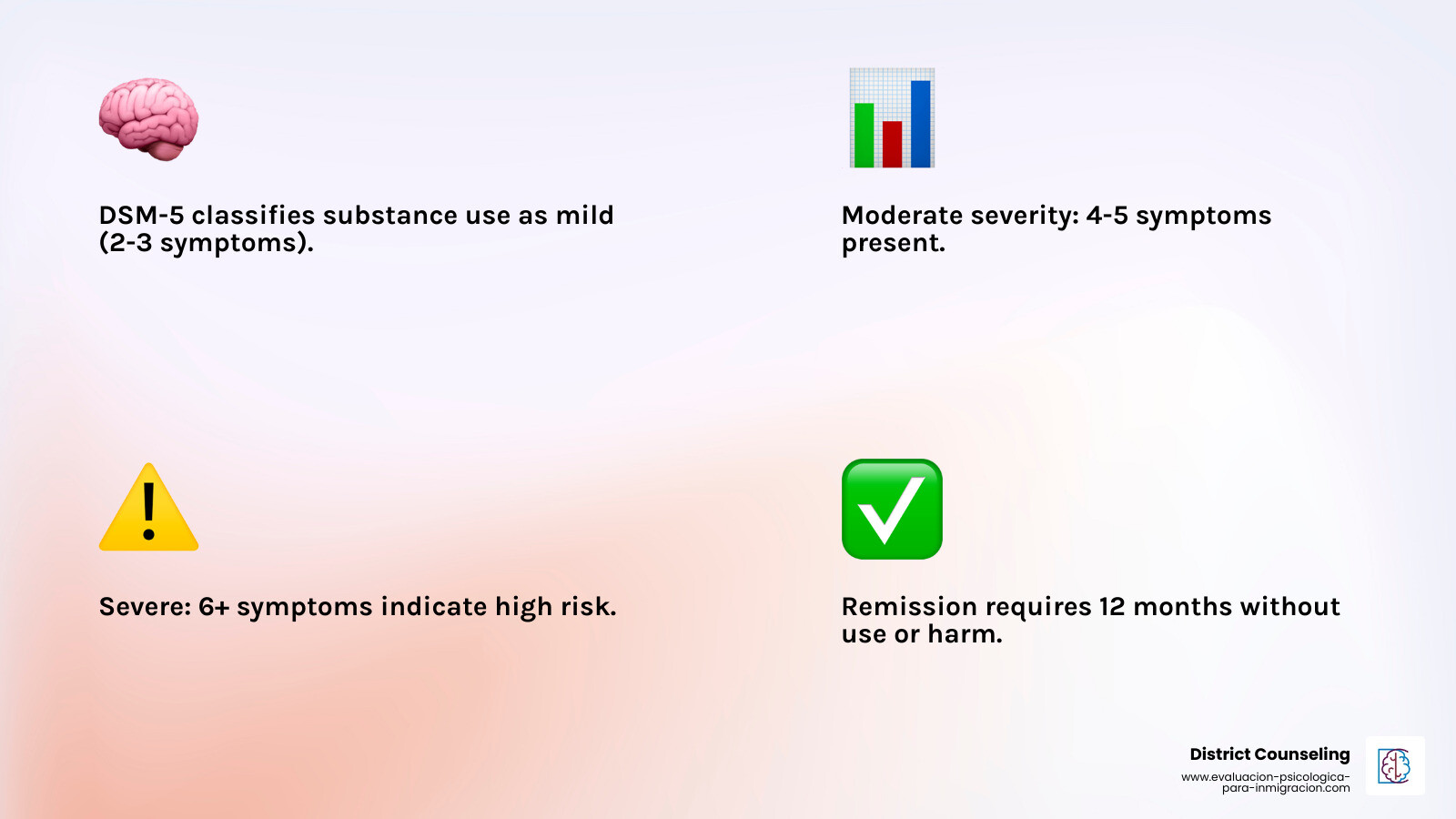
- Substance Use Standards: The CDC uses DSM-5 criteria, classifying substance use as mild (2-3 symptoms), moderate (4-5), or severe (6+).
- Remission: "Sustained full remission" is defined as 12 months without use or harmful behaviors.
Our evaluations can help clarify these issues. For example, if a civil surgeon flags a past mental health issue, our detailed psychological report can explain the context and demonstrate that any "harmful behavior" is unlikely to recur, supporting your admissibility.
Conclusion
Navigating the immigration system is a marathon, not a sprint. A professional immigration mental health evaluation is more than just a piece of paper; it is a voice for the voiceless and a way to bring the human element into a complex legal process.
At District Counseling, we serve clients across Texas—including Houston, Austin, Dallas, and San Antonio—as well as Florida, California, New York, and several other states via telehealth. We specialize in Spanish-to-English translations to ensure your story is perfectly understood by the court.
We also believe in the long-term well-being of our clients. That is why we offer 6 free therapy sessions after your report is completed. We don't just want to help you win your case; we want to help you heal.
If you're ready to take the next step, check out our Blog for more resources or schedule your immigration mental health evaluation today. We are here to support you every step of the way.