
Speaking Your Language: How Bilingual Therapists Strengthen Your U Visa Case
Why a Bilingual Psychologist Immigration Eval Can Change the Outcome of Your Case

Getting a bilingual psychologist immigration eval could be one of the most important steps you take in your U Visa case — or any immigration case where your mental health story needs to be told clearly and completely.
Quick answer: What is a bilingual psychologist immigration eval?
- A psychological evaluation conducted in your native language by a licensed psychologist
- Used as legal evidence in immigration cases (U Visa, VAWA, asylum, hardship waivers, and more)
- Documents trauma, emotional impact, and mental health conditions for USCIS or immigration court
- Produces a written report that can significantly strengthen your case
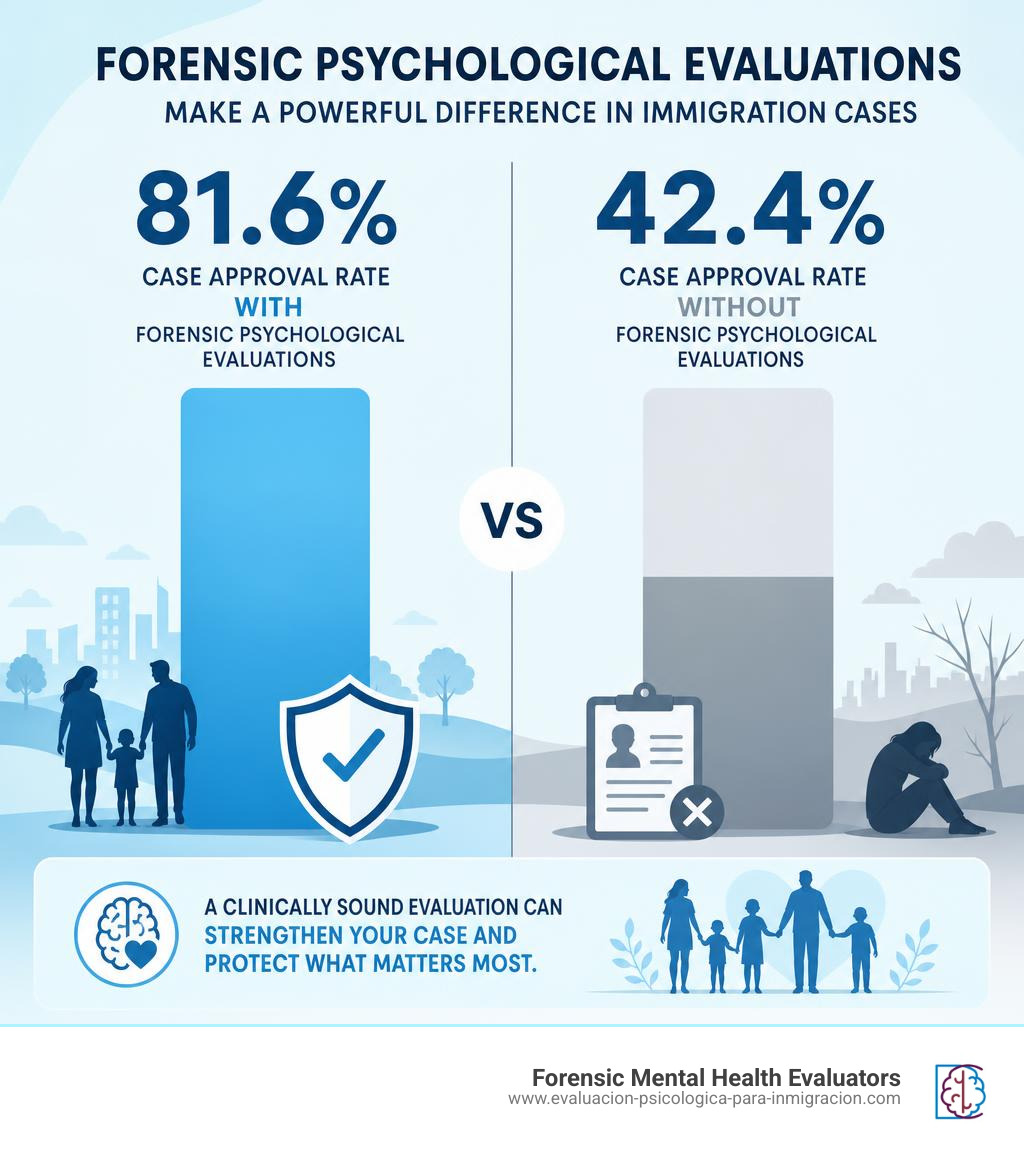
The difference between getting relief and facing deportation can come down to a single document. Research shows that applicants who submitted forensic psychological evaluations were granted immigration relief at a rate of 81.6% — compared to just 42.4% in the general asylum population. That gap is significant. And when that evaluation is conducted in your own language, by someone who understands your culture, the story it tells becomes even more powerful.
For Hispanic immigrants in Texas facing removal, the fear of family separation is real. Your U.S. citizen children. Your spouse. The life you've built. A well-written, clinically sound evaluation can show decision-makers exactly what's at stake — not just in legal terms, but in human ones.
The challenge? Finding the right evaluator who can truly understand you — without anything getting lost in translation.
I'm Francisco Ortiz, Lead Forensic Mental Health Evaluator at District Counseling PLLC, a Certified Forensic Mental Health Evaluator licensed in six states, including Texas, with specialized training in hardship waiver evaluations, asylum cases, U Visa and T Visa applications, and extensive experience providing bilingual psychologist immigration eval services for Spanish-speaking clients. In this guide, I'll walk you through everything you need to know to make an informed decision about your evaluation.
What is a Bilingual Psychologist Immigration Eval and Why Does It Matter?
At its core, a bilingual psychologist immigration eval is a specialized forensic evaluation designed specifically for legal proceedings. While traditional clinical therapy focuses on long-term healing and treatment, a forensic evaluation is a structured, objective assessment used to answer specific legal questions for United States Citizenship and Immigration Services (USCIS) or an immigration judge.
When you are navigating the complex web of immigration law, your mental health is often a crucial piece of the puzzle. An evaluation provides the court with an objective, professional look at your cognitive and psychological state. For non-native English speakers, having this assessment conducted by a bilingual professional is not just a luxury—it is a necessity for ensuring that your true mental health story is captured accurately.
To explore how these evaluations fit into the broader legal landscape, you can read our comprehensive Bilingual Immigration Psychological Evaluations resource, or consult our updated Guía de Evaluación de Inmigración 2026 for the latest policy contexts.
The Core Purpose of a Bilingual Psychologist Immigration Eval
The primary goal of a bilingual psychologist immigration eval is to provide a comprehensive clinical assessment that serves as objective evidence of trauma, extreme hardship, or psychological vulnerability.
When an immigration officer reviews your application, they are looking for credible, detailed documentation. A standard personal statement can only go so far. A licensed psychologist uses standardized diagnostic tools, structured clinical interviews, and behavioral observations to build a scientifically backed report. This report details:
- The presence of mental health conditions such as Post-Traumatic Stress Disorder (PTSD), Major Depressive Disorder, or severe anxiety.
- The direct connection between these conditions and the trauma you experienced (such as domestic violence, human trafficking, or qualifying crimes).
- The potential psychological devastation that deportation or family separation would cause.
By translating complex emotional pain into clinical terminology that legal authorities respect, we provide a solid foundation of proof. You can learn more about how these reports are structured to meet strict legal standards through our detailed guide on Evaluación Psicológica para Inmigración.
Key Differences Between Monolingual and Bilingual Evaluators
Many wonder: Can't I just use a monolingual English psychologist and a Spanish interpreter?
While using a professional interpreter is sometimes necessary for less common languages, it is rarely the ideal choice when a qualified bilingual psychologist is available. Language is not just about translating words literally; it is about catching cultural idioms, emotional tones, and subtle language nuances.
When an interpreter is introduced into a psychological evaluation, a "third-party dynamic" is created. This can make it difficult for you to build the deep, trusting rapport needed to discuss highly sensitive topics like physical abuse, sexual assault, or fear of death. Direct communication with a bilingual evaluator eliminates these barriers entirely.
| Feature | Monolingual Evaluator + Interpreter | Direct Bilingual Evaluator |
|---|---|---|
| Rapport Building | Often slower; the client may feel uncomfortable sharing trauma with two strangers in the room. | Faster and more natural; direct client-to-therapist connection. |
| Nuance & Idioms | Cultural expressions (e.g., "susto", "nervios") may be mistranslated or lose clinical significance. | Evaluator immediately recognizes and clinically contextualizes cultural idioms. |
| Accuracy of Quotes | Quotes in the final report are "double-translated," raising potential credibility questions. | Direct quotes are recorded in the native language and translated precisely by the clinician. |
| Session Flow | Can feel disjointed, taking twice as long due to the constant pausing for translation. | Smooth, natural conversation allowing for organic emotional expression. |
How Language and Cultural Competence Impact Your Case
Cultural competence goes hand-in-hand with language proficiency. A bilingual psychologist doesn't just speak your language; they understand the cultural context of your upbringing, your family dynamics, and the societal pressures of your home country. This deep understanding is crucial for establishing credibility with USCIS.

When we evaluate clients from Latin America, we bring an understanding of how mental health is viewed in those communities. Often, there is a stigma surrounding therapy, which might cause a client to minimize their symptoms or express psychological pain through physical ailments (somatization), like chronic headaches or stomach pain. A culturally competent evaluator knows how to look for these signs, ensuring your symptoms are not overlooked. For a deeper look at this process, see our article on Bilingual and Culturally Responsive Immigration Evaluations.
Overcoming Language Barriers in Trauma Reporting
Recalling trauma is one of the most difficult things a person can do. When we experience severe trauma, our brains store those memories in highly emotional, non-verbal ways. When forced to speak about these events in a second language, many individuals experience a "cognitive disconnect." They may struggle to find the right words, appear detached, or fail to convey the true depth of their emotional pain.
When you speak in your native language, the emotional expression is raw, authentic, and complete. You can describe your fears, nightmares, and memories without worrying about grammar or vocabulary. This direct channel of communication allows us to document your symptoms with the highest level of detail.
For more details on how a bilingual approach preserves the emotional integrity of your testimony, explore our resource on Immigration Psychological Evaluation | Bilingual Therapist.
Ensuring Accuracy and Credibility in the Final Report
USCIS officers and immigration judges are trained to look for inconsistencies in applications. A weak, vague, or poorly translated psychological report can actually harm your case.
To ensure the highest standards of credibility, we use doctoral-level evaluation practices that incorporate both subjective clinical interviews and objective standardized testing. These objective tools are crucial because they contain validity scales designed to detect malingering (exaggerating or faking symptoms).
When a report can show that a client took standardized tests and passed these validity checks, it makes the clinical diagnoses of PTSD or depression virtually bulletproof. The legal authorities can see that the evaluation is not just a subjective opinion, but a scientifically validated diagnostic report that meets the highest forensic standards.
Common Immigration Cases That Benefit from Bilingual Evaluations
While a bilingual evaluation is helpful for anyone navigating the immigration system, there are several specific case types where a professional mental health report is particularly influential.

U Visa and T Visa Applications
The U Visa is designed for victims of qualifying crimes (such as domestic violence, sexual assault, felonious assault, or kidnapping) who have suffered substantial physical or mental abuse and have been helpful to law enforcement. The T Visa is similar but specifically designed for victims of severe forms of human trafficking.
In these cases, the psychological report must clearly document the "substantial mental abuse" you suffered as a result of the crime. We must show how the trauma continues to impact your daily life, your ability to work, and your relationships.
To learn more about how we document these specific trauma markers, you can read our guides on Evaluación Psicológica para Caso de UVisa and Evaluación Psicológica para Caso de TVisa.
VAWA, Asylum, and Hardship Waivers
- VAWA (Violence Against Women Act): Allows abused spouses, children, or parents of U.S. citizens or lawful permanent residents (LPRs) to petition for legal status independently. The evaluation must document the domestic abuse, which often includes emotional, verbal, financial, and psychological coercion rather than just physical violence. Learn more at Evaluación Psicológica para Caso de VAWA.
- Extreme Hardship Waivers (I-601 and I-601A): These cases require proving that if the immigrant is deported, their qualifying U.S. citizen or LPR relative (spouse or parent) will suffer "extreme hardship." The evaluation focuses heavily on the qualifying relative's mental health, documenting how the separation or relocation would trigger severe depression, anxiety, or medical decline. Learn more at Evaluación Psicológica para Caso de un Perdón.
- Asylum Cases: For individuals fleeing persecution in their home countries based on race, religion, nationality, political opinion, or membership in a particular social group. The evaluation documents the trauma of past persecution and the severe fear of returning.
- Cancellation of Removal: For individuals in deportation proceedings, demonstrating that their deportation would cause "exceptional and extremely unusual hardship" to their U.S. citizen or LPR family members. Learn more at Evaluación Psicológica para Caso de Cancelación de Deportación.
The Step-by-Step Process of a Bilingual Immigration Evaluation
We strive to make the evaluation process as comfortable, clear, and stress-free as possible. We understand that speaking about your deepest pain is difficult, and we walk with you every step of the way.
What to Expect During a Bilingual Psychologist Immigration Eval
A standard bilingual psychologist immigration eval in our practice is thorough, professional, and typically structured as follows:
- Initial Consultation: We speak briefly to understand your specific immigration case, coordinate with your attorney, and schedule your appointments.
- Clinical Interviews: We conduct two separate sessions (usually 1.5 hours each, for a total of 3 hours of direct interviewing). These sessions can be done in-person or via secure, HIPAA-compliant video telehealth. We discuss your personal history, your journey to the U.S., the traumatic events you experienced, and your current mental health symptoms.
- Standardized Testing: We administer scientifically validated psychological tests in your native language to support our clinical observations.
- Report Writing: We compile all of this information into a comprehensive, highly detailed written report (typically 12 to 35 pages long) that contains formal clinical diagnoses, test results, and professional recommendations.
- Delivery: The final report is delivered to both you and your immigration attorney within approximately 3 weeks of your final interview.
Qualifications, Ethics, and Confidentiality Standards
Because these reports are legal documents, the credentials of your evaluator are highly scrutinized by USCIS. When choosing an evaluator, make sure they meet these essential standards:
- Active State Licensing: The evaluator must be a licensed psychologist (Psy.D. or Ph.D.) or a licensed mental health clinician in your state.
- Specialized Forensic Training: General clinical therapists are wonderful, but they often lack the forensic training required to write reports that stand up in court. Your evaluator should have specialized training in immigration evaluations.
- HIPAA Compliance & Secure Technology: Virtual evaluations must be conducted on encrypted, secure platforms to protect your private health information.
- Clear Boundaries of Confidentiality: Unlike traditional therapy, you must sign a release of information allowing the psychologist to share the final report with your lawyer and immigration authorities. An ethical evaluator will explain this clearly before you begin.
Frequently Asked Questions about Bilingual Immigration Evaluations
How do I find a qualified bilingual psychologist near me?
You should look for licensed professionals with a proven track record in forensic mental health and positive reviews from immigration attorneys. Your attorney is often your best resource, as they know which evaluators write reports that successfully win cases.
Additionally, you can search professional directories or read about our credentials at Quiénes Somos - Experto en Evaluación Psicológica para Inmigración to see if our expertise aligns with your needs.
How much does an immigration psychological evaluation cost?
In the professional industry, standard fees for a comprehensive psychological evaluation generally range from $1,000 to $2,000. This fee covers the clinical interviews, the administration and grading of psychological tests, coordination with your attorney, and the 8 to 12 hours of clinical writing required to produce a 12-to-35-page report.
Many providers offer flexible payment plans to help make this essential service accessible. If you have an urgent court deadline, expedited "rush" services (completed within 1 to 2 weeks) are often available for an additional fee of $300 to $500.
Can evaluations be conducted via telehealth?
Yes! Thanks to modern, secure, HIPAA-compliant video platforms, you can complete your evaluation from the comfort and privacy of your own home.
Furthermore, because of PSYPACT (an interstate compact), licensed psychologists who are PSYPACT-certified can legally conduct remote evaluations across dozens of participating states. This means that whether you live in Texas, Florida, California, New York, Utah, Virginia, or Idaho, you can access top-tier bilingual forensic evaluations without having to travel to a physical office. For a complete guide on how this works, see our resource on Evaluaciones Psicológicas de Inmigración por Telehealth.
Conclusion
Navigating the immigration system is undoubtedly one of the most stressful experiences of a person's life. But you do not have to walk this path alone, and you certainly shouldn't have to struggle to make yourself understood.
At District Counseling / Forensic Mental Health Evaluators, we specialize in providing compassionate, culturally sensitive, and legally powerful evaluations. We serve clients throughout Texas—including Houston, Katy, Cypress, Sugar Land, Austin, Dallas, and San Antonio—as well as virtually in Florida, California, New York, Utah, Virginia, and Idaho.
Our unique approach sets us apart:
- Fully Bilingual: We conduct our evaluations entirely in Spanish, translating them seamlessly into English for USCIS.
- Client Comfort First: We provide a warm, safe, and non-judgmental space to share your story.
- Ongoing Healing: We don't just write your report and send you on your way. Because we believe in your long-term well-being, we offer 6 free therapy sessions after your report is completed to help you begin processing your trauma and building a brighter future.
If you are ready to take the next step in strengthening your U Visa, VAWA, hardship, or asylum case, explore our resource on Evaluación Psicológica para Caso de Asilo or contact us today to schedule your consultation. Let us help you tell your story, in your own language, with the dignity and professional precision you deserve.