
Beginner's Guide to Psychological Evaluation
What Is a Psychological Evaluation — and Do You Need One?

A psychological evaluation is a structured process where a trained clinician uses standardized tests, interviews, and observations to understand how a person thinks, feels, and behaves.
Quick answer — here's what you need to know:
- What it is: A set of standardized tests and interviews used to assess mental health, cognitive abilities, and behavior
- Who needs it: People experiencing unexplained emotional, behavioral, or cognitive symptoms — or those who need a formal evaluation for legal, educational, or medical purposes
- What it involves: An intake interview, one or more testing sessions (typically 2–4 hours), and a feedback appointment to review results
- Who conducts it: A licensed psychologist or doctorate-level clinician
- What it produces: A detailed report used for diagnosis, treatment planning, or legal documentation
Think of it as the mental health equivalent of a physical exam. The symptoms may be visible — difficulty concentrating, emotional distress, memory problems — but the cause often isn't. A psychological evaluation helps find that cause.
This is especially important for immigrants facing legal proceedings. A formal evaluation can document the psychological impact of family separation, trauma, or hardship — evidence that can matter deeply in immigration court.
My name is Francisco Ortiz, and as a Certified Forensic Mental Health Evaluator and Lead Forensic Mental Health Evaluator at District Counseling PLLC, I specialize in conducting psychological evaluations for immigration cases, including Hardship Waivers, Asylum, and U-Visa applications. In this guide, I'll walk you through everything you need to know — in plain language.
Understanding the Psychological Evaluation: Definition and Key Differences
To understand what a psychological evaluation is, it helps to look at how we define it. According to the Psychological evaluation - Wikipedia entry, it is a method used to assess an individual's behavior, personality, cognitive abilities, and several other domains.
Many people confuse a psychological evaluation with a psychiatric assessment. While both are critical tools in the mental health field, they serve different purposes, use different methods, and are conducted by different professionals.
A psychological evaluation focuses heavily on standardized psychological testing. We use scientifically validated, norm-referenced tests to measure specific cognitive functions, personality traits, or academic abilities. The goal is to understand how your mind processes information and experiences.
A psychiatric assessment, on the other hand, is primarily a clinical interview designed to identify psychiatric signs and symptoms to guide medical diagnoses and pharmacological treatment. It is conducted by a medical doctor (a psychiatrist) or a psychiatric nurse practitioner who can prescribe medications. For more details on adult clinical evaluations, you can review the Practice Guidelines for the Psychiatric Evaluation of Adults.
Here is a quick comparison to help you see the differences:
| Feature | Psychological Evaluation | Psychiatric Assessment |
|---|---|---|
| Primary Practitioner | Licensed Psychologist (PhD, PsyD) | Psychiatrist (MD, DO) or Psychiatric NP |
| Core Focus | Cognitive, behavioral, and personality testing | Symptom identification and medical diagnosis |
| Methods Used | Standardized tests, clinical interviews, observations | Clinical interviews, medical history, lab tests |
| Primary Outcome | Comprehensive profile, diagnostic clarity, treatment plan | Diagnosis, medication management plan |
| Typical Duration | Several hours across multiple visits | 45 to 90 minutes for an initial intake |
While a psychiatrist might ask you about your symptoms and medical history to prescribe an antidepressant, a psychologist will administer a battery of structured tests to determine whether those symptoms stem from a major depressive disorder, an underlying learning disability, or trauma.
When is Testing Recommended and Who Needs It?
Often, the symptoms of a mental health or cognitive issue are highly apparent, but the underlying cause remains hidden. You might notice a child struggling in school, an adult showing signs of cognitive decline, or an individual experiencing severe, unexplained emotional distress. In these situations, we recommend a psychological evaluation to uncover the root cause.

Recognizing Symptoms That Warrant a Psychological Evaluation
We frequently work with individuals who are unsure why they are struggling. Some of the most common signs and symptoms that indicate a need for a formal evaluation include:
- Academic or Workplace Difficulties: Constant trouble focusing, poor time management, or failing grades, which may point to ADHD or a learning disability.
- Cognitive and Memory Changes: Forgetfulness, confusion, or difficulty completing familiar tasks, which could indicate a cognitive disorder like dementia or the effects of a brain injury.
- Unexplained Mood and Behavioral Changes: Sudden social withdrawal, extreme mood swings, or severe anxiety that does not respond to standard coping mechanisms.
- Trauma and Emotional Distress: Severe emotional reactions following a traumatic event, which is incredibly common in asylum seekers. For those navigating these complex legal pathways, you can read more info about trauma and asylum evaluations to understand how we document these experiences.
Special Populations: Children, Adults, and Immigration Cases
Psychological evaluations are highly tailored to the population being tested:
- Children: Evaluations for children focus heavily on developmental milestones, learning disabilities, and behavioral issues (such as ADHD or autism spectrum disorders). Standardized tests help schools create Individualized Education Programs (IEPs) to support the child's academic journey.
- Adults: For adults, evaluations often address career placement, fitness for duty, diagnostic clarity for long-standing mental health issues, or cognitive decline.
- Immigration Cases: This is our specialty at District Counseling. Forensic mental health evaluations play a pivotal role in legal settings. A professional evaluation can document severe psychological hardship, trauma, or abuse, which is vital for cases like U-Visas, T-Visas, VAWA cases, Cancellation of Deportation, and Hardship Waivers / Perdones.
If you are currently navigating the immigration system, we highly recommend reading our Guía Completa de Evaluación de Inmigración. We provide these specialized services in Spanish and translate them into English, serving clients across our physical offices in Texas (including Houston, Katy, Cypress, and Sugar Land) as well as online. For those living in other states, we also offer secure, convenient telehealth immigration evaluations for residents of Florida, California, Utah, New York, Virginia, and Idaho.
Common Types of Psychological Tests and What They Measure
To build a complete profile of an individual, we use a combination of standardized, norm-referenced tests. These instruments are carefully regulated and administered according to strict professional standards, such as the APA Guidelines for Psychological Assessment.
Here are the primary categories of tests used during an evaluation:
- Intelligence Tests (IQ): Measure intellectual capabilities, problem-solving skills, and cognitive processing speed (e.g., the Wechsler Adult Intelligence Scale).
- Achievement Tests: Measure academic skills in areas like reading, writing, and mathematics to identify learning disabilities.
- Personality Inventories: Assess enduring personality traits, coping styles, and emotional stability (e.g., the Minnesota Multiphasic Personality Inventory or MMPI-2).
- Neuropsychological Tests: Evaluate specific brain functions like memory, attention, and executive functioning, often used after a brain injury or to assess dementia.
- Behavioral Rating Scales: Completed by the individual, parents, or teachers to track specific symptoms like hyperactivity, depression, or anxiety.
Objective vs. Projective Testing Methods
Within psychological testing, we categorize tests into two main methods:
- Objective Testing: These tests rely on highly structured, set responses, such as true/false or multiple-choice questions. They are highly reliable and standardized, leaving little room for subjective interpretation by the examiner. Examples include the MMPI-2 and various self-report anxiety or depression scales.
- Projective Testing: These tests are unstructured and designed to uncover hidden emotions, conflicts, and unconscious thoughts. Instead of choosing from set answers, you are asked to respond to ambiguous stimuli. The Rorschach Inkblot Test and the Thematic Apperception Test (TAT) are classic examples. While less standardized than objective tests, they offer deep qualitative insights into a person's inner world.
What to Expect and How to Prepare for the Process
If you have never had a psychological evaluation, it is completely normal to feel a bit anxious. Knowing what to expect can help ease your mind.
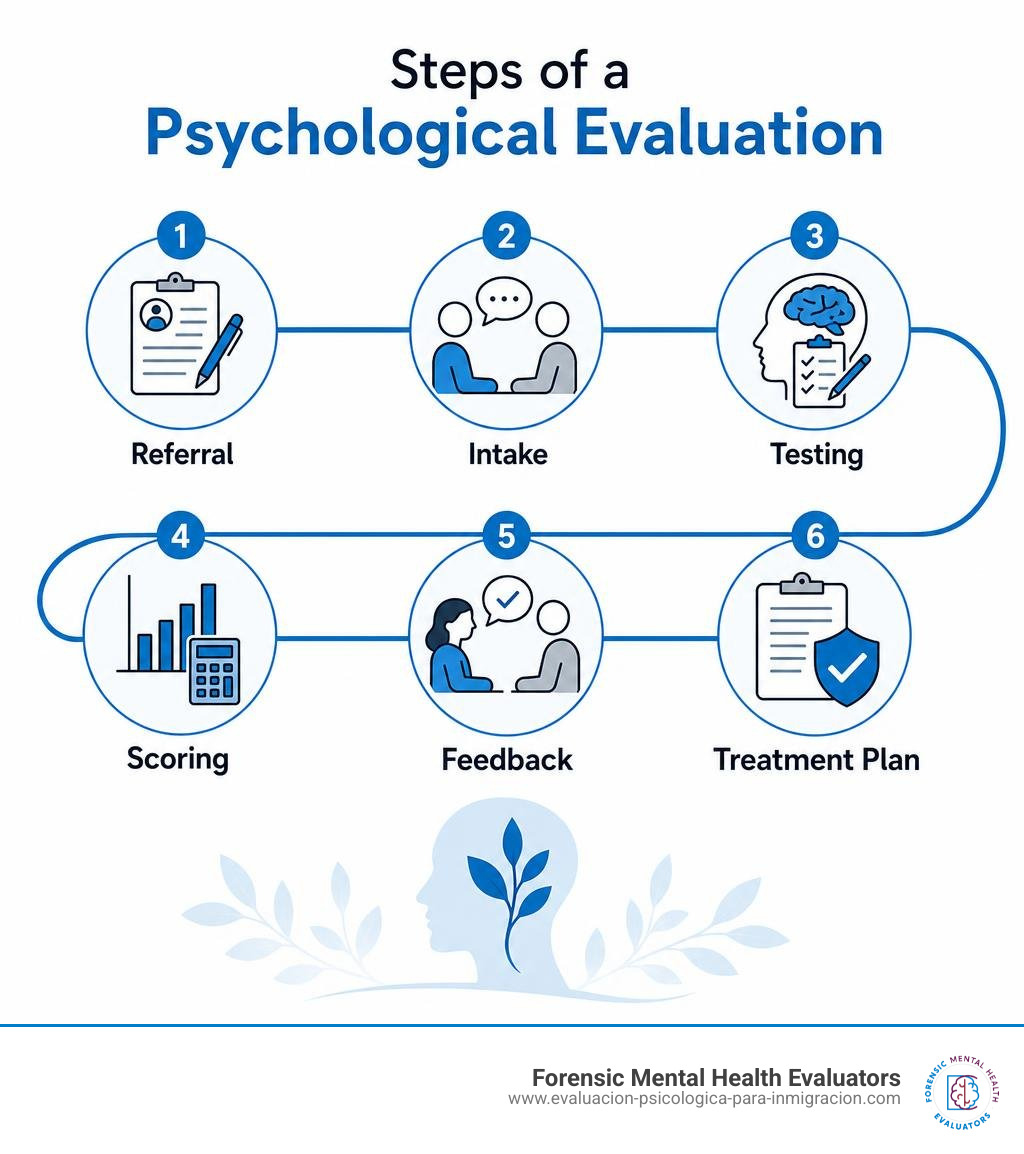
At District Counseling, we break the process down into three distinct phases:
- The Intake Appointment (1 Hour): We sit down with you to discuss your history, current symptoms, and the reasons you are seeking an evaluation. If this is a forensic immigration evaluation, we will ask about your personal background, family, and the specific hardships or trauma you have experienced.
- The Testing Session (2 to 4 Hours): This is the hands-on portion. You will complete a customized battery of standardized tests. Depending on your needs, this may take several hours and might be split across multiple visits to prevent fatigue.
- The Feedback Session (1 Hour): Once we have scored and interpreted the tests, we meet with you to review the results, discuss the diagnoses, and outline a personalized treatment plan.

How to Prepare for Your Psychological Evaluation
The most important rule of psychological testing is: Do not study or practice for the tests.
Standardized tests are designed to capture your natural, everyday functioning. Trying to "prepare" or practice can invalidate the results, making it harder for us to help you. Instead, follow these simple steps:
- Get Plenty of Sleep: Arrive well-rested so you can perform at your best.
- Eat a Good Meal: Bring a snack or water if your testing session is scheduled for several hours.
- Bring Your Medical History: Write down any medications, supplements, or previous mental health diagnoses you have.
- Be Honest: There are no "right" or "wrong" answers on these assessments. Honest responding is the only way to ensure an accurate diagnosis and an effective treatment plan.
Interpreting Results, Finding a Provider, and FAQs
Once the testing is complete, we compile all the data from your clinical interview, standardized tests, and behavioral observations into a comprehensive psychological report. This report is a powerful document that provides a clear diagnostic formulation and guides your future treatment.
Interestingly, meta-analyses have shown that the psychological assessment process itself can function as a therapeutic intervention. Simply receiving clear, objective feedback about your struggles can provide immense relief and a sense of validation.
To ensure your results are valid and legally defensible, your evaluation must be conducted by a licensed, doctorate-level clinician or a highly trained specialist. For clinical evaluations, practitioners rely on established frameworks like the American Psychiatric Association Practice Guidelines to ensure high-quality care.
Does insurance cover psychological testing?
In many cases, health insurance will cover clinical psychological testing if there is a documented "medical necessity" (such as diagnosing ADHD, autism, or cognitive decline). However, you must verify coverage with your insurance provider beforehand, as many plans require pre-authorization.
Please note: Forensic evaluations, such as those conducted for immigration court, are almost never covered by insurance because they are legally required rather than medically necessary in the eyes of insurance companies.
How long does a psychological evaluation take?
The entire process, from the initial intake to receiving the final report, typically takes a few weeks. The face-to-face testing itself usually takes between 2 and 4 hours, but scoring the tests, interpreting the data, and writing a comprehensive, multi-page report takes several additional hours of clinical work behind the scenes.
Can I fail a psychological test?
No, you cannot fail a psychological evaluation. These assessments are not academic exams. They are designed to map out your cognitive strengths, behavioral patterns, and emotional health.
Furthermore, many of our standardized tests include built-in "validity scales." These scales can detect if someone is over-reporting symptoms (trying to look worse than they are), under-reporting symptoms (trying to look perfect), or answering randomly. The best approach is simply to be honest and do your best.
Conclusion
A psychological evaluation is not just a label; it is a roadmap to clarity, healing, and personalized treatment. Whether you are seeking answers for academic struggles, managing cognitive changes, or navigating a complex immigration case, a professional evaluation can provide the answers you need to move forward with confidence.
At District Counseling, we are committed to making this process as comfortable and supportive as possible. We specialize in providing culturally sensitive, bilingual (Spanish/English) evaluations for immigration cases. Because we believe that diagnosis is only the first step on your mental health journey, we are proud to offer 6 free therapy sessions following your evaluation report to help you transition from understanding your symptoms to actively healing.
We serve clients throughout our locations in Houston, Katy, Cypress, and Sugar Land, Texas, as well as virtually across Florida, California, Utah, New York, Virginia, and Idaho.
If you or a loved one are ready to take the next step, we invite you to Schedule a Psychological Evaluation for Immigration with our experienced team today. Let us help you find the answers and support you deserve.