
Why a Psych Report is Your T-Visa Secret Weapon
The Strategic Role of a T Visa Psych Report

In immigration law, a t visa psych report is much more than a clinical summary; it is a forensic bridge. It takes the "invisible wounds" of a survivor—the shame, the terror, the fragmented memories—and translates them into the specific legal language that USCIS adjudicators require.
While a personal statement provides your narrative, the psychological evaluation provides objective, clinical corroboration. We look at what we call the "clinical pillars" of an evaluation: the background of the trafficking incidents, the cultural dynamics at play, the specific symptoms and functional impairments you are experiencing, and your long-term prognosis.
By documenting functional impairment, we show how the trauma of trafficking has made it difficult for you to work, sleep, or maintain relationships. This provides a clear picture to USCIS that the harm you suffered was not just a temporary setback, but a life-altering experience that meets the statutory threshold of "severe." You can find more info about T-Visa evaluations to see how these reports are structured to meet these high standards.
Corroborating Physical Presence with a T visa psych report
One of the four main requirements for a T visa is proving that you are physically present in the United States "on account of" a severe form of human trafficking. For many survivors, this is harder than it sounds. Trauma-induced memory loss is a real clinical phenomenon. When you have been through a "severe form of trafficking," your brain often tries to protect you by fragmenting or suppressing the most painful memories.
This can lead to inconsistencies in your testimony, which USCIS might mistake for a lack of credibility. A t visa psych report helps explain this. We use clinical evidence to show that your memory gaps are actually symptoms of trauma, not dishonesty. We document how your continued presence in the U.S. is a direct result of the trafficking situation—perhaps because you escaped and have nowhere else to go, or because you are still receiving essential trauma-informed care here that is not available in your home country. Utilizing Expert T Visa Psychological Evaluation Services ensures that these nuances are clearly communicated to immigration officials.
Documenting Trauma in a T visa psych report
Trauma doesn't always look like what we see in the movies. In a t visa psych report, we look for the specific, documented symptoms of Post-Traumatic Stress Disorder (PTSD), major depression, and generalized anxiety. Common symptoms we document in trafficking cases include:
- Hypervigilance: Constantly looking over your shoulder or jumping at loud noises.
- Flashbacks: Feeling as though you are back in the trafficking situation.
- Emotional Numbness: Feeling "checked out" or unable to feel joy or sadness.
- Avoidance: Staying away from certain streets, languages, or types of people that remind you of the trafficker.
Our diagnostic impressions aren't just labels; they are evidence of the harm you've endured. For a detailed breakdown of how we document these symptoms, visit our page on Evaluacion Psicologica Para Caso De Tvisa.
Strategic Timing: When to File and When to Wait
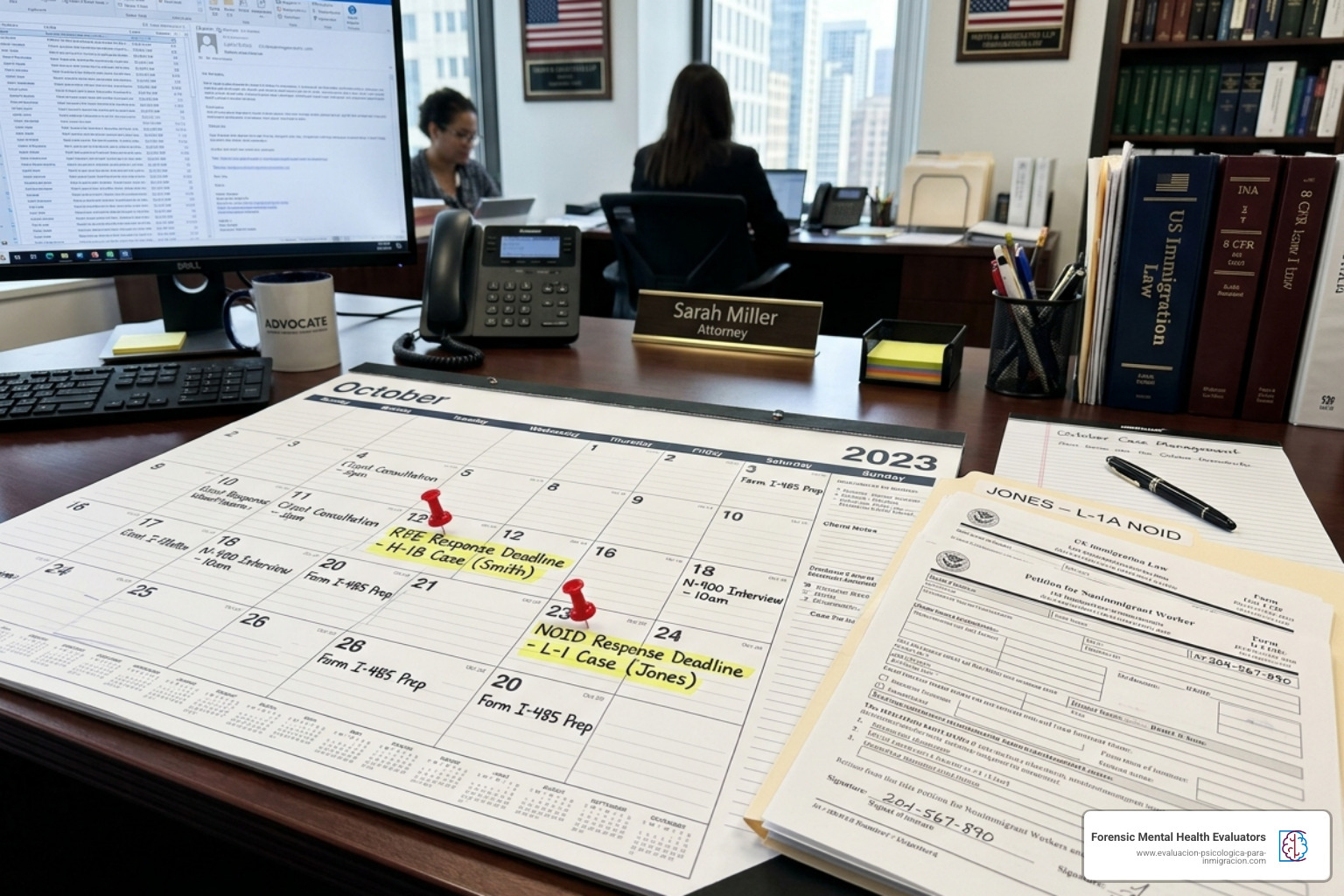
One of the most common questions we hear is: "Should I include the psych report in my initial filing?"
As of April 2026, the guidance from leading advocacy organizations like CAST (the Coalition to Abolish Slavery and Trafficking) is generally to wait. While it might feel proactive to send everything at once, there are strategic risks to submitting an overly broad evaluation in the beginning.
- The Risk of Overly Broad Reports: A report submitted too early might include unrelated background information that could inadvertently trigger inadmissibility issues or create minor inconsistencies with future testimony.
- Tailoring to USCIS Concerns: If USCIS sends a Request for Evidence (RFE) or a Notice of Intent to Deny (NOID), they are essentially telling you exactly what they are worried about. We can then tailor the t visa psych report to answer those specific questions—whether they concern your physical presence, your cooperation with law enforcement, or the specifics of your hardship claim.
- Fresh Evidence: Psychological evaluations are most "reliable" in the eyes of an adjudicator when they have been completed recently (often within 30 to 60 days of submission).
T-Visa vs. U-Visa: Psych Report Requirements
| Requirement | T-Visa (Trafficking) | U-Visa (Crime Victim) |
|---|---|---|
| Primary Focus | Extreme hardship and physical presence | Substantial mental or physical abuse |
| Cooperation | Must comply with reasonable requests | Must be helpful to law enforcement |
| Hardship Standard | "Unusual and severe harm" | Not explicitly required for the visa itself |
| Timing | Often better as an RFE/NOID response | Often included in initial filing |
Proving Extreme Hardship and Unusual Harm

The "Extreme Hardship" requirement is often the highest hurdle for T visa applicants. USCIS defines this as "unusual and severe harm" that goes far beyond the typical difficulties of deportation. Everyone faces hardship when leaving the U.S., but a trafficking survivor faces something much worse.
In a t visa psych report, we document:
- Re-traumatization Risk: How returning to the country where the trafficking began (or where the trafficker has influence) would cause a total mental health collapse.
- Lack of Care: The unavailability of specialized, trauma-informed mental health services in the home country.
- Social Stigma: In many cultures, victims of sex or labor trafficking are ostracized or shamed by their families and communities. This isolation is a form of severe psychological harm.
- Safety Concerns: Fear of retaliation from the trafficking ring.
We aim to show that removal isn't just a move—it's a death sentence for your mental and physical recovery. Our approach to T-Visa Psychological Evaluation and Trauma-Informed Care focuses on making these risks clear to the reader.
The Evaluation Process: Costs, Qualifications, and Telehealth
We know that the idea of a "psychological evaluation" can be intimidating. Here is exactly what the process looks like when you work with us:
- The Clinical Interview: This usually involves 2 to 3 sessions. We move at your pace. You control how much you share, and we take care to ensure the process does not re-traumatize you.
- Psychological Testing: We use validated, evidence-based tools (like the Clinician-Administered PTSD Scale) to provide objective data for your report.
- Qualifications: All our evaluations are conducted by doctoral-level clinicians or highly experienced licensed professionals who understand the forensic requirements of immigration law.
- Telehealth: We offer secure, HIPAA-compliant telehealth sessions. This allows us to serve clients in 44 states, including major hubs like Texas, Florida, California, New York, and Virginia.
- Confidentiality: Your information is protected by HIPAA. We only share the final report with your attorney once you have reviewed it and given us written consent.
Cost Structure: While costs can vary based on the complexity of the case (such as the need for expedited processing or addenda), a standard t visa psych report typically ranges from $1,500 to $2,000. It is important to note that most health insurance plans do not cover forensic evaluations for immigration purposes, so these are generally private-pay services.
For those also exploring other humanitarian options, we provide similar expertise for Evaluacion Psicologica Para Caso De Uvisa.
Frequently Asked Questions about T Visa Psychological Evaluations
Should I include a psych report in my initial T-Visa application?
As mentioned, most experts (and our team) suggest waiting. Unless your attorney has a specific strategic reason for an early filing, it is usually better to wait for an RFE. This allows the report to be "fresh" and specifically tailored to any concerns USCIS raises.
How does a psychological evaluation help with law enforcement cooperation?
To get a T visa, you generally must comply with "reasonable requests" for assistance from law enforcement. However, there are exceptions for those who have suffered severe physical or psychological trauma. A t visa psych report can document that your trauma is so severe that you are physically or mentally unable to cooperate without suffering further harm.
Can I conduct my T-Visa evaluation in Spanish?
Yes! At District Counseling, we specialize in Spanish-language evaluations. We believe you should be able to tell your story in the language you feel most comfortable in. We then provide a certified English translation for USCIS.
Conclusion
A T visa is a lifeline, but the path to obtaining one is paved with complex requirements and high evidentiary standards. At Forensic Mental Health Evaluators (District Counseling), we are dedicated to supporting survivors in Houston, Austin, Dallas, San Antonio, and throughout the states of Texas, Florida, California, and beyond.
We offer more than just a report; we offer a supportive environment. Our services include Spanish-to-English translation, a focus on client comfort, and—unique to our practice—6 free therapy sessions post-report to help you continue your healing journey.
Whether you are just starting your application or responding to an RFE, we are here to help. You can also learn more about the Uscis U Visa process if you are a victim of other qualifying crimes.
Don't leave your future to chance. Schedule your T-Visa evaluation today and let us help you build the strongest case possible.