
Detailed Guide to Psychological Evaluation Services in Dallas
Why a Psychological Evaluation in Dallas Can Change the Outcome of Your Immigration Case

If you are looking for a psychological evaluation in Dallas to support your immigration case, here is the most important information you need to know right away:
Quick Summary:
| Question | Answer |
|---|---|
| What is it? | A formal clinical document that demonstrates the emotional impact of your immigration situation |
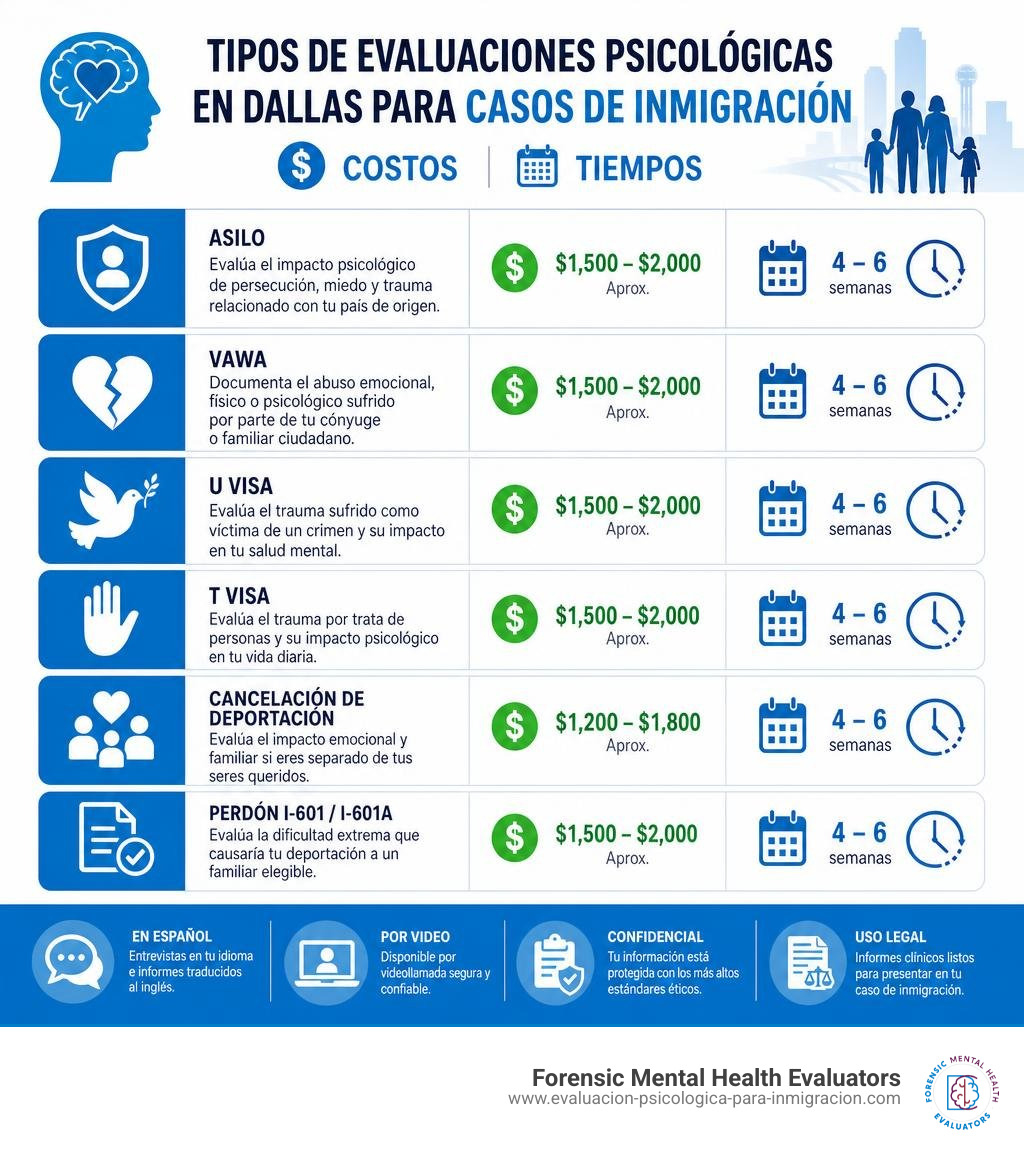
| Which cases is it for? | Cancellation of removal, VAWA, U Visa, T Visa, Asylum, I-601/I-601A Waivers |
| How much does it cost? | Between $1,200 and $2,000 on average |
| Does insurance cover it? | No — it is classified as a forensic/legal evaluation, not medical |
| How long does it take? | 4 to 6 weeks from the first contact to the final report |
| Is it done in Spanish? | Yes — and the report is translated into English for legal use |
| Can it be done via video call? | Yes, through secure telehealth platforms |
Facing a deportation process when you have children or a spouse who is a US citizen is one of the most difficult situations a family can experience. The fear, uncertainty, and emotional pain are real — and in many cases, documenting that psychological impact professionally can be the deciding factor in your legal case.
A psychological evaluation is not therapy. It is a clinical and legal tool. It gathers objective evidence on how your immigration status is affecting your mental health and that of your family — and this evidence goes directly to your attorney, the immigration judge, or USCIS.
My name is Francisco Ortiz, a Certified Forensic Mental Health Evaluator (CFMHE) specializing in psychological evaluations in Dallas and throughout Texas for high-risk immigration cases, including extreme hardship waivers, asylum, and U Visa and T Visa applications. With an active license in six states and advanced training in forensic immigration evaluations, I have helped Spanish-speaking immigrants document their suffering accurately and with cultural competence. In the following sections, I explain exactly what to expect at each stage of the process.
What is a Dallas Psychological Evaluation and When is it Needed?
A psychological evaluation in Dallas is a comprehensive clinical analysis designed to assess a person's emotional, cognitive, and behavioral state. Unlike a regular counseling session, this service uses a structured methodology that combines in-depth clinical interviews, standardized psychometric tests, and a review of relevant medical or legal records.

In the legal field, courts, medical professionals, and immigration authorities require these evaluations to make formal and well-founded determinations. Through a detailed analysis, we can identify specific conditions such as post-traumatic stress disorder (PTSD), major depression, generalized anxiety, and the impact of historical or recent trauma.
If you are in the middle of a legal process in Texas, having a solid forensic report is essential. To better understand how these reports are structured in the state, you can consult our guide on the Texas Immigration Psych Evaluation, where we detail the clinical standards applied in the region.
Dallas Psychological Evaluation for Immigration Cases
For the immigrant community in Dallas, a clinical evaluation can mean the difference between the approval of a legal status or family separation. These reports humanize your legal file, providing the immigration judge or USCIS officers with a scientific and objective perspective of the emotional suffering faced by the applicant or their loved ones.
We work directly with various types of immigration petitions, adapting each evaluation to the requirements of your immigration attorney:
- Waiver Cases (I-601 / I-601A): We evaluate the impact and extreme hardship that a US citizen or permanent resident spouse or parent would suffer if the applicant is deported. You can read more in our section on Psychological Evaluation for Waiver Cases.
- VAWA Petitions: Designed for individuals who have suffered physical, verbal, or psychological abuse by a spouse or parent who is a citizen or resident. We document the consequences of domestic violence in the Psychological Evaluation for VAWA Cases.
- U Visa and T Visa: For survivors of serious crimes or human trafficking in US territory who cooperate with law enforcement. We analyze severe trauma in the Psychological Evaluation for U Visa Cases and in the Psychological Evaluation for T Visa Cases.
- Political Asylum: We document the credible fear of returning to the country of origin and the consequences of harm suffered due to political, religious, or social persecution, detailed in the Psychological Evaluation for Asylum Cases.
- Cancellation of Removal: We evaluate the devastating impact on legal dependents if the family provider is expelled from the country. Learn more in the Psychological Evaluation for Cancellation of Removal Cases.
Each of these processes requires a specialized clinical approach that aligns with the standards of the Psychological Evaluation for Immigration.
Dallas Psychological Evaluation for Clinical Diagnostics in Immigration Cases
Diagnostic accuracy is the core of any successful forensic report. In immigration cases, it is not enough to mention that the client "feels sad" or "is worried." It is essential to apply scientifically validated diagnostic tools to formally identify specific mental health disorders.
Our evaluations analyze complex symptoms of PTSD, clinical depression, adjustment disorders, and severe anxiety. By connecting these diagnoses to the client's personal history, we objectively demonstrate the presence of trauma and the risk of severe psychological deterioration if the legal circumstances are not resolved favorably. If you want to delve deeper into how these diagnoses are structured in North Texas, we invite you to read about the Dallas Psychological Immigration Assessment.
The Step-by-Step Process of an Immigration Evaluation
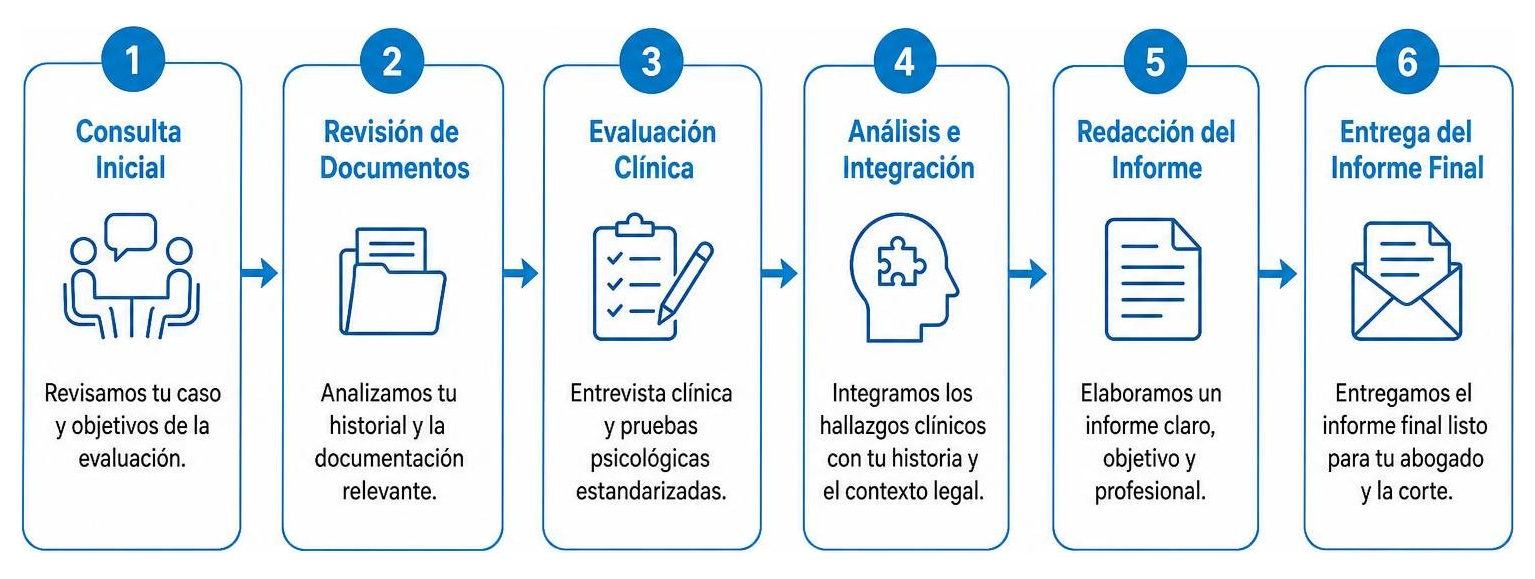
We understand that undergoing a psychological evaluation can cause nervousness. However, our process is designed to be as comfortable, clear, and structured as possible. We collaborate closely with your immigration attorney to ensure that every clinical detail aligns perfectly with the legal strategy of your case.

The path from the initial consultation to the delivery of the final report follows a series of rigorous steps to guarantee the maximum quality and validity of the document before the authorities, an approach characteristic of a Forensic Immigration Evaluation.
Preparation and Necessary Documents
To maximize the effectiveness of the session, it is very helpful for you to gather certain key documentation beforehand. Although not all documents are mandatory, having them helps build a much more robust clinical file. We recommend preparing:
- Personal timeline: A brief summary of the most significant dates and events in your life, including your arrival in the United States and any traumatic or stressful incidents.
- Medical and therapeutic records: Histories of previous treatments, prescriptions, or past diagnoses.
- Police or legal reports: Especially important for U Visa, T Visa, or VAWA cases.
- Symptom log: If possible, write down for one or two weeks how your anxiety or sadness manifests in your daily life (trouble sleeping, panic attacks, lack of appetite).
Having the support of a Texas Immigration Psychological Expert will allow you to organize this information in the most strategic way for your case.
Clinical Interview and Psychological Testing
The direct evaluation phase consists of one or two detailed clinical interviews, with a total duration of 1.5 to 3 hours. During this time, we will talk respectfully about your personal history, your family environment, your current symptoms, and your fears regarding the future.
In addition to the interview, we apply standardized psychometric tests and self-report questionnaires to gather objective data about your mental health. This comprehensive approach allows us to clinically corroborate the level of emotional impact and reflect it indisputably in the final report. For U Visa applicants, for example, this process is crucial, as detailed in the Dallas U Visa Mental Evaluation Clinical Consultation.
Costs, Payment Options, and Insurance Coverage in 2026
Investing in mental health and legal support is a significant step for any family. In the year 2026, the costs of private psychological evaluations in the Dallas area vary depending on the complexity of the case and the purpose of the evaluation. Below, we present an estimate of the average rates in the private pay market so you can plan your budget with complete clarity.
| Evaluation Type | Average Cost Range (Private Pay) |
|---|---|
| Immigration Psychological Evaluation (VAWA, U Visa, Asylum, Waiver) | $1,200 – $2,000 |
| Diagnostic Mental Health Evaluation (ADHD, Depression, Anxiety) | $1,750 |
| Autism Evaluation | $2,000 |
| Combined Evaluation (Autism + Clinical Diagnosis) | $3,000 |
| Pre-surgical Evaluation | $1,000 |
To learn more about the cost structure and accessibility of these services in the state of Texas, you can review the information on the Austin Spanish Immigration Evaluation.
Average Rates and Payment Plans
We know that legal processes entail multiple expenses and that the financial burden can be overwhelming. For this reason, in our practice, we seek to offer the maximum possible flexibility. We offer personalized payment plans that allow the total cost of the evaluation to be divided into affordable installments throughout the process.
We firmly believe that economic difficulties should not be an obstacle to obtaining high-quality clinical documentation that protects your future and that of your family. If you want to learn more about accessible evaluation services for asylum cases, visit our section on Texas Asylum Psychological Services.
Does Health Insurance Cover an Immigration Evaluation?
One of the most frequent questions from our clients is whether they can use their health insurance (such as Blue Cross Blue Shield, Aetna, or Medicaid) to cover the cost of the evaluation. The short answer is no.
Psychological evaluations for immigration purposes are classified under the forensic and legal scope, not as medically necessary treatments. Health insurance companies only cover services intended for therapy or direct medical diagnosis for the patient's recovery, excluding evaluations requested by courts or immigration agencies.
Fortunately, thanks to modern technology, today it is possible to access these services efficiently and flexibly no matter where you are in the state. We invite you to read our guide on Immigration Psychological Evaluations via Telehealth to discover how to speed up your process from the comfort of your home in Texas, Florida, California, Utah, or Idaho.
Key Differences Between Forensic Evaluation and Traditional Therapy
It is very common to confuse a forensic evaluation with traditional psychological therapy, but both services have completely different purposes, structures, and ethical boundaries.
To help you understand which service you need at this moment, we have prepared a quick comparison:
- Purpose: Traditional therapy focuses on ongoing treatment, symptom relief, and the long-term emotional well-being of the patient. The Forensic Immigration Evaluation on the contrary, seeks to gather objective clinical data to answer a specific legal question and generate a written report for a third party (such as a judge or USCIS).
- Duration: Therapy is an open-ended process that can last for months or years. A forensic evaluation is a brief process that is generally completed in an average of 1 to 3 interview sessions.
- Confidentiality: In therapy, confidentiality is almost absolute. In a forensic evaluation, confidentiality is limited from the beginning, as the client explicitly authorizes the final report to be shared with their attorney, the court, or immigration authorities.
- Clinical Relationship: The therapist acts as an unconditional supportive ally for the patient's growth. The forensic evaluator must maintain a posture of neutrality and scientific objectivity to guarantee the validity of the report before the law.
Frequently Asked Questions about Psychological Evaluations
How long does it take to receive the final report?
The average time to complete an immigration evaluation is 4 to 6 weeks from the first clinical interview to the delivery of the final translated report. In urgent situations where there are strict legal deadlines, we offer expedited services (for an additional fee) to deliver the report in a shorter timeframe, always coordinating in advance with the attorney handling the case.
Can evaluations be conducted via video call?
Yes. The vast majority of immigration evaluations can be conducted safely and confidentially through telehealth platforms that comply with health regulations. The only requirement is that the psychologist or evaluator must have an active and valid professional license in the state where the client is physically located at the time of the interview.
Where can I find Spanish-speaking professionals in Dallas?
It is essential that your evaluation is conducted in your native language to avoid misunderstandings and ensure that you can express your emotions and traumatic experiences with complete freedom and accuracy. In our practice, we have a fully bilingual and culturally sensitive team that understands the challenges of migration and cultural adaptation in the United States.
Conclusion
In the maze of immigration laws, having the support of mental health professionals who understand your language, your culture, and the urgency of your situation is invaluable. At District Counseling, we are dedicated to offering evaluations of the highest scientific quality, written with the forensic precision that judges and USCIS officers demand, and fully translated from Spanish to English to facilitate your legal process.
But our commitment to you goes beyond a simple legal document. We understand that remembering and documenting difficult situations can open emotional wounds. That is why, in addition to delivering a solid report for your case, our service includes 6 free therapy sessions after the delivery of the report. We want to make sure you have the emotional support needed to heal and move forward with your life.
If you are ready to strengthen your immigration case and take the next step with confidence, we invite you to visit our main page on Psychological Evaluation for Immigration. Contact us today to schedule your initial consultation and let us accompany you on this path toward a safer and more stable future for you and your family.