
Download and Prepare Your I-914 Form Without Costly Errors
How to prepare Form I-914 for T status

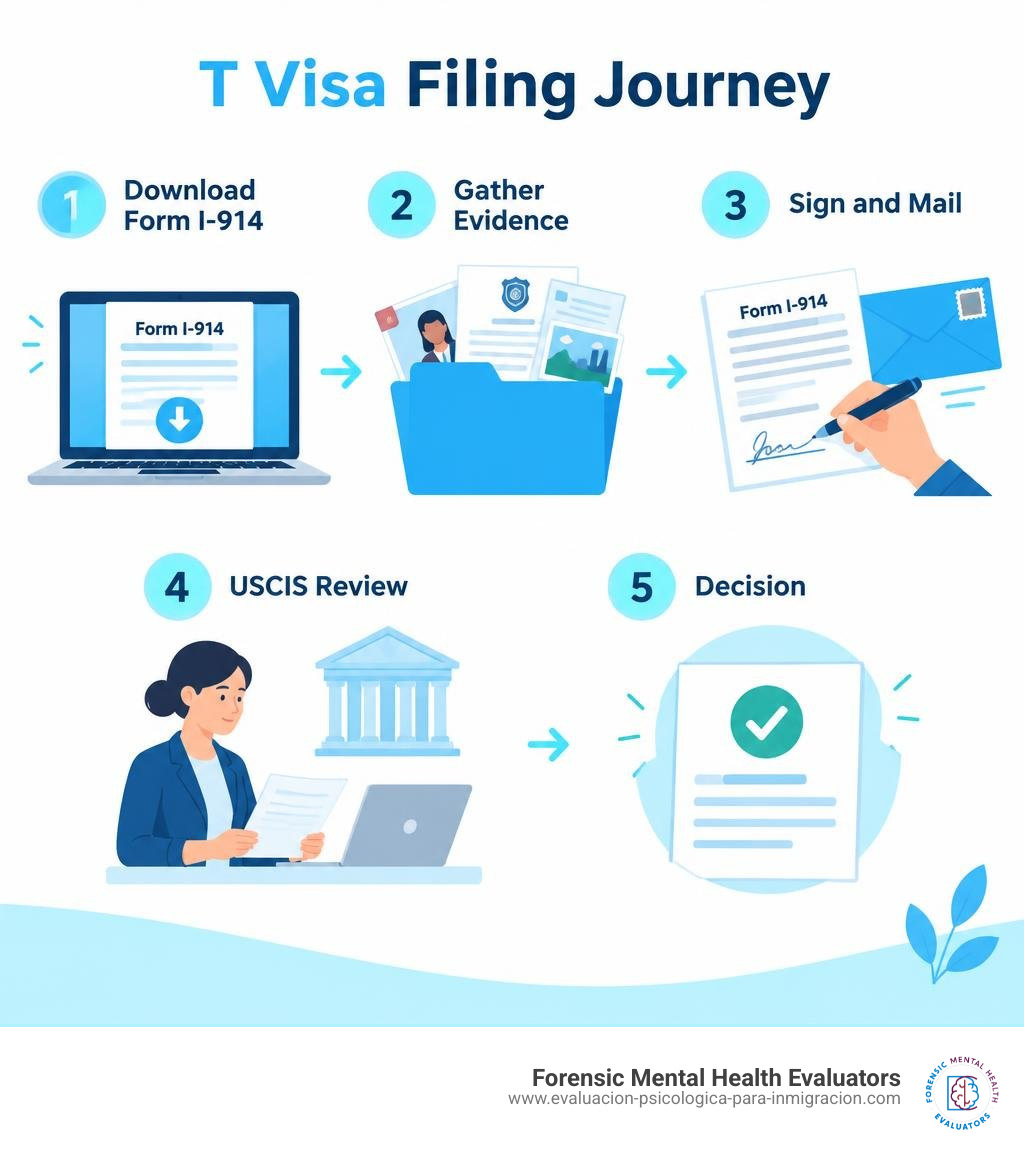
To apply for T nonimmigrant status, download Form I-914 and its instructions from USCIS. Write a personal statement about the trafficking you experienced. Gather evidence of your physical presence in the United States, any law enforcement cooperation or exemption, and the harm you would face if removed. Then sign the form and check the current USCIS filing address before mailing it. Form I-914 is for survivors of severe human trafficking; it is not the same as a U visa application.
I'm Francisco Ortiz, a certified forensic mental health evaluator with experience assessing trauma and hardship in T-visa cases. I help survivors document mental health evidence that may support an I-914 form filing.
Understanding Form I-914 and Eligibility for T Nonimmigrant Status
Navigating humanitarian immigration relief can feel daunting, but understanding the legal foundation of Form I-914 is your most empowering first step. Congress created T nonimmigrant status (often referred to as the T visa) under the Victims of Trafficking and Violence Protection Act. Its primary purpose is to protect victims of severe human trafficking and allow them to remain legally in the United States while assisting law enforcement or recovering from severe trauma.
To qualify for T-1 nonimmigrant status using the Application for T Nonimmigrant Status | USCIS, you must meet four core statutory requirements established by immigration law:
- Victim of Severe Trafficking: You are or have been a victim of a severe form of trafficking in persons. Under federal law, this covers both sex trafficking (in which a commercial sex act is induced by force, fraud, or coercion, or where the person induced is under 18 years old) and labor trafficking (the recruitment, harboring, transportation, provision, or obtaining of a person for labor or services through force, fraud, or coercion for involuntary servitude, peonage, debt bondage, or slavery).
- Physical Presence: You are physically present in the United States, American Samoa, the Commonwealth of the Northern Mariana Islands, or at a U.S. port of entry on account of the trafficking. This includes individuals who escaped trafficking and remained in the country.
- Law Enforcement Compliance: You have complied with any reasonable request for assistance from federal, state, local, or tribal law enforcement agencies investigating or prosecuting trafficking, unless you qualify for a statutory exemption.
- Extreme Hardship: You would suffer extreme hardship involving unusual and severe harm if you were removed from the United States.
Many survivors confuse this benefit with crime-victim protections. While both pathways provide essential relief, reviewing our U Visa Complete Guide 2026 highlights key differences: U visas cover qualifying felony-level crimes like felonious assault or domestic violence, whereas Form I-914 exclusively remedies severe labor and commercial sex trafficking.
Human Trafficking vs. Human Smuggling
A frequent point of confusion during immigration reviews involves separating human trafficking from human smuggling. While smuggling can sometimes turn into trafficking, they are legally distinct concepts with critical implications for your petition.
- Human Smuggling is an offense against a border. It involves the voluntary agreement of an individual to be transported unlawfully across an international boundary. Once transportation ends and payment is settled, the relationship between the migrant and the smuggler typically terminates.
- Human Trafficking is an ongoing crime against a person's fundamental liberty. It involves exploitation through force, fraud, or coercion—regardless of whether an international border was crossed. A victim may enter the country legally on a valid visa or unlawfully and later become subjected to debt bondage, involuntary servitude, or forced labor.
| Factor | Human Smuggling | Human Trafficking |
|---|---|---|
| Consent | Voluntary; individual contracts with a smuggler | Involuntary or initial consent vitiated by force, fraud, or coercion |
| Exploitation | Ends upon arrival at destination | Ongoing exploitation through labor or commercial sex |
| Border Crossing | Requires crossing an international border | Can occur across borders or entirely within domestic borders |
| Immigration Relief | Does not convey immigration status | Qualifies survivor for T nonimmigrant status via Form I-914 |
Legal Exceptions to Law Enforcement Cooperation
While the general rule requires applicants to assist law enforcement agencies (LEAs), the law recognizes that severe trauma or age can make cooperation difficult or impossible. You are exempt from the cooperation requirement if:
- You were under 18 years of age at the time of the trafficking victimization; or
- You are unable to cooperate due to severe physical or psychological trauma.
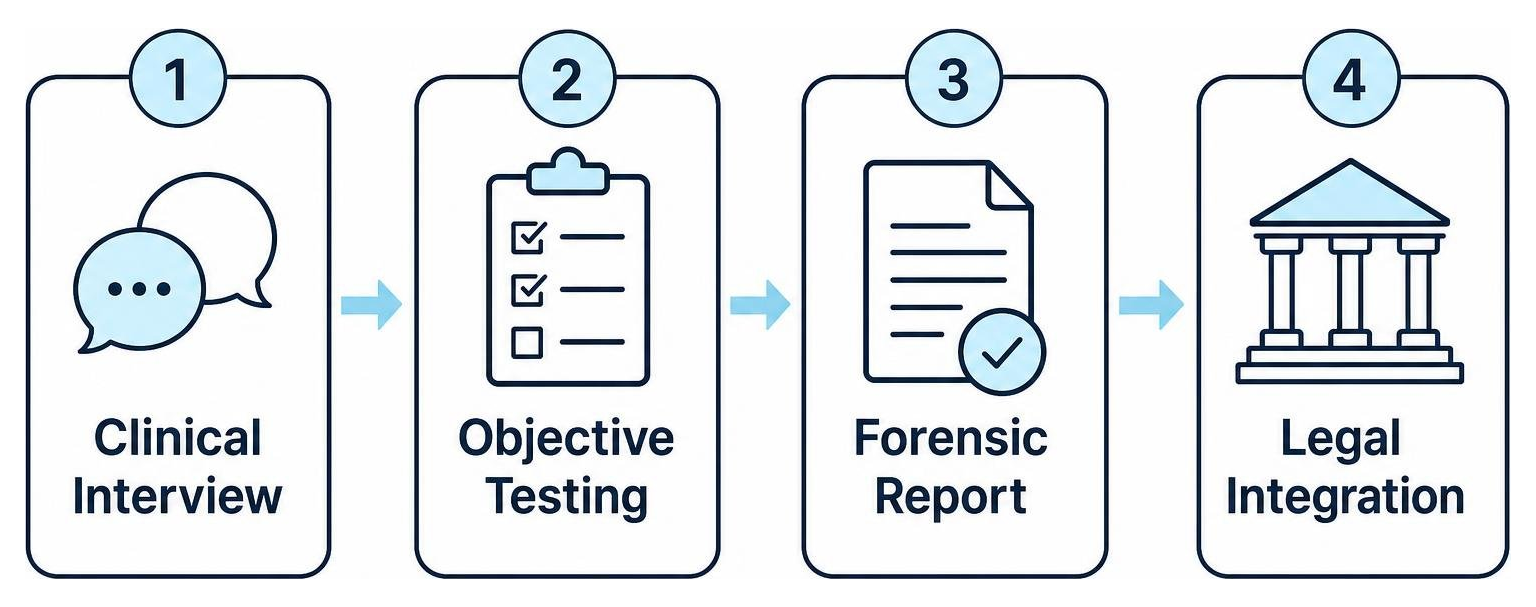
In our clinical practice across Texas (including Houston, Katy, Cypress, Sugarland, Austin, Dallas, and San Antonio), we regularly evaluate survivors who suffer from profound Post-Traumatic Stress Disorder (PTSD), severe depressive disorders, and dissociation. Documenting this psychological impact is crucial. If fear, panic attacks, or trauma triggers prevent you from testifying or interacting with authorities, obtaining a comprehensive clinical evaluation—similar to a clinical mental health assessment for U visa and T visa cases—provides the necessary objective medical evidence USCIS requires to grant a trauma-based exemption.
Step-by-Step Instructions to Prepare the I-914 Form
Completing Form I-914 demands precision and consistency across every field. Errors or discrepancies between your paperwork and sworn statements can cause avoidable delays.

Follow the official Form I-914, Instructions for Application for T Nonimmigrant Status while completing each section:
- Part 1. Purpose for Filing: Indicate whether you are applying for original T-1 nonimmigrant status or filing an additional action.
- Part 2. General Information About You: Enter your full legal name, aliases, alien registration number (A-Number, if any), Social Security number (if issued), date of birth, and nationality. Safety Tip: If you fear continued threats from traffickers, provide a confidential "Safe Mailing Address" where USCIS can send notices without endangering you.
- Part 3. Additional Information About Your Application: Address your eligibility directly, confirming whether you are a victim of severe trafficking, physically present due to that trafficking, cooperating with LEAs or seeking an exemption, and whether you are requesting an Employment Authorization Document (EAD).
- Part 4. Processing Information (Inadmissibility & Criminal History): Answer all questions regarding prior immigration violations, arrests, citations, or criminal charges truthfully. Answering "Yes" does not mean automatic rejection, but it requires accompanying explanations and waiver requests.
- Part 5. Information About Your Family Members: List your eligible family members and indicate whether you are including them as derivatives.
- Parts 6–8. Applicant, Interpreter, and Preparer Certifications: Sign and date the declaration. Ensure any translator or accredited preparer signs their respective certification sections. Unsigned applications are rejected outright.
Downloading the Official I-914 Form and Verifying Current Edition Details
USCIS strictly rejects outdated editions of immigration forms. Always verify that your download matches the current official release:
- Current Edition Date: 01/20/25 (always verify this date in the lower corner of every printed page).
- OMB Control Number: 1615-0099 (current expiration date: 08/31/2026).
- Page Integrity: When printing, verify that all page footers, borders, and barcodes remain fully visible and crisp without cutoffs.
Requesting Work Authorization and Submitting Supplement Forms
You do not need to file a separate, stand-alone Form I-765 if you check the appropriate box in Part 3 of Form I-914 requesting an Employment Authorization Document (EAD). Once USCIS approves your T-1 status, an EAD is automatically generated under category (a)(16).
Along with your primary petition, you may need related supplements:
- Form I-914, Supplement A: Used to petition for eligible derivative family members.
- Form I-914, Supplement B (Declaration for Trafficking Victim): A formal declaration completed and signed by a law enforcement official.
- Form I-192: Application for Advance Permission to Enter as a Nonimmigrant (used to waive grounds of inadmissibility).
Evidence Requirements and Essential Supporting Documents
A successful I-914 filing rests upon the credibility, consistency, and weight of your supporting documentation. USCIS adjudicators evaluate whether your narrative and external records establish each statutory requirement by a preponderance of the evidence.
Your primary piece of initial evidence is your Personal Narrative Statement. This signed, sworn affidavit should describe:
- How you came into contact with your trafficker;
- The false promises, force, threats, fraud, or coercion used to control you;
- The conditions of forced labor, involuntary servitude, or commercial sexual exploitation you endured;
- How you escaped or left the trafficking situation;
- Any interactions you had with law enforcement (or why trauma/age prevented you from reporting); and
- The severe harm, retaliation, medical risks, or societal stigma you would face if returned to your home country.
To substantiate your trauma and hardship claims, working with a qualified clinician is invaluable. Specialized clinical assessments—such as a forensic U Visa Psychological Assessment adapted for severe trafficking trauma—provide empirical, standardized validation of post-traumatic stress, anxiety, and the severe psychological toll of exploitation.
Document Checklist for Filing Your I-914 Form Package
Assemble your complete submission packet in the following structured order:
- Identity & Status Records: Copy of passport identity pages, birth certificate, Form I-94 arrival record (if entered with inspection), or any government-issued photo identification.
- Form I-914: Fully completed, dated, and signed with the valid 01/20/25 edition.
- Personal Narrative Statement: Detailed, signed affidavit chronicling the entire trafficking experience and resulting hardship.
- Law Enforcement Documentation: Completed Form I-914, Supplement B, police reports, court transcripts, or official communication logs (or psychological evidence supporting an exemption).
- Psychological & Medical Evidence: Comprehensive forensic mental health evaluations, treatment notes, psychiatric diagnoses, or medical records documenting physical trauma and psychological injury.
- Country Conditions & Hardship Proof: Human rights reports, news articles, and country condition documentation showing lack of protection or medical resources in your home nation.
- Certified Translations: Full English translations accompanied by signed certificates of translation for every non-English document.
Overcoming Inadmissibility Grounds and Requesting Waivers
If you entered the U.S. without inspection, overstayed a visa, worked without authorization, or have certain arrest records, you may trigger grounds of inadmissibility under INA Section 212(a). Fortunately, T-visa applicants have access to one of the most generous waivers in immigration law through Form I-192 (Application for Advance Permission to Enter as a Nonimmigrant).
Under INA Section 212(d)(13), USCIS has discretionary authority to waive most grounds of inadmissibility (excluding certain severe security and terrorism grounds) if the ground was caused by or connected to your victimization, or if granting the waiver is in the national interest. Just as when evaluating complex inadmissibility waivers in USCIS U Visa petitions, submitting evidence that demonstrates rehabilitation, positive community ties, and underlying trauma connection is vital to obtaining a favorable discretionary decision.
Assembling, Signing, and Mailing Your Application
Once your documents and affidavits are gathered, proper packaging ensures that your submission is processed smoothly without administrative rejections.
- Check Signatures: USCIS strictly rejects stamped or typed signatures. Ensure every form features a genuine handwritten signature in black ink (or a legible photocopy of an original wet signature).
- Include Certified Translations: Any document containing foreign language text (such as Spanish birth certificates or police records) must include a complete English translation. The translator must certify their competence to translate and sign under penalty of perjury.
- Organize with Tabs: Place Form I-914 on top, followed by Form I-192 (if applicable), Supplement A (for family), your narrative statement, and indexed exhibits tabbed along the bottom.
- Select the Correct Lockbox: Mail your completed application packet via tracked courier (USPS Certified/Priority, FedEx, or UPS) to the designated USCIS Lockbox based on your geographic residence (the Elgin, IL or Phoenix, AZ lockbox). Always verify the current mailing address on the USCIS filing directory before dispatching.
Family Inclusion via Supplement A
You can protect your immediate family members from danger by filing Form I-914, Supplement A (Application for Derivative T Nonimmigrant Status) either concurrently with your initial petition or while your case is pending.
Eligibility depends on your age at the time of filing your principal I-914:
- If Principal Applicant is Under 21 Years of Age: You may file for your:
- Spouse;
- Unmarried children under 21 years of age;
- Parents; and
- Unmarried siblings under 18 years of age.
- If Principal Applicant is 21 Years of Age or Older: You may file for your:
- Spouse; and
- Unmarried children under 21 years of age.
- Special Present Danger Category (Any Age): Regardless of your age, you can petition for your parents, unmarried siblings under 18, or adult/minor children of a derivative family member if you establish that they face a present danger of retaliation as a direct result of your escape from trafficking or your cooperation with law enforcement.
Avoiding Common Errors That Trigger Rejection or RFEs
A Request for Evidence (RFE) or rejection notice causes unnecessary stress. Protect your timeline by avoiding these common oversights:
- Using an Outdated Edition: Submitting forms other than the 01/20/25 edition results in automatic rejection.
- Leaving Blank Mandatory Fields: Write "N/A" (not applicable) or "None" where appropriate rather than leaving fields blank, which can trigger system intake errors.
- Vague Narrative Statements: Ensure your personal statement clearly establishes the nexus between the perpetrator's actions and the statutory definitions of forced labor or sex trafficking.
- Uncertified Translations: Failing to include translator certification statements will invalidate vital foreign evidence.
- Inconsistent Dates: Double-check that dates of birth, arrival dates, and trafficking timelines align identically across all forms, police reports, and psychological evaluations.
Frequently Asked Questions about the I-914 Application
What is the filing fee for Form I-914 and can it be waived?
There is no filing fee for Form I-914 or Form I-914 Supplement A. The principal petition and derivative family petitions are completely fee-exempt. While related forms such as Form I-192 (waiver of inadmissibility) may carry filing fees, applicants who cannot afford these costs may request a fee waiver by filing Form I-912 or submitting an explicit fee waiver request demonstrating financial hardship.
Is Form I-914, Supplement B mandatory for T visa approval?
No. Completing and submitting Form I-914, Supplement B (Declaration of Law Enforcement Officer for Victim of Trafficking in Persons) is optional. While Supplement B serves as strong primary evidence of trafficking victimization and LEA cooperation, USCIS considers all credible secondary evidence. You can satisfy the evidentiary standard through your personal narrative, police incident logs, grand jury subpoenas, trial transcripts, protective orders, and comprehensive forensic mental health evaluations.
Can a T visa lead to lawful permanent resident status?
Yes. T nonimmigrant status is an established pathway to a Green Card. Under INA Section 245(l), a T-1 nonimmigrant can apply for adjustment of status (Form I-485) after maintaining continuous physical presence in the United States for at least 3 continuous years in lawful T-1 status (or after the investigation/prosecution of trafficking is certified complete, whichever occurs first). Similar to the pathway outlined in our guide on transitioning from a U Visa to Green Card, you must demonstrate continuous good moral character, ongoing cooperation (or maintenance of your exemption), and either continuous presence or extreme hardship.
Conclusion
Preparing your petition for T nonimmigrant status is an essential step toward personal safety, legal stability, and healing. By systematically gathering your evidence, articulating your narrative, verifying the 01/20/25 edition, and addressing any inadmissibility factors with appropriate waivers, you can build a strong, credible case for USCIS review.
At District Counseling, our bilingual clinical team understands the profound courage required to recount trafficking experiences. We provide thorough, trauma-informed psychological evaluations translated from Spanish into English for immigration petitions across Texas, Florida, California, New York, Utah, Virginia, and Idaho. To support your ongoing healing, we also offer six complimentary therapy sessions following the completion of your evaluation report.
If you or your legal representative are preparing a petition and require objective clinical evidence to document severe trauma or extreme hardship, learn more about scheduling a professional evaluación psicológica para caso de TVisa to support your path to legal protection and safety.