
The Anatomy of an Immigration Psychological Evaluation Sample
What an Immigration Psychological Evaluation Sample Actually Looks Like

An immigration psychological evaluation sample gives you a clear picture of what a real forensic report contains — and why it matters for your case. Here is a quick breakdown:
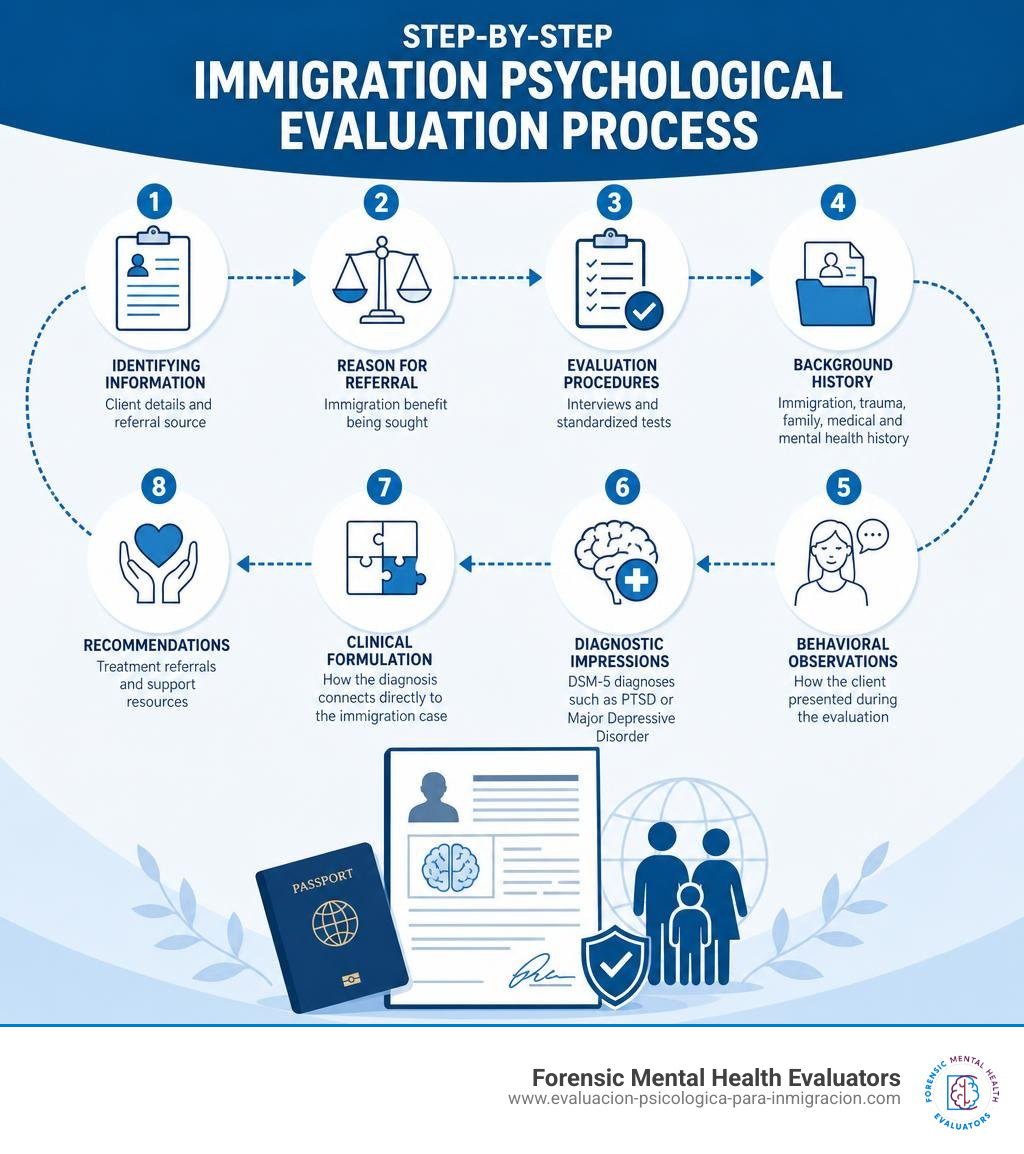
What a standard immigration psychological evaluation includes:
- Identifying information — Client's name, date of birth, country of origin, and referral source
- Reason for referral — The specific immigration benefit being sought (e.g., hardship waiver, VAWA, asylum)
- Evaluation procedures — List of clinical interviews and standardized tests used (e.g., CAPS-5, DASS-21)
- Background history — Immigration history, trauma history, family situation, medical and mental health history
- Behavioral observations — How the client presented during the evaluation
- Diagnostic impressions — DSM-5 diagnoses such as PTSD or Major Depressive Disorder
- Clinical formulation — How the diagnosis connects directly to the immigration case
- Recommendations — Treatment referrals and support resources
If you are facing deportation, the stakes could not be higher. Separation from your U.S. citizen children or spouse is not just painful — it is a documented psychological harm that immigration courts and USCIS can recognize as extreme hardship. But only when it is properly documented.
Research shows that cases supported by a forensic psychological evaluation have an 81.6% grant rate, compared to just 42.4% for cases without one. That gap is not a coincidence. A well-structured report gives a judge or USCIS officer something concrete to act on.
The problem is that most people have never seen one of these reports before. Knowing what a finished evaluation looks like — its sections, its language, and its clinical reasoning — helps you understand what you are asking for and why it works.
I am Francisco Ortiz, Lead Forensic Mental Health Evaluator at District Counseling PLLC and a Certified Forensic Mental Health Evaluator (CFMHE), licensed in six states, with specialized training in producing immigration psychological evaluation samples for hardship waivers, asylum cases, and U-Visa and T-Visa applications. In this guide, I will walk you through every component of a professional report so you know exactly what to expect.
What is an Immigration Psychological Evaluation?
At its core, an Immigration Mental Health Evaluation is a highly specialized clinical assessment used in legal proceedings. Unlike a standard therapy intake, its primary purpose is to provide objective, expert evidence regarding an applicant's mental and emotional condition. This document translates complex human suffering, trauma, and psychological diagnoses into clear, legally admissible language for United States Citizenship and Immigration Services (USCIS) and immigration courts.
In immigration cases, a psychological evaluation is not designed to prove a case by itself, but rather to serve as a critical secondary piece of evidence. This is especially true when primary documentation, such as police reports or medical records, is limited or completely unavailable. By documenting objective trauma and the severe emotional consequences of relocation or separation, the evaluation establishes a clear "nexus" (or connection) between the applicant's mental health and the legal requirements of their petition.
Clinical vs. Forensic Psychological Evaluations
It is common to confuse clinical therapy with a forensic assessment, but they serve entirely different purposes. In clinical therapy, the focus is on treatment, healing, and building a supportive relationship over time. The therapist acts as an advocate for the client's well-being.
In contrast, a forensic psychological evaluation is rooted in objective neutrality. Guided by the American Psychological Association (APA) Specialty Guidelines for Forensic Psychology, the evaluator acts as an independent expert. The goal is not to treat the individual, but to assess them rigorously and present an unbiased clinical picture to the court. To maintain these strict ethical boundaries, APA guidelines prohibit an evaluator from providing ongoing therapy to a client after completing their forensic assessment. For a deeper look into these differences, you can read more about Evaluación Forense de Inmigración.
Who is Qualified to Conduct an Immigration Psychological Evaluation Sample?
Not all mental health professionals have the same scope of practice. While licensed mental health counselors, clinical social workers, and marriage and family therapists can screen for trauma and diagnose emotional difficulties (such as depression, anxiety, or PTSD), licensed psychologists hold a broader clinical scope.
Specifically, only licensed psychologists are qualified to perform advanced psychometric testing, such as IQ or neurological testing. This distinction is crucial for cases involving naturalization waivers (Form N-648) for applicants with intellectual or cognitive disabilities, which require a psychologist or medical doctor to complete. When looking at an immigration psychological evaluation sample, the credentials of the evaluator must be clearly stated to ensure admissibility in court.
The Core Sections of an Immigration Psychological Evaluation Sample
A high-quality evaluation is built on a structured methodology. It is not a simple letter of support; it is an extensive, multi-page document that combines clinical interviews, standardized testing, and diagnostic criteria from the Diagnostic and Statistical Manual of Mental Disorders (DSM-5). Legal organizations frequently share resources like the Asylum Sample Psychological Evaluation - Tahirih Justice Center to show attorneys and clinicians the rigorous structure required for these assessments.
Standardized Psychometric Testing and Diagnostic Tools
To build a legally defensible report, we cannot rely on clinical interviews alone. We use standardized, validated psychometric testing tools to measure symptoms objectively. Some of the most common diagnostic instruments include:
- CAPS-5 (Clinician-Administered PTSD Scale): The gold standard for assessing Post-Traumatic Stress Disorder symptoms and severity.
- DASS-21 (Depression, Anxiety, and Stress Scale): A quantitative measure of distress across three distinct emotional domains.
- Other specialized tools: In specific cases, personality or risk assessments such as those outlined in the SWAP-200 National Security Report may be referenced to understand complex diagnostic profiles.
These psychometric scores are presented as objective data points, comparing the applicant's responses to established clinical averages to prove the severity of their mental health conditions.
The Structural Anatomy of a Professional Report
When reviewing an immigration psychological evaluation sample, you will find that the document typically spans 12 to 20 pages and follows a precise sequence:
- Biographical Data: Comprehensive personal details, including legal name, date of birth, country of origin, marital status, languages spoken, and current living arrangements.
- Medical and Psychiatric History: A complete history of prior physical illnesses, head injuries, surgeries, medications, and any past mental health treatments.
- Current Psychiatric Symptoms: A detailed checklist and narrative of active symptoms (e.g., panic attacks, nightmares, flashbacks, sleep disturbances, and cognitive difficulties).
- Trauma and Immigration History: A chronological account of the applicant's experiences, detailing the events that forced them to flee their home country or the abuse they suffered within a relationship.
- Clinical Formulation & Recommendations: The synthesis of all data, leading to a formal DSM-5 diagnosis and concrete recommendations, such as trauma-focused EMDR therapy, support groups, or safety planning.
How Evaluations Support Different Immigration Case Types
Every immigration petition has unique legal standards. A forensic evaluator must tailor the report to address the specific legal questions asked by USCIS or the immigration judge. To understand the broader scope of how these assessments apply to various legal paths, you can explore our Immigration Evaluation Complete Guide.
Extreme Hardship Waivers (I-601 and I-601A)
In hardship waiver cases, the focus is not on the immigrant, but on the qualifying U.S. citizen or permanent resident relative (such as a spouse or parent). The evaluation must prove that the qualifying relative would face "extreme or exceptional hardship" if the immigrant were deported, or if the relative had to relocate abroad with them.
Because USCIS evaluates hardship on a case-by-case basis, the evaluator must document multiple overlapping factors: financial impact, severe medical conditions, educational disruption, and the loss of critical family support networks.
| Ordinary Separation Factors (Usually Insufficient) | Extreme Hardship Factors (Documented in Evaluation) |
|---|---|
| Typical sadness and emotional distress over separation | Diagnosed Major Depressive Disorder or severe PTSD requiring clinical care |
| Normal financial strain from maintaining two households | Total financial ruin, inability to work due to severe psychological distress |
| Minor health concerns managed with standard care | Chronic, life-threatening medical conditions relying on the applicant's daily caregiving |
| General adjustment difficulties moving to a new country | Inability to relocate due to severe safety risks, language barriers, or lack of medical care abroad |
VAWA Self-Petitions (Form I-360)
The Violence Against Women Act (VAWA) allows abused spouses, children, or parents of U.S. citizens or permanent residents to petition for legal status independently. Crucially, VAWA protections apply regardless of gender, including those in same-sex marriages. Immigrant women face intimate partner violence (IPV) at rates equal to or exceeding U.S.-born women, with some populations reporting lifetime IPV rates as high as 93% compared to 36.4% among U.S.-born women.
Because abusers often use the victim's immigration status as a tool of psychological control, police are rarely called, leaving no primary evidence of the abuse. A psychological evaluation serves as vital secondary evidence to document the severe emotional cruelty and physical or sexual abuse suffered.
Common psychological symptoms documented in VAWA cases include:
- Severe hypervigilance and startle responses
- Intrusive flashbacks and nightmares of abuse
- Profound feelings of guilt, shame, and worthlessness
- Dissociation and emotional numbing as survival mechanisms
- Depressive symptoms linked to chronic isolation and coercive control
Once submitted, a high-quality evaluation can help secure a prima facie determination, providing immediate temporary benefits and protection from removal proceedings while the petition is processed. This is particularly important given the long processing times as of June 2026: spousal petitions average 28.3 months, child petitions average 28.4 months, and parent self-petitions average 19.7 months.
Asylum, U-Visa, and T-Visa Cases
For asylum seekers, U-Visa (victims of severe crimes), and T-Visa (victims of human trafficking) applicants, the evaluation must document the psychological trauma resulting from past persecution or victimization. Torture and conflict are endemic in many parts of the world, with a meta-analysis of 81,866 individuals from 40 countries showing that torture is present in 21% of conflict-affected populations. Furthermore, PTSD rates among torture survivors range between 13% and 25%.
Evaluators working with these sensitive cases must practice trauma-informed care. This means building rapport slowly, giving the applicant control over the interview pace, and normalizing their emotional reactions to prevent re-traumatization during the clinical interview.

Evidentiary Standards and Best Practices for Forensic Reports
To stand up to rigorous legal scrutiny, a forensic report must adhere to strict evidentiary standards. A weak or poorly written report can lead to delays, Requests for Evidence (RFEs), or outright case denials. As detailed in the Immigration Evaluation Guide 2026, the evaluator must provide a comprehensive, objective analysis rather than a simple summary of the client's words.
This objective analysis requires incorporating credible country conditions (such as human rights reports or medical availability in the home country) and addressing potential credibility issues. For example, if an applicant struggles to remember specific dates of traumatic events, the evaluator can explain how severe trauma and PTSD biologically impair memory retention, protecting the applicant's credibility in court.
Furthermore, cultural considerations and language barriers must be carefully addressed. Many trauma survivors present their distress through somatic symptoms (such as chronic headaches or stomach pain) rather than Western psychological terms. A culturally sensitive evaluator knows how to translate these expressions of distress into accurate clinical diagnoses.
The Impact of Forensic Evaluations on Case Grant Rates
The presence of a forensic psychological evaluation has a profound impact on the outcome of immigration proceedings. According to published data, immigration relief cases that include forensic medical or psychological evaluations achieve an 81.6% grant rate, compared to a national average of only 42.4% for cases without such documentation. This statistical significance highlights how crucial a comprehensive, professional report is for judges and USCIS officers who need objective, expert clinical evidence to justify granting legal relief.
What to Expect During the Evaluation Process
We understand that undergoing a psychological evaluation can feel intimidating. However, knowing what to expect can help ease your anxiety.
The evaluation process typically involves two sessions, totaling 3 hours of direct clinical interviewing. During this time, we will discuss your background, immigration journey, and current mental health symptoms, and we will complete several standardized questionnaires. The standard cost for an evaluation generally ranges from $900 to $2,000, depending on the complexity of the case, and we offer flexible payment plans to make the service accessible.
For clients who cannot travel to our physical locations, we offer secure, HIPAA-compliant telehealth options across our licensed states, allowing you to complete your assessment from the comfort and privacy of your home.

Preparing for Your Immigration Psychological Evaluation Sample
To make the most of your evaluation, it is helpful to prepare ahead of time:
- Complete Intake Forms: Fill out all biographical, medical, and psychiatric symptom checklists prior to your first session.
- Gather Records: Bring copies of relevant medical files, past mental health records, and any legal documents or police reports.
- Coordinate with Your Attorney: We will collaborate closely with your immigration lawyer to ensure the final report directly addresses the specific legal arguments of your case.
- Interpreter Services: If you are more comfortable speaking a language other than English, professional interpreter services can be coordinated to ensure clinical and translation accuracy.
Frequently Asked Questions about Immigration Evaluations
How much does an immigration psychological evaluation cost?
The cost of an evaluation typically ranges from $900 to $2,000. This fee covers the clinical interviews, psychometric test scoring, extensive coordination with your attorney, and approximately 8 hours of clinical report writing. Payment plans are available to help fit this investment into your budget.
How long does it take to receive the final report?
Our standard turnaround time is 3 weeks after the final interview session is completed. For urgent legal deadlines, expedited or rush options are available (such as 1-week or 2-week turnarounds) for an additional fee, meeting all 2026 processing standards.
Can the evaluation be conducted in a language other than English?
Yes. We believe you should tell your story in the language you feel most comfortable using. We provide evaluations in Spanish, and we utilize professional, trauma-informed interpreters for other languages to ensure complete cultural sensitivity and translation accuracy.
Conclusion
An immigration psychological evaluation sample is more than just a template; it is a highly structured, evidence-based roadmap that can completely change the trajectory of an immigration case. By documenting the deep psychological impact of trauma, abuse, and potential separation, these reports provide immigration courts and USCIS with the clinical clarity they need to grant relief.
At District Counseling, we specialize in providing compassionate, forensic-quality psychological evaluations for immigration cases (including U-Visas, asylum, VAWA, and cancellation of removal) across Texas—with convenient services in Houston, Katy, Cypress, Sugar Land, Austin, Dallas, and San Antonio—as well as in Florida, California, New York, Utah, Virginia, and Idaho.
Our unique approach focuses on client comfort: we conduct evaluations in Spanish (translated to English) and, to support your ongoing healing, we provide 6 free therapy sessions after your report is delivered.
If you are ready to strengthen your immigration case with a professional forensic evaluation, explore our services for Evaluación Psicológica para Inmigración and schedule your consultation with us today.