
Asylum and Beyond: Evaluating Trauma for Immigration Mental Health
Why Trauma Evaluation Immigration Matters in a High-Stakes Case

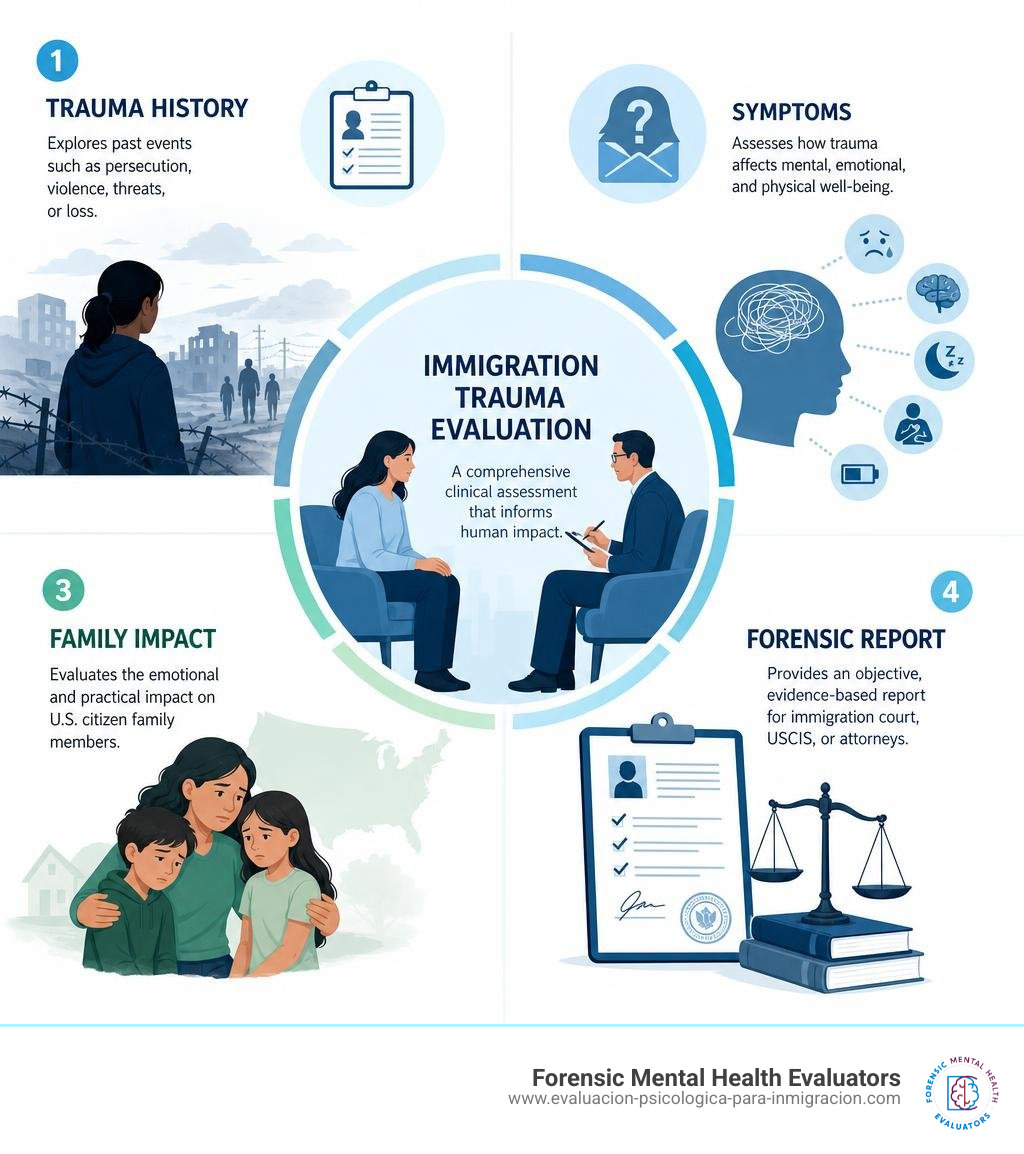
A trauma evaluation immigration report is a forensic mental health assessment that documents how trauma, family separation, persecution, violence, or other severe stressors affect a person and, in some cases, their U.S. citizen relatives. It gives an immigration court, USCIS, or attorney objective clinical evidence - not a legal decision - about symptoms, functioning, and psychological harm.
For a parent or spouse facing removal, this may include evidence of the emotional and practical hardship a U.S. citizen child or partner could experience if the family is separated or forced to relocate. In asylum and other humanitarian cases, it can also explain why a survivor may struggle to describe traumatic events in a neat, fully chronological way.
Trauma is common among displaced people. Research estimates that about 1 in 10 adult refugees in Western countries experiences PTSD, while a review of refugee studies found an estimated 36% had survived torture. These experiences can affect memory, concentration, sleep, trust, emotional control, and the ability to speak about painful events.
A strong evaluation does not decide whether someone is "credible" or legally qualifies for relief. Instead, it carefully describes whether the person's symptoms, behavior during the interview, and reported history are clinically consistent with trauma and current impairment.
I am Francisco Ortiz, a Certified Forensic Mental Health Evaluator and bilingual clinician who conducts trauma evaluation immigration assessments for hardship waivers, asylum matters, U and T visas, and immigration-court competency concerns. My work focuses on clear, evidence-based findings that help legal decision-makers understand the human impact behind an immigration case.
Core Competencies and Legal Frameworks in Trauma Evaluation Immigration
Conducting a trauma evaluation immigration assessment requires a specialized blend of clinical expertise, scientific knowledge, and legal awareness. While traditional mental health care focuses on therapeutic healing and client advocacy, forensic immigration evaluations operate within an administrative legal framework where objectivity, neutrality, and adherence to legal standards are paramount.
Evaluators must understand key legal benchmarks to ensure their reports effectively address psycholegal questions without overstepping their professional scope. In asylum cases, for instance, adjudicators assess whether an applicant has established a "well-founded fear" of persecution based on race, religion, nationality, membership in a particular social group, or political opinion. Standards such as the Mogharrabi test guide legal adjudicators in determining whether an applicant’s fear is both subjectively genuine and objectively reasonable.
To bridge clinical findings with international legal benchmarks, clinicians frequently refer to the Istanbul Protocol—the recognized international standard for documenting torture and ill-treatment. Furthermore, recent scientific research on adjudicating credibility highlights how objective mental health assessments substantiate severe psychological harm, bridging the gap between clinical presentation and legal standards.
Understanding Core Competencies in Trauma Evaluation Immigration
Executing an ethically sound and scientifically defensible Immigration Forensic Evaluation requires core cross-specialty competencies:
- Clinical Assessment & Diagnosis: Expertise in applying diagnostic criteria (e.g., DSM-5-TR) for post-traumatic stress disorder (PTSD), major depressive disorder (MDD), anxiety, and somatic distress, while accounting for cultural idioms of distress.
- Forensic Methodology & Objectivity: Maintaining an impartial, non-advocacy stance, conducting response style analyses, and avoiding legal conclusions reserved exclusively for judges and USCIS officers.
- Multicultural & Migration Knowledge: Understanding the sociopolitical realities of origin countries, pre-migration trauma, transit hazards, and post-migration systemic stressors.
- Psycholegal Reasoning: Translating psychological diagnoses into clear explanations of functional impairment, memory barriers, or severe hardship relevant to specific legal statutes.
- Expert Report Writing: Drafting comprehensive, unambiguous affidavits that articulate clinical observations, evaluation protocols, diagnostic reasoning, and limitations for legal readers.
Legal Expectations vs. Memory Neurobiology in Trauma Evaluation Immigration
A fundamental challenge in immigration proceedings is the deep conflict between legal expectations of narrative consistency and the scientific reality of trauma-affected memory. Adjudicators often expect applicants to present clear, linear, and perfectly chronological accounts of past persecution. However, modern neurobiology demonstrates that severe psychological trauma alters brain structures—particularly the prefrontal cortex, hippocampus, and amygdala—thereby impairing autobiographical memory formation and retrieval.
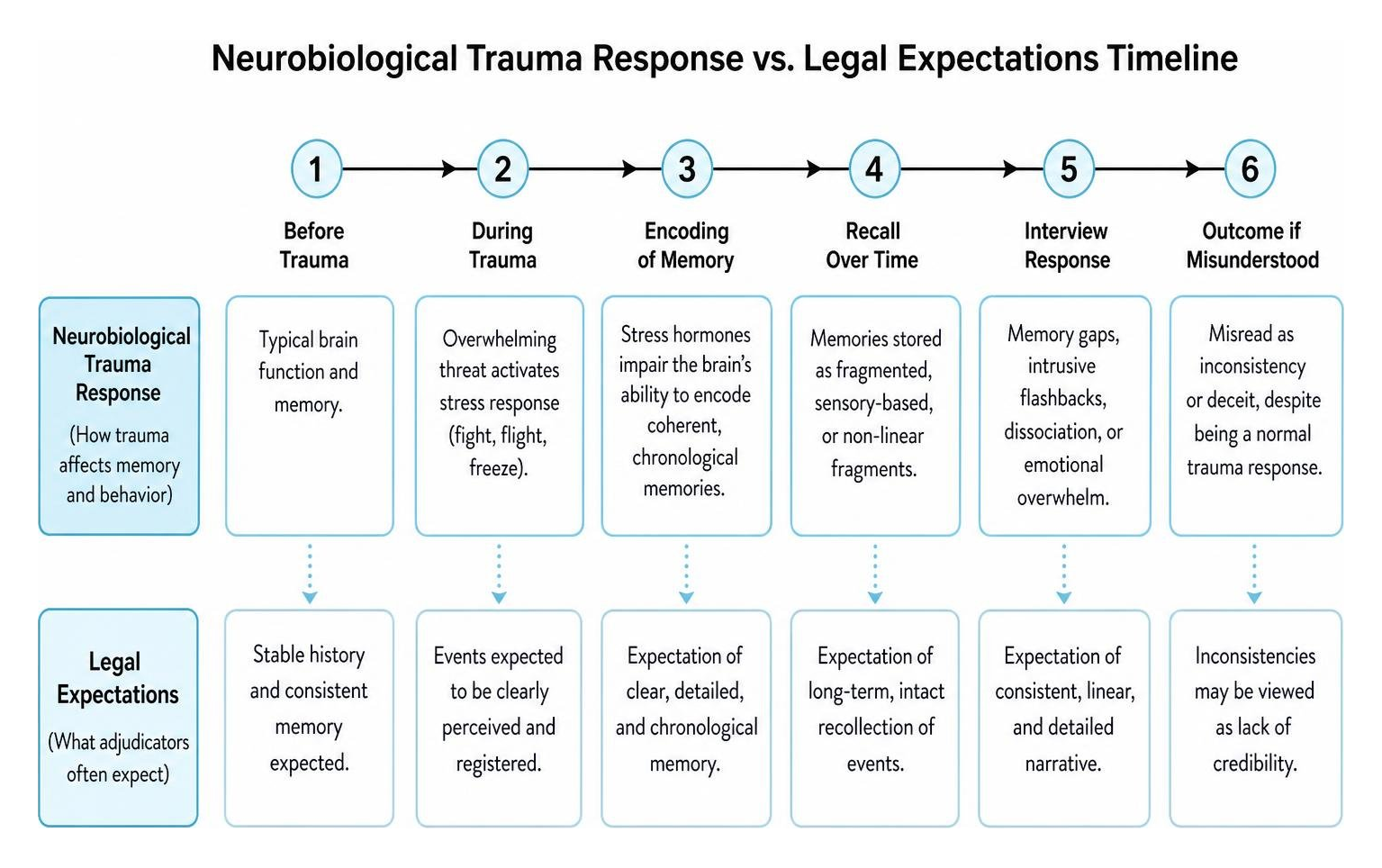
During traumatic events, elevated stress hormones disrupt the brain's ability to encode cohesive, chronological memories. Instead, memories are frequently stored as fragmented, sensory-based, or non-linear fragments. When asked to recall these events years later, survivors may experience memory gaps, intrusive flashbacks, or dissociation.
According to a comprehensive study on trauma narratives in legal proceedings, symptoms of PTSD—such as intrusive dissociation, memory fragmentation, emotional avoidance, and intense shame—frequently lead to narrative omissions or delayed disclosures. Rather than indicating deceit, these narrative discrepancies are natural neurobiological symptoms of severe trauma. Forensic evaluators serve an essential educational role in documenting how an applicant's psychological profile aligns with known clinical patterns of trauma recall.
Clinical Best Practices for Trauma Assessment Across Stressors

Creating a safe, non-retraumatizing interview environment is essential for conducting a valid trauma evaluation immigration assessment. Evaluators must structure the physical and emotional space to minimize triggers that mimic past interrogation, detention, or abuse. Interviews should take place in private, well-lit, quiet spaces, with clear physical boundaries and freedom to request breaks at any point.
Clinicians evaluating candidates for a Psychological Evaluation for Asylum Case or a Psychological Evaluation for VAWA Case must carefully balance the need for detailed forensic documentation with the duty to minimize emotional harm. When signs of severe distress or dissociation occur, evaluators should pause, validate the evaluee's feelings, offer grounding exercises, and resume questioning only when the individual is emotionally regulated.
Assessing High-Impact Stressors and Narrative Construction
Immigration evaluations often involve individuals who have survived extreme traumatic stressors, including physical torture, political detention, human trafficking, abduction, and gender-based violence. A review of 55 studies on refugee populations indicates that an estimated 36% of refugees have experienced torture in their origin countries. Additionally, studies show that up to 80% of asylum-seeking women report gender-based violence, with more than one-third citing it as their main reason for seeking protection.
When documenting these experiences, clinicians should refrain from aggressive cross-examination, focusing instead on semi-structured, trauma-informed interview techniques:
- Physical Torture & Abuse: Carefully record reported physical mechanisms and correlate them with observed somatic complaints or physical scarring in alignment with Istanbul Protocol guidelines.
- Sexual & Gender-Based Violence: Account for deep cultural shame and fear of community ostracization, which routinely cause survivors to minimize or delay disclosing sexual trauma until trust is established.
- Human Trafficking & Coercive Control: Document patterns of psychological manipulation, debt bondage, forced isolation, and threats against family members.
- Narrative Synthesis: Integrate memory fragments into a respectful narrative "portraiture" that accurately reflects the evaluee's authentic voice and psychological symptoms without exaggerating or minimizing their experiences.
Groundbreaking research on forensic witnessed trauma demonstrates that systematic forensic assessments offer impartial, objective documentation that validates survivor experiences in legal settings.
Navigating Language Dynamics and Interpreter Management
When evaluating non-English-speaking evaluees, working with qualified interpreters is critical to achieving diagnostic accuracy. Evaluators should avoid using family members or friends, as their presence can compromise confidentiality, introduce bias, or inhibit the evaluee from disclosing sensitive trauma, such as domestic or sexual abuse.
Clinicians and interpreters should adhere to clear operational standards:
- Verbatim Translation: Interpreters must translate word-for-word in the first person, avoiding summarizing, filtering, or modifying the evaluee's statements.
- Cultural Brokering: Evaluators and interpreters must collaborate to contextualize cultural idioms of distress (e.g., describing anxiety or depression as "weak nerves" or "sinking of the heart") without altering clinical meaning.
- Pre-Evaluation Briefings: Review evaluation protocols, boundary expectations, and emotional safety plans with the interpreter before beginning the clinical interview.
- Neutrality and Concordance: Ensure the interpreter’s gender, dialect, and political/social background do not create discomfort or trust barriers for the evaluee.
Navigating Forensic Objectivity, Ethics, and Credibility Analysis

A fundamental ethical challenge in immigration assessments is managing the distinction between clinical treatment and forensic evaluation. In a therapeutic context, the clinician’s primary goal is healing, support, and client advocacy. In contrast, a forensic mental health evaluator must maintain strict neutrality, serving as an objective expert witness for the tribunal or court.
| Feature / Dimension | Clinical Treatment Focus | Forensic Evaluation Role |
|---|---|---|
| Primary Goal | Symptom reduction, healing, and client advocacy | Objective assessment and psycholegal clarification |
| Primary Beneficiary | The patient/client | The court or legal adjudicator |
| Role Perspective | Supportive, empathetic, therapeutic ally | Neutral, objective, evidence-based examiner |
| Data Reliance | Subjective self-report and clinical narrative | Multi-source data, collateral records, response style analysis |
| Scope of Findings | Treatment plan and clinical progress reports | Forensic report addressing specific legal criteria |
To maintain objectivity during an Immigration Mental Health Evaluation, evaluators must avoid advocacy language (such as asserting that an applicant "deserves asylum" or "is entirely trustworthy"). Ultimate legal findings rest solely with the adjudicator. Evaluators evaluate psychological consistency by assessing whether reported symptoms, clinical presentation, collateral records, and test data align with recognized diagnostic frameworks.
When assessing response styles, clinicians should evaluate potential malingering, exaggeration, or defensive underreporting. Evaluees facing deportation or seeking asylum may underreport psychological distress due to cultural shame or a desire to appear strong, while others may exaggerate symptoms out of acute anxiety. By utilizing collateral medical records, standardized assessment measures, and careful clinical observation, evaluators provide balanced, scientifically grounded reports.
Preventing Evaluator Burnout and Vicarious Traumatization
Evaluating severe trauma—such as torture, human trafficking, and child abuse—presents significant psychological demands for clinicians. Studies show that secondary traumatization affects a substantial percentage of professionals working closely with refugee trauma survivors.
To maintain professional performance and long-term well-being, evaluators should adopt active vicarious trauma management strategies:
- Structured Peer Consultation: Participate regularly in peer review groups to discuss challenging cases, evaluate diagnostic conclusions, and monitor countertransference.
- Workload Management: Limit the number of intensive trauma evaluations conducted per month to ensure sufficient time for reflection and recovery.
- Continuing Education: Engage in ongoing training on trauma-informed practices, forensic methodology, and self-care strategies.
- Recognizing Vicarious Resilience: Drawing professional strength and perspective from observing the remarkable resilience, endurance, and courage displayed by immigrant families.
Frequently Asked Questions About Immigration Trauma Evaluations
How does a trauma evaluation impact an immigration case grant rate?
Forensic mental health evaluations significantly strengthen immigration claims by providing objective clinical evidence of trauma and functional impairment. Empirical research demonstrates a clear link between expert evaluations and positive case outcomes:
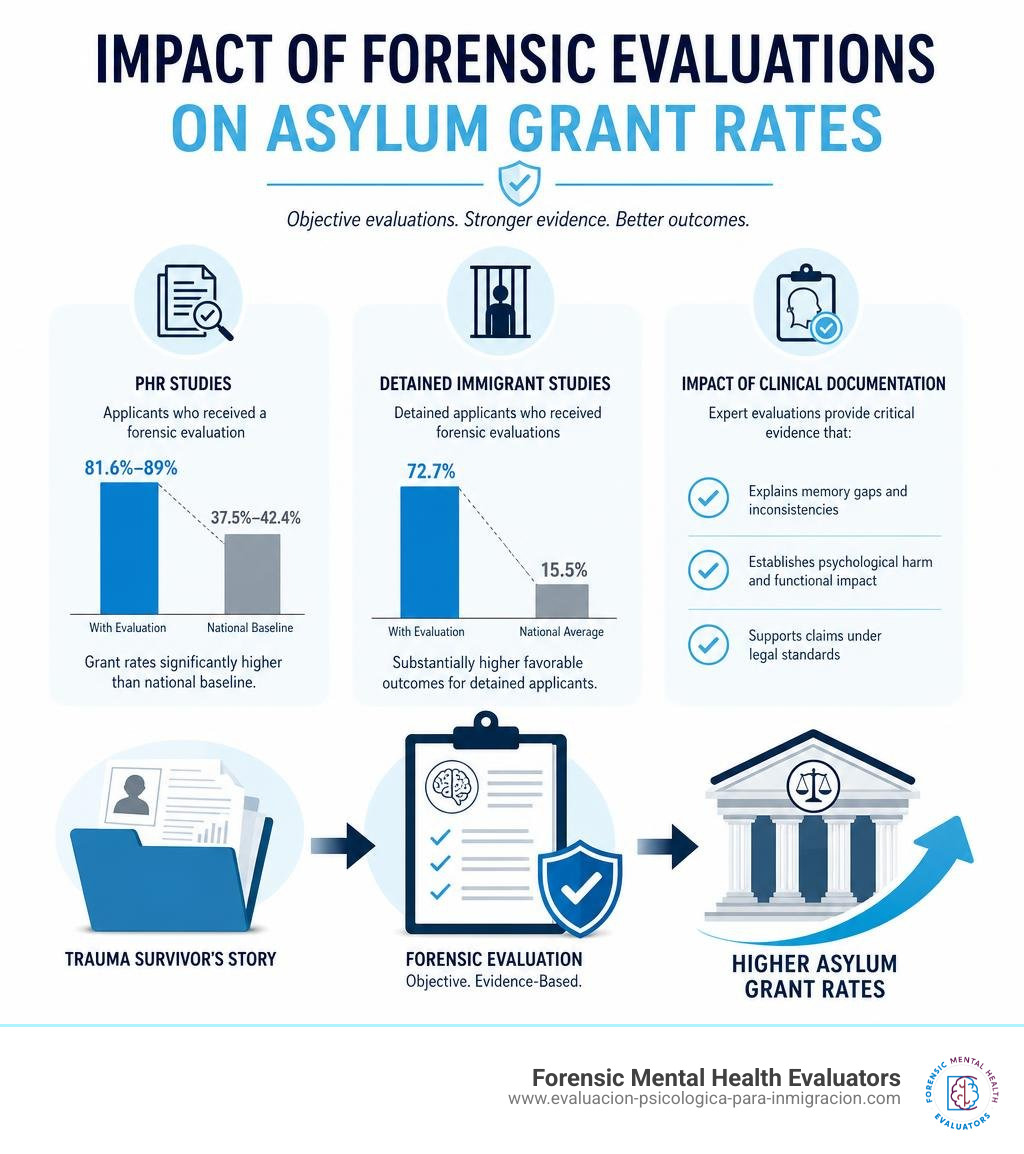
- Physicians for Human Rights (PHR) Studies: Research analyzing thousands of asylum cases found that applicants who received a forensic evaluation achieved grant rates between 81.6% and 89%, compared to national baseline grant rates ranging from 37.5% to 42.4%.
- Detained Immigrant Studies: Detained applicants who received forensic medical or psychological evaluations obtained favorable legal outcomes in 72.7% of cases, compared to a national average of just 15.5% for detained individuals overall.
- Impact of Clinical Documentation: An expert evaluation offers clinical contextualization for memory gaps, establishes psychological harm, and substantiates claims under an official Empirical study on forensic examinations impact. For a complete overview of case requirements, consult our Immigration Evaluations Complete Guide 2026.
Why do trauma survivors struggle with consistent narratives in immigration court?
Trauma survivors frequently experience narrative inconsistencies, memory gaps, or delayed disclosures due to the neurobiological effects of trauma on memory processing:
- Memory Fragmentation: Severe stress disrupts normal memory encoding in the prefrontal cortex and hippocampus, leading to disjointed, non-linear recall rather than a neat chronological sequence.
- PTSD and Avoidance: Individuals with PTSD often actively avoid traumatic memories to prevent overwhelming intrusive thoughts, panic, or emotional distress.
- Dissociation: During high-stress questioning, survivors may experience emotional numbing or depersonalization, causing their testimony to appear flat, detached, or fragmented.
- Cultural Shame & Stigma: Experiences involving sexual assault, domestic violence, or torture carry intense cultural stigma, often leading survivors to withhold painful details until they feel entirely secure.
What qualifications should a clinician have to perform immigration evaluations?
Clinicians conducting immigration evaluations should possess:
- Active Mental Health Licensure: Be a licensed mental health professional (e.g., Clinical Psychologist, LCSW, LPC, LMFT) authorized to diagnose and treat mental illness.
- Specialized Forensic & Trauma Training: Advanced training in forensic assessment, trauma-informed evaluation protocols, and standardized diagnostic tools.
- Cross-Cultural Competency: Demonstrated experience working with culturally diverse populations, managing language interpreters, and understanding cultural idioms of distress.
- Knowledge of Immigration Legal Frameworks: Clear understanding of psycholegal standards for asylum, hardship waivers, VAWA, U/T visas, and cancellation of removal.
Conclusion
A comprehensive trauma evaluation immigration report serves as a vital bridge between trauma science and legal adjudication. By documenting symptoms, memory barriers, and the psychological impact of persecution, expert evaluators ensure that legal adjudicators evaluate non-linear narratives and emotional distress through an informed clinical lens.
At District Counseling, we provide specialized, bilingual forensic mental health evaluations across major Texas metropolitan areas—including Houston, Katy, Cypress, Sugarland, Austin, Dallas, and San Antonio—as well as across Florida, California, New York, Utah, Virginia, and Idaho. Our team offers evaluations in Spanish and English, prioritizing client comfort, forensic precision, and objective documentation. Furthermore, we support every client's healing journey by including six complimentary therapy sessions following report completion.
Whether assessing extreme hardship, asylum claims, or petitions under a Psychological Evaluation for VAWA Case, our mission remains clear: providing objective, scientifically grounded evaluations that illustrate the true human experience behind every immigration case.