
Navigate Court-Ordered Psychological Testing Without the Stress
What to Expect From a Psychological Evaluation for Court

A psychological evaluation for court is a structured assessment that gives a judge, immigration officer, or other legal decision-maker objective mental health information relevant to a legal question. It is not therapy, and the evaluator's role is to assess facts, not take sides.
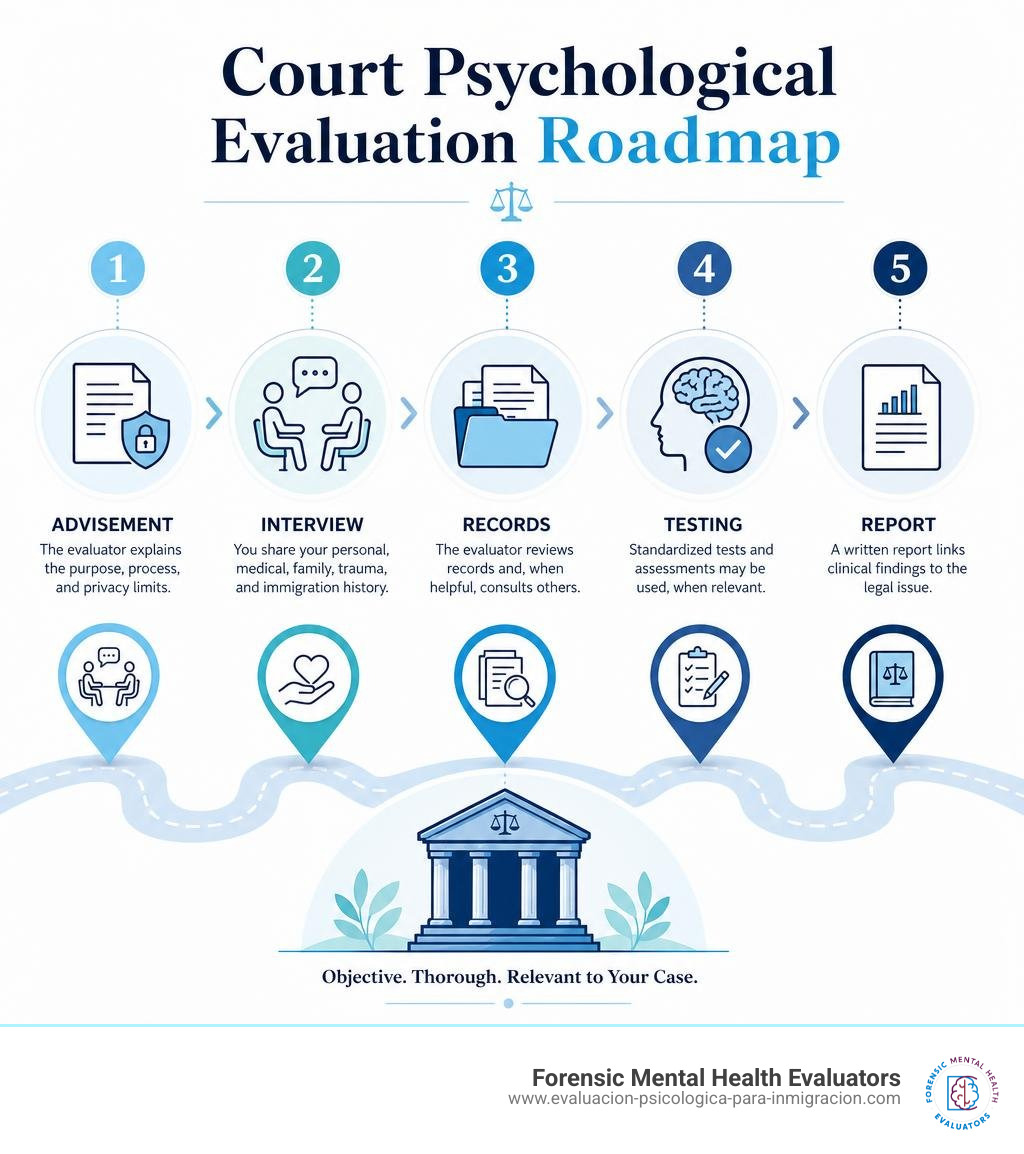
For an immigration hardship case, the evaluation may document how deportation or family separation could affect a U.S. citizen spouse or child. Expect the evaluator to:
- Explain the purpose of the assessment and its privacy limits.
- Ask about your personal, medical, family, trauma, and immigration history.
- Review supporting records and, when helpful, speak with family members or other informed people.
- Write a report that connects clinical findings to the legal issue in your case.
It is normal to feel worried, especially when your family's future is at stake. The best preparation is simple: bring complete records, answer honestly, and ask your attorney or evaluator what the court or immigration process specifically requires.
I am Francisco Ortiz, a Certified Forensic Mental Health Evaluator who conducts psychological evaluation for court matters, with focused experience in immigration hardship, asylum, U-Visa, T-Visa, and immigration-court competency evaluations. I provide trauma-informed, culturally aware assessments and bilingual support for Spanish-speaking clients navigating high-stakes legal cases.
Understanding the Purpose of a Psychological Evaluation for Court
Navigating legal proceedings can feel overwhelming, especially when the legal system orders an assessment of your mental health. Many individuals confuse a forensic evaluation with a routine counseling session. While traditional psychotherapy focuses on personal healing and unconditional positive regard, a forensic psychological assessment serves an entirely distinct function: answering a specific legal question for a trier of fact (such as a judge or jury).
As outlined in the Reference Guide on Mental Health Evidence, clinical and forensic contexts differ fundamentally in terms of purpose, confidentiality, and data collection. An expert psychological evaluation requires strict objectivity, multi-source verification, and a clear legal nexus linking mental health symptoms directly to the statutory issue at hand.
| Feature | Clinical Therapy | Forensic Psychological Evaluation |
|---|---|---|
| Primary Goal | Treatment, symptom reduction, and healing | Objective fact-finding for legal decision-makers |
| Client Relationship | Collaborative, therapeutic, supportive | Neutral, detached, evaluative |
| Confidentiality | Protected by strict doctor-patient privilege | Waived/limited; findings submitted to court |
| Scope of Data | Relies primarily on client self-report | Multi-source: psychometrics, records, collateral interviews |
| Final Product | Treatment plans and clinical progress notes | Legally admissible forensic psychological report |
Competency to Stand Trial and Criminal Responsibility
In criminal proceedings, courts must ensure that defendants are mentally capable of participating in their own defense. In the United States, adjudicative competence evaluations have grown significantly over the decades—from an estimated 25,000 to 36,000 annual evaluations in 1973 up to 50,000 to 60,000 annual evaluations in modern estimates.
The foundational constitutional standard stems from Dusky v. United States (1960), which mandates that a defendant must have:
- A sufficient present ability to consult with their attorney with a reasonable degree of rational understanding.
- A rational as well as factual understanding of the proceedings against them.
Under Pate v. Robinson (1966) and Drope v. Missouri (1975), a court is constitutionally obligated to halt trial proceedings and order a competency assessment whenever there is a "bona fide doubt" regarding the defendant's mental fitness. Furthermore, Cooper v. Oklahoma (1996) established that states cannot impose an excessively burdensome standard, such as "clear and convincing evidence," on a defendant trying to prove incompetency; the standard is a preponderance of the evidence.
As detailed in the AAPL Practice Guideline for Competence to Stand Trial, evaluators must assess present mental capacity rather than retrospective state of mind, distinguish between factual versus rational understanding, and determine whether restorability is feasible through treatment.
Family Law, Child Custody, and Civil Litigation
In family and civil courts, evaluations address distinct psycho-legal questions:
- Child Custody Determinations: Family courts prioritize the "best interests of the child." Evaluators assess parental mental fitness, emotional stability, and direct parent-child interactions to assist judges in establishing custody arrangements.
- Independent Mental Examinations (Rule 35): In civil injury claims or workplace discrimination lawsuits where an individual claims severe emotional distress or psychological trauma, an evaluation objectively measures functional impairment and verifies the psychological harm claimed.
Immigration Proceedings and Hardship Claims
Immigration law frequently relies on specialized psychological assessments to document emotional, cognitive, and trauma-related factors. Whether facing removal hearings or submitting administrative petitions, objective clinical evidence provides essential context for immigration judges and officers.
Key immigration matters requiring psychological assessments include:
- Extreme Hardship Waivers (Form I-601/I-601A): Documenting the catastrophic emotional, medical, and psychological impact on a qualifying U.S. citizen or lawful permanent resident spouse or parent if the applicant is deported.
- Violence Against Women Act (VAWA) Petitions: Establishing the psychological consequences of domestic abuse, battery, or extreme cruelty.
- U-Visa and T-Visa Applications: Documenting the severe physical or mental abuse suffered by victims of qualifying crimes or human trafficking.
- Immigration Court Hearings: Utilizing an asylum cancellation psych evaluation or a cancellation of removal psych eval to establish relief eligibility before the Executive Office for Immigration Review during EOIR immigration court proceedings.
The Multi-Stage Forensic Assessment Process
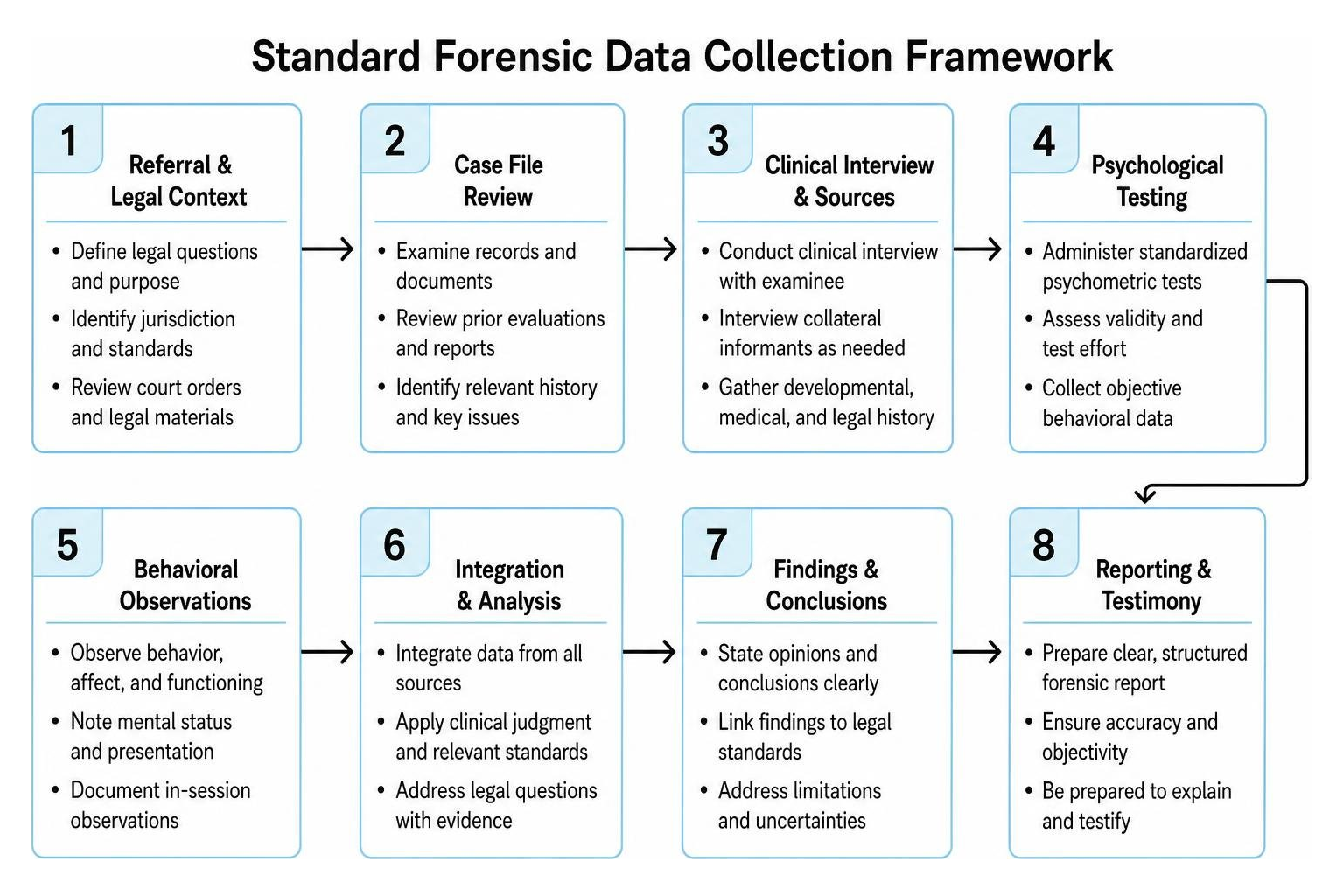
Forensic assessments follow structured, empirical methodologies to ensure legal defensibility. When establishing trial competency or evaluating civil capacity, evaluators rely on standardized guidelines such as the WA Forensic Evaluation Report Guidelines.

Intake Advisement and Limits of Confidentiality
The evaluation begins with formal forensic advisement. Unlike therapy, where confidentiality is protected, the evaluator must disclose:
- The exact legal mandate and purpose of the evaluation.
- Who will receive the final written findings (the judge, attorneys, or immigration officers).
- The absence of traditional doctor-patient privilege.
- Fifth Amendment protections against self-incrimination in criminal matters.
- That non-cooperation or refusal to participate will be documented in the formal report.
Clinical Interviews and Psychometric Testing Batteries
The clinical interview typically lasts 1 to 2 hours (or longer in complex cases), covering developmental history, psychosocial background, trauma exposure, and a Mental Status Examination (MSE).
Standardized psychological testing sessions usually span 2 to 6 hours across one or more appointments. Evaluators select validated psychometric batteries based on the referral question:
- Personality and Symptom Inventories: Minnesota Multiphasic Personality Inventory (MMPI-3) or Personality Assessment Inventory (PAI) to identify psychiatric conditions, emotional distress, and response styles.
- Cognitive and Intellectual Functioning: Wechsler Adult Intelligence Scale (WAIS-IV) to assess cognitive capacity, learning ability, and IQ.
- Symptom Validity and Effort Testing: Tools like the Test of Memory Malingering (TOMM) to confirm genuine effort and rule out feigning or symptom exaggeration.
Reviewing Collateral Records and Third-Party Informants
Because evaluees in legal contexts may have incentives to minimize or exaggerate symptoms, evaluators must cross-reference self-reports with third-party data:
- Medical, psychiatric, and hospital records.
- Academic transcripts and Individualized Education Programs (IEPs).
- Criminal history, police incident reports, and discovery documentation.
- Collateral interviews with family members, educators, or previous healthcare providers.
Forensic Report Writing and Expert Testimony
Once all data is collected, the clinician synthesizes the findings into a comprehensive forensic psychological report. As outlined in our immigration psychological evaluations guide, an effective report clearly outlines diagnostic formulations, functional legal capacities, and concrete clinical conclusions. If needed, the evaluator provides expert testimony and defends the methodology during cross-examination.
Managing Preparation, Timelines, and Financial Factors
Understanding administrative requirements, pricing structures, and evaluation timelines helps eliminate uncertainty. For clinicians and attorneys seeking a deep dive into statutory standards, the Forensic Handbook for Mental Health Professionals remains an essential reference across civil, criminal, and federal venues.

How to Prepare for a Psychological Evaluation for Court
Preparation is about organization and calm transparency rather than memorizing "correct" answers:
- Gather Comprehensive Records: Collect prior psychiatric records, medical summaries, academic files, and legal documents beforehand. You can review a sample immigration evaluation review to see how background documentation integrates into forensic findings.
- Create a Life Timeline: Write out major life milestones, traumatic incidents, medical diagnoses, and symptom onset dates to keep your interview focused.
- Practice Emotional Authenticity: Do not attempt to present an overly "perfect" image or downplay past struggles. Standardized testing instruments are designed to detect defensiveness, and minimization can undermine credibility.
- Rest and Prepare: Ensure adequate sleep, bring corrective eyewear or hearing aids if required, and arrive on time.
What Does a Psychological Evaluation for Court Cost and Who Pays?
Forensic mental health evaluations represent specialized clinical-legal work. Consequently:
- Hourly Rates: Professionals conducting these evaluations typically charge hourly rates ranging from $100 to $400 or more.
- Total Cost Range: Total costs typically run from a few thousand dollars up to over $10,000 for highly complex, multi-day civil or criminal cases.
- Responsibility for Payment: In private civil, family, or immigration matters, the evaluee or retaining party pays for the evaluation directly. In criminal court appointments, such as under Idaho Code 19-2522 assessment standards, public funds may cover evaluation costs if the defendant meets statutory indigency requirements; otherwise, the defendant bears financial responsibility. Health insurance policies generally do not cover court-ordered evaluations because they are legal assessments rather than medically necessary therapeutic treatments.
Expected Evaluation Timelines and Report Turnaround
Completing a court-ordered psychological assessment takes several weeks from the initial appointment to the delivery of the final signed report:
- Intake & Interviewing: 1 to 3 hours.
- Testing Batteries: 2 to 6 hours.
- Scoring, Collateral Analysis & Drafting: 10 to 20+ hours of clinician analysis.
- Total Turnaround: Reports are generally delivered to legal counsel or the court within 2 to 4 weeks following the final testing session, though expedited timelines can sometimes be accommodated for upcoming court dates.
Frequently Asked Questions About Court Psychological Evaluations
Are court-ordered psychological evaluations confidential?
No. Traditional doctor-patient confidentiality does not apply to forensic evaluations. The findings, psychometric test scores, diagnostic summaries, and clinical opinions are compiled into a formal report submitted directly to the judge, attorneys, or government adjudicators. The evaluator must explicitly notify you of these disclosure rules prior to beginning the interview.
What happens if someone refuses a court-ordered evaluation?
Refusing to comply with a court-mandated evaluation can carry serious legal consequences. In civil or family cases, the court may draw an adverse inference against the non-cooperating party or dismiss their claims. In criminal proceedings, refusal can result in contempt of court charges or prolonged detention while competency is resolved. The clinician will note any refusal or lack of cooperation directly in the report.
Can an evaluee receive direct clinical feedback after the assessment?
Typically, no. Unlike standard therapeutic assessments where clients attend a dedicated feedback session to review test results, a forensic evaluator's primary duty is to the requesting court, attorney, or adjudicating body. The finished report is delivered directly to the retaining legal counsel or the court clerk, who will review the findings with you within the context of your legal strategy.
Conclusion: Navigating Your Legal Evaluation with Confidence
Undergoing a court-mandated psychological evaluation can feel daunting, but understanding the legal standards, assessment stages, and testing instruments removes the uncertainty. When you approach the process with organized documentation and open honesty, the evaluation serves as an objective tool to present your psychological reality clearly to the court.
At District Counseling, we offer compassionate, trauma-informed, and culturally sensitive forensic mental health assessments across Texas (including Houston, Katy, Cypress, Sugarland, Austin, Dallas, and San Antonio) and in authorized jurisdictions including Florida, California, New York, Utah, Virginia, and Idaho. We provide complete Spanish-language evaluations translated into court-ready English documents, ensuring comfort for immigrant families and individuals facing critical legal proceedings. Contact us today to schedule your confidential consultation and learn more about our comprehensive assessment services.