
Find a Qualified Psychological Evaluator in Texas
Understanding How to Get a Psychological Evaluation in Texas

A psychological evaluation in Texas is an in-depth clinical assessment that combines structured interviews, medical history reviews, and objective psychometric tests. It helps diagnose mental health conditions, clarify cognitive functioning, and provide formal documentation for medical procedures or legal cases like immigration hardship waivers.
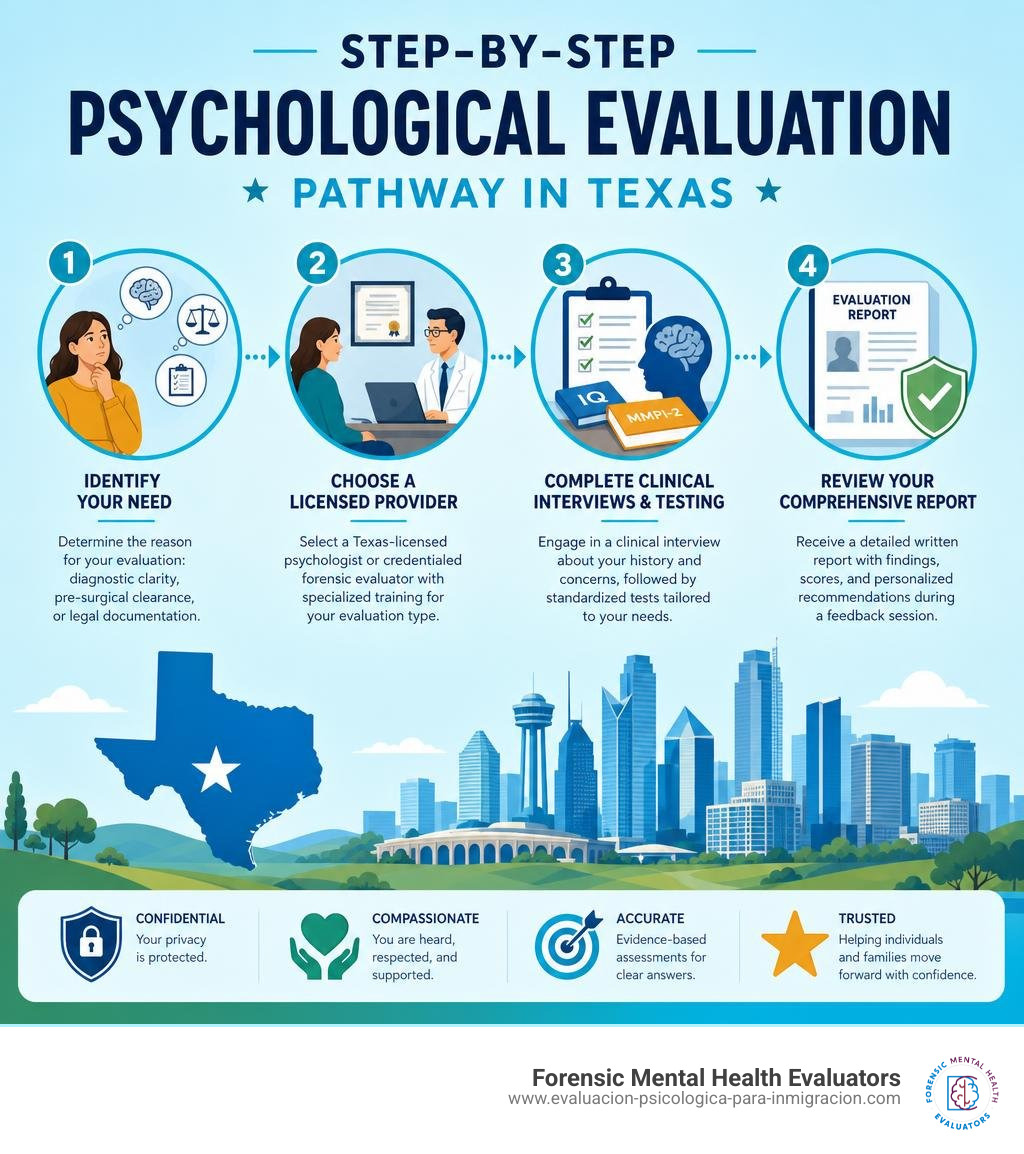
To complete an evaluation in Texas:
- Identify your specific need: Determine whether you need testing for diagnostic clarity (such as ADHD or trauma), pre-surgical clearance, or legal evidence for court or immigration proceedings.
- Choose a licensed provider: Select a Texas-licensed psychologist or credentialed forensic mental health evaluator with specialized training in your specific evaluation type.
- Complete clinical interviews and testing: Participate in an intake session covering your background history, followed by standardized psychological test batteries.
- Review your comprehensive report: Receive a formal, written evaluation outlining diagnostic findings, clinical scores, and personalized recommendations during a feedback session.
I am Francisco Ortiz, a Certified Forensic Mental Health Evaluator specializing in trauma-informed assessments and legal proceedings. With extensive experience conducting each type of psychological evaluation Texas courts and immigration authorities require, I help individuals and families document their mental health needs with clarity and diagnostic precision.
What to Expect from a Psychological Evaluation in Texas
Navigating a formal clinical assessment does not have to feel overwhelming. When we conduct comprehensive evaluations across our locations—whether in Houston, Katy, Cypress, or Sugar Land—our priority is creating a supportive, transparent environment where you feel heard and respected from start to finish.
A thorough psychological evaluation follows strict diagnostic standards established in the Diagnostic and Statistical Manual of Mental Disorders (DSM-5). Unlike a casual discussion or a brief online screening quiz, an evaluation is a multi-step clinical process designed to measure emotional, cognitive, and personality patterns with objective precision.
Clinical Intake and Objective Psychometric Testing
The assessment journey starts with a comprehensive intake interview. During this stage, we explore your personal background, developmental milestones, medical background, family dynamics, and educational or occupational history. We want to understand what brought you in and how specific challenges affect your daily life.
Following the clinical interview, we administer standardized psychometric instruments tailored to your referral question. These tools may evaluate:
- Cognitive and Executive Functioning: Assessing working memory, processing speed, sustained attention, and problem-solving abilities.
- Emotional and Mood Functioning: Measuring levels of depression, anxiety, trauma responses, panic, or obsessive-compulsive tendencies.
- Personality and Behavioral Patterns: Identifying underlying structural traits, coping styles, and defense mechanisms using validated objective measures.
Every standardized test provides reliable psychometric data. Completing a structured Psychological Evaluation allows us to compare individual scores against established normative samples, ensuring an objective, unbiased clinical baseline.
Diagnostic Clarification, Report Writing, and Feedback
Once all testing is finished, the real detective work begins. We score and analyze the assessment batteries, cross-referencing objective scores with clinical observations and your reported history. This thorough data integration enables us to formulate an accurate differential diagnosis, distinguishing between overlapping issues—such as separating complex trauma from ADHD or bipolar mood swings from borderline personality traits.
Next, we compile the results into a formal Psychological Report. This comprehensive clinical document outlines:
- Relevant psychosocial, educational, and medical background
- Exact names of psychometric instruments administered
- Standardized test scores and clinical interpretations
- DSM-5 diagnostic formulations
- Concrete, tailored recommendations for ongoing therapy, medical care, academic accommodations, or legal proceedings
Finally, we meet for a dedicated feedback session. We walk through the findings step by step, answer every question, and discuss immediate next steps so you have absolute clarity on your path forward.

Mental Health Assessment vs. Psychological Evaluation
People often use the terms "mental health assessment" and "psychological evaluation" interchangeably, but in Texas clinical practice and legal settings, they serve distinct purposes. Choosing the correct assessment format saves you valuable time, prevents unnecessary expenses, and ensures your documentation meets exact clinical or legal requirements.
| Feature | Mental Health Assessment | Comprehensive Psychological Evaluation |
|---|---|---|
| Primary Scope | Broad clinical screening for common mood and anxiety issues | In-depth testing of cognitive, personality, and emotional structures |
| Testing Tools | Symptom rating scales and brief diagnostic interviews | Standardized, normed psychometric test batteries and clinical interviews |
| Evaluation Duration | 1 to 2 hours total | 4 to 10+ hours across intake, testing, scoring, and analysis |
| Report Length | Typically 2 to 4 pages | Thorough 10 to 25+ page diagnostic or forensic report |
| Typical Cost Range | Lower cost (approx. $300 to $600 or free via LMHA) | Comprehensive private fee (typically $1,500 to $3,000+) |
| Primary Use Cases | Case management, therapy intake, probation dismissal | Differential diagnosis, neurodiversity, court, pre-surgery, immigration |
Diagnostic Scope, Personality Screening, and Legal Viability
A mental health assessment is essentially a snapshot. It is designed to screen for immediate concerns like generalized anxiety, mild depression, or situational stress. These assessments are commonly used by community clinics, Employee Assistance Programs (EAPs), or probation departments to demonstrate general due diligence before closing a case.
In contrast, a comprehensive psychological evaluation is a high-resolution portrait. It dives beneath surface symptoms to evaluate complex personality pathology—such as narcissistic, paranoid, or antisocial patterns—while measuring underlying cognitive impairments. Because psychological evaluations generate reports that are three to four times longer and backed by standardized data, they hold substantial evidentiary weight in high-stakes environments like immigration courts, child custody matters, and criminal proceedings. In legal contexts, relying on an informal screening instead of a full forensic evaluation can leave your case vulnerable to challenge.
Free Public Assessments and LMHA Support via 2-1-1
Texas provides essential public resources for individuals who require mental health screenings but face severe financial limitations. Texas residents aged 18 and older are eligible for a free mental health assessment through their regional Local Mental Health Authority (LMHA) or Local Behavioral Health Authority (LBHA), funded via Texas Health and Human Services.
To find your designated regional authority:
- Dial 2-1-1 on your phone (the Texas Health and Human Services directory line) and ask for the local mental health authority serving your county.
- Contact the intake division of your regional LMHA to schedule an initial screening.
- Present required documentation at your appointment, such as a state-issued ID, proof of Texas residence, and income verification.
While LMHAs provide vital public safety-net screenings, they generally focus on community treatment placement rather than specialized private-pay forensic reports, detailed immigration hardship documentation, or pre-surgical clearances.

Specialized Clinical, Pre-Surgical, and Forensic Evaluations
Specialized evaluations require clinical expertise matched to the specific questions being asked by medical boards, school systems, or legal bodies.
Diagnostic Testing and Psychological Evaluation in Texas for Adults
Many adults spend years struggling with unexplained mental fatigue, chronic procrastination, or emotional dysregulation without knowing the underlying cause. What looked like basic anxiety during college might actually be undiagnosed adult ADHD or an unaddressed trauma response.
When conducting an adult diagnostic evaluation, our clinicians systematically separate overlapping conditions. A consultation with an experienced Clinical Psychologist in Dallas TX or our evaluators across Texas helps clarify executive dysfunction, sensory processing difficulties, or mood disorders, providing a roadmap for targeted therapy, workplace adjustments, and daily executive functioning strategies.
Child and Adolescent Assessments and the CANS System
Evaluating children and teenagers requires an intentional, family-centered approach. In Texas public health systems, child and youth evaluations follow a structured two-phase format involving both an intake assessment and the standardized Child and Adolescent Needs and Strengths (CANS) tool.
State-funded youth assessments mandate that both the child and primary caregiver participate actively. For families navigating public education accommodations, it is important to understand that a clinical medical diagnosis made by an independent evaluator differs from educational eligibility determinations made by Texas school districts during ARD (Admission, Review, and Dismissal) meetings under federal special education laws.
Pre-Surgical Clearances, Court-Ordered Evaluations, and Immigration Cases
Beyond general diagnostics, three specialized evaluation categories require specific clinical protocols:
- Pre-Surgical Psychological Clearances: Surgeons and insurance providers routinely require psychological clearances prior to major procedures like bariatric weight-loss surgery, spinal cord stimulator implantations, and chronic pain interventions. These evaluations assess your emotional readiness, coping strategies, lifestyle adaptations, and social support systems to support successful long-term recovery.
- Court-Ordered and Law Enforcement Clearances: Forensic evaluations for child custody disputes, legal competence, or peace officer licensing require strict adherence to state standards. For example, law enforcement licensing follows the Texas Commission on Law Enforcement guidelines (TCOLE L-3 Declaration), which mandates at least two separate standardized psychometric instruments (one assessing normal personality traits and one measuring psychopathology) followed by a post-scoring, face-to-face clinical interview.
- Immigration Psychological Evaluations: Our practice at District Counseling focuses on clinical and forensic documentation for federal immigration proceedings, including U-Visas, VAWA petitions, T-Visas, Asylum claims, and Cancellation of Removal hardship cases. Completing an Immigration Mental Health Evaluation or an in-depth Evaluacion Forense de Inmigracion provides the detailed diagnostic evidence necessary to document extreme emotional, psychological, and physical hardship. To further support our clients throughout their legal journeys, we offer complete Spanish-to-English professional translation and include six free individual therapy sessions post-report.
Costs, Insurance Limits, and Finding the Right Provider
Understanding the financial and professional considerations involved in psychological testing helps you select the right provider for your situation.

Insurance Authorization, Medicaid Guidelines, and Private Pay Rates
Costs for psychological testing vary across Texas based on case complexity, clinician credentials, and the overall time required for testing and report writing. Standard adult psychological evaluations across private practices typically range between $1,500 and $3,000, with intensive child custody evaluations trending higher due to multi-party collateral interviews. Some specialized providers charge flat rates—such as standalone $800 ADHD/autism packages—covering intake, administration, scoring, and feedback.
If you plan to use health insurance or Medicaid, keep these key factors in mind:
- Medical Necessity Criteria: Commercial insurers and managed care plans like Texas Children's Health Plan require clinical proof that testing is medically necessary to resolve diagnostic ambiguity after standard treatments have failed.
- Service Exclusions: Standard health insurance plans specifically exclude evaluations conducted primarily for legal proceedings, child custody battles, employment fitness, or school placement requirements.
- Strict Utilization Caps: Under established Texas Medicaid testing limits, psychological testing is strictly capped at four hours per client per day and eight hours per client per calendar year without prior clinical authorization. Evaluators must submit precise CPT billing codes (such as 96130/96131 for evaluation services and 96136/96137 for test administration) to secure coverage.
Selecting the Right Specialist for a Psychological Evaluation in Texas
When choosing an evaluator, always verify their regulatory standing and experience in your specific evaluation type:
- Licensing and Board Verification: Confirm that your evaluator is licensed under the Texas Behavioral Health Executive Council (BHEC). Doctoral-level psychologists must complete extensive supervised clinical training and pass rigorous credentialing exams, including the Examination for Professional Practice in Psychology (EPPP licensing requirements require a $600 examination fee and passage within two years of board approval).
- Forensic Experience: If your evaluation will be presented in court or before USCIS, work with an evaluator who has specific forensic training. A poorly structured report can undermine your legal position.
- Language and Cultural Competence: Psychological testing must be culturally sensitive. If your primary language is Spanish, choose a practice that provides native-language testing, such as an Austin Spanish Immigration Evaluation, so nuances in your symptom reporting are captured accurately without translation loss.
Frequently Asked Questions About Texas Evaluations
How much does an evaluation typically cost in Texas?
A comprehensive private psychological evaluation in Texas typically costs between $1,500 and $3,000 depending on the scope of testing, clinical complexity, and report length. Basic mental health assessments usually range from $300 to $600, while specialized flat-fee evaluations for ADHD or autism are often available starting at $800 to $1,200.
Who is eligible for a free mental health assessment through the state?
Texas residents aged 18 and older can receive a free mental health assessment through their designated Local Mental Health Authority (LMHA) or Local Behavioral Health Authority (LBHA). These public assessments are funded through Texas Health and Human Services to evaluate service eligibility and create baseline treatment plans. You can locate your regional provider by calling 2-1-1.
How do clinical evaluations differ from school district testing?
A clinical psychological evaluation is performed by an independent licensed psychologist to identify DSM-5 medical diagnoses and guide clinical treatment or therapy. School district evaluations (Full and Individual Initial Evaluations, or FIIEs) are conducted by educational specialists solely to determine if a student meets Texas Education Agency criteria for special education services or Section 504 classroom accommodations. A medical diagnosis does not automatically guarantee school-based educational accommodations, though it provides critical documentation during ARD committee reviews.
Conclusion
Whether you are seeking clarity on a personal mental health condition, completing necessary medical clearance before surgery, or gathering vital documentation for an immigration petition, getting an accurate assessment is the most important first step.
At District Counseling, our specialized evaluators provide thorough, trauma-informed clinical and forensic evaluations across Texas, including Houston, Katy, Cypress, Sugar Land, Austin, Dallas, and San Antonio, as well as serving clients across Florida, California, New York, Utah, Virginia, and Idaho. We offer complete bilingual Spanish evaluations translated into English and provide six free individual therapy sessions following your report to support your long-term emotional well-being.
Schedule your consultation today by exploring our Evaluacion Psicologica para Inmigracion services, and take the first step toward getting the diagnostic clarity, legal support, and compassionate mental health care you deserve.