
Step-by-Step Guide to Obtener un Informe Psicológico para Inmigración
What is an informe psicologico inmigracion, and when is it needed?

To obtain an informe psicologico inmigracion, the essential steps are: 1) coordinate with your immigration attorney to define the legal purpose, 2) schedule appointments with a licensed forensic mental health evaluator, 3) complete clinical interviews and psychometric testing, and 4) receive a certified expert report for USCIS or immigration court.
A psychological report for immigration is a structured forensic evaluation that analyzes a person's mental health status, emotional impact, and psychosocial consequences within an immigration legal process. Unlike traditional therapy, where the primary goal is treatment and ongoing emotional support, this forensic evaluation has a diagnostic and evidentiary purpose. It provides USCIS officers (United States Citizenship and Immigration Services) and immigration judges with an objective clinical opinion that explains the causal connection between traumatic experiences, extreme hardship, and the psychological well-being of the applicant or qualifying family members.
The immigration process can create significant levels of stress, anxiety, and migratory grief. A thorough psychological evaluation for immigration helps translate complex personal experiences into technical, objective, and legally relevant language.
| Feature | Traditional Clinical Therapy | Forensic Psychological Evaluation for Immigration |
|---|---|---|
| Primary goal | Treatment, symptom reduction, and ongoing emotional well-being. | Objective evaluation and documentation of psychological impact for a legal process. |
| Professional role | Therapist and facilitator of the personal healing process. | Neutral and impartial forensic evaluator. |
| Report recipient | The patient or treating medical team. | Immigration judges, USCIS officers, and defense attorneys. |
| Process length | Months or years of ongoing sessions. | Usually 2 to 4 comprehensive diagnostic sessions. |
| Focus of findings | Personal growth and therapeutic goals. | Causal nexus, standardized psychometrics, and formal diagnoses under the DSM-5-TR. |
Types of legal cases that may require an informe psicologico inmigracion
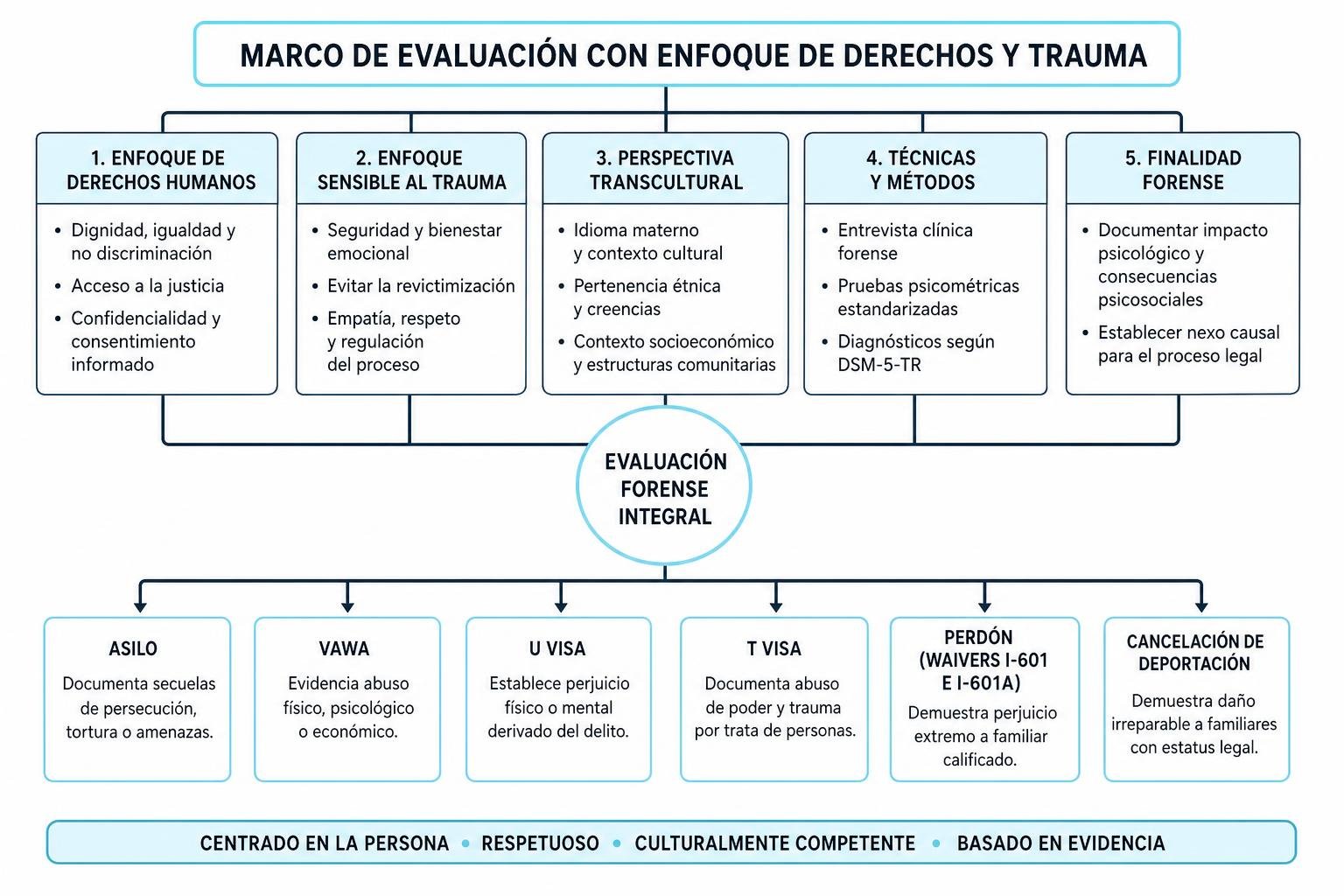
Immigration attorneys often request specialized forensic evaluations to support several types of humanitarian petitions and legal defenses:
- Asylum Petitions: In affirmative or defensive asylum cases, the report documents the psychological effects of persecution, torture, or threats in the country of origin. Applicants in these proceedings may need a detailed psychological evaluation for an asylum case that supports symptoms of post-traumatic stress or major depression.
- Domestic Violence (VAWA): Survivors of physical, psychological, or economic abuse by a spouse or family member who is a U.S. citizen or lawful permanent resident often need documentation of that abuse. A psychological evaluation for a VAWA case can show the pattern of control and the emotional harm suffered.
- Victims of Crimes (U Visa): Designed for people who suffered qualifying crimes in the United States and cooperated with authorities, a psychological evaluation for a U visa case establishes the physical or mental harm connected to the crime.
- Victims of Human Trafficking (T Visa): People who experienced labor or sexual exploitation may use a psychological evaluation for a T visa case to document abuse of power and resulting trauma.
- Extreme Hardship Waivers (I-601 and I-601A): These cases require evidence that deportation or prolonged absence would cause extreme hardship to a qualifying relative. A psychological evaluation for a waiver case helps explain that impact on the family's mental health.
- Cancellation of Removal: When a person is facing removal proceedings, a psychological evaluation for cancellation of removal can demonstrate the serious and lasting harm that children, spouses, or parents with legal status may suffer.
A transcultural, trauma-informed, and child-rights approach
The accuracy of a forensic opinion depends on cultural sensitivity and a strong understanding of complex trauma. Studies such as the PorTiMujer mental health research report have highlighted how sociocultural barriers and gender-based violence intersect with irregular immigration status, intensifying psychological distress.
An immigration forensic evaluation should use an intersectional perspective that considers the person's primary language, ethnic background, socioeconomic context, and community structures. This helps prevent misdiagnosis caused by cultural bias.
Psychological evaluations for unaccompanied minors and vulnerable populations
Forensic evaluation of migrant children and adolescents who are unaccompanied requires specific clinical protocols. Minors face extreme vulnerability when they lack immediate protection networks during their migration journey and when they enter institutional reception systems.
In our offices and forensic evaluation services, we prioritize the best interests of the child, adapting the setting and the assessment tools to the child's developmental maturity.
Psychosocial risk factors during transit and reception
Migration during childhood is often shaped by traumatic events in the country of origin, during transit, and in the destination country. As the technical guide How can the mental health of migrant children be improved? explains, unaccompanied minors frequently experience cumulative grief, uprooting, and the constant stress of legal uncertainty.
Forced family separation, exposure to organized violence, and lack of support networks can create acute stress reactions that must be evaluated carefully. In these cases, an appropriate trauma evaluation for immigration cases helps distinguish between adaptive grief and psychiatric conditions such as complex post-traumatic stress or severe emotional dysregulation.
Informed consent and active participation of the minor
Evaluations with minors respect the principle of progressive autonomy and the rights of the child. This means adapting the clinical process through:
- Developmentally appropriate explanation: Informing the minor about the purpose of the interview, their rights, and the use of the forensic report in clear language without unnecessary technical terms.
- Informed assent: Making sure the minor understands that participation is voluntary and that they may request breaks at any time.
- Active listening: Allowing the story to unfold at the child's own pace without forcing details about traumatic experiences unless they are strictly necessary for the forensic purpose.
- Coordination with legal guardians: Maintaining clear communication with the minor's legal representatives or guardians to ensure a safe and legally valid immigration mental health evaluation.
Step-by-step process for forensic evaluation and intersectoral coordination

A strong forensic report should combine scientific rigor, clinical foundation, and legal relevance. Our team follows a standardized protocol to help ensure that each report meets the high standards expected by courts and immigration agencies.
Key steps for structuring a rigorous informe psicologico inmigracion
For a forensic report to serve as persuasive documentary evidence, it should be organized methodically:
- Clinical history and biographical background: Collection of family history, medical background, academic and employment history, and developmental history.
- Trauma history and migration timeline: Chronological documentation of the events that triggered migration, experiences during the journey, and difficulties after arrival.
- Current mental status examination: Clinical observation of behavior, affect, orientation, thought coherence, and cognitive functioning.
- Standardized psychometric battery: Use of tests validated for the person's cultural profile, such as anxiety inventories, depression scales, and post-traumatic stress questionnaires.
- Diagnosis under the DSM-5-TR: Integration of observed symptoms into formal clinical criteria, including psychosocial stressors.
- Clinical credibility assessment: Evaluation of the internal consistency of the narrative and consideration of validity scales when appropriate.
- Technical translation and certification: When the legal process requires it, we follow the recommendations in this bilingual immigration evaluation guide, delivering the document in English with appropriate forensic certification.
Clients who cannot attend in-person appointments may access our immigration psychological evaluations by Telehealth, available for clients in Texas, California, Idaho, Utah, Florida, and other states where we provide coverage.
Diagnostic tools and prevention of revictimization
Clinical evaluation should avoid revictimization whenever possible. This is achieved through semi-structured interviews that gather the necessary information in a unified way, reducing the need for the applicant to repeat a traumatic story before multiple systems.
Academic research, such as this undergraduate thesis on adaptation and integration, emphasizes the value of assessing psychosocial adaptation and sociocultural rootedness. In extreme hardship or cancellation of removal cases, measuring how the person is integrated into the community and what social support is available can be decisive for a complete forensic psychological report.
Intersectoral coordination: health, education, and protection
Supporting the psychosocial well-being of migrants requires coordinated models of care. Experience from humanitarian response projects, such as the Melilla intersectoral coordination pilot model between 2023 and 2025, where two groups of approximately 12 people conducted 15 diagnostic interviews, 12 interviews with minors, and 3 focus groups in protection centers, shows that monthly coordination among health, education, and social services can reduce referral times and improve clinical outcomes.
As described in the article Fear, anxiety, trauma: this is the mental health of migrants when they arrive, the combination of ongoing psychological support, legal assistance, and integration resources is one of the most effective ways to reduce anxiety and stabilize the applicant's mental health. In our evaluations, we include the therapeutic recommendations needed so the attorney and community services can work in a coordinated way.
Frequently Asked Questions about Psychological Evaluations for Immigration
What methodological obstacles arise in migration-related emergencies, and how can they be addressed?
The main obstacles include language barriers, institutional mistrust, and tight legal deadlines. To address them, we work with bilingual evaluators, use culturally adapted psychometric tools, and coordinate report timelines directly with legal teams.
How does a forensic report help reduce retraumatization?
By consolidating clinical data collection into a structured protocol, the evaluation helps prevent the person from having to repeatedly describe traumatic experiences to different legal professionals. The evaluator also uses emotional grounding and containment techniques to reduce the risk of traumatic stress being reactivated during the session.
How long does it take to complete an evaluation and receive the forensic report?
The complete process usually takes 2 to 3 weeks from the first interview session to delivery of the final report translated into English. In cases involving urgent legal deadlines or upcoming court dates, expedited delivery options may be coordinated with the attorney handling the case.
Conclusion
The immigration journey can involve significant legal and emotional challenges. A well-supported, bilingual, trauma-informed forensic evaluation can make an important difference when presenting a case before immigration authorities.
At District Counseling, we provide specialized psychological evaluations for asylum, extreme hardship waivers, VAWA, U Visa, T Visa, and cancellation of removal cases in Texas, including Houston, Katy, Cypress, Sugarland, Austin, Dallas, and San Antonio, as well as in Florida, California, New York, Utah, Virginia, and Idaho. Our commitment does not end when the report is delivered: to support your overall well-being, we offer 6 supportive therapy sessions at no additional cost after the report is completed.
If you or your client needs a strong and professional clinical opinion, begin the process by scheduling your psychological evaluation for immigration today.