
Who Qualifies for Cancellation of Removal for Non-LPRs?

Cancellation of removal for non-LPRs lets some people facing deportation ask an immigration judge to let them stay and become lawful permanent residents. To qualify, you generally need 10 years of continuous physical presence, good moral character, no disqualifying convictions, and proof that your removal would cause exceptional and extremely unusual hardship to a U.S. citizen or green card holder spouse, parent, or child. Meeting those requirements does not guarantee approval; the judge must also grant relief as a matter of discretion.
The hardest part is often showing how your family would be affected, with evidence that goes beyond the pain of separation alone. This guide explains the rules, the court process, and how to build a clear hardship record.
I’m Francisco Ortiz, a forensic mental health evaluator who prepares psychological assessments for immigration cases, including cancellation of removal for non-LPR cases. My work focuses on documenting mental health concerns and family hardship in a way immigration attorneys can use alongside other evidence.
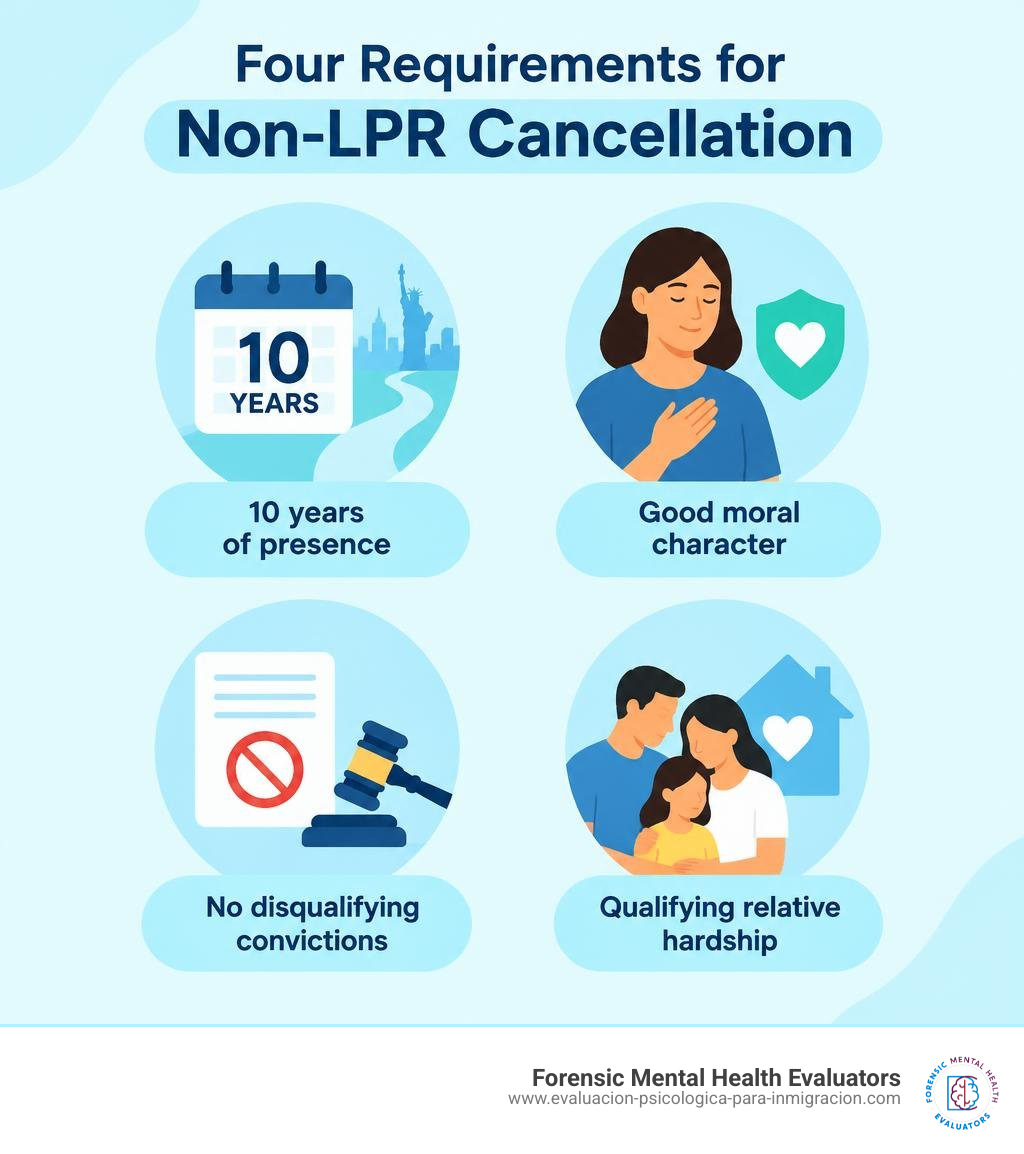
Core Eligibility Criteria for Cancellation of Removal for Non-LPR Applicants
Under Immigration and Nationality Act (INA) § 240A(b)(1), defensive non-LPR cancellation is governed by strict statutory rules outlined in official DOJ EOIR guidance on cancellation of removal. Unlike affirmative applications submitted directly to USCIS, this form of relief is strictly defensive and exclusively available to individuals placed in formal cancellation removal proceedings before the Executive Office for Immigration Review (EOIR).
Meeting the statutory threshold is merely the entry ticket. Even if an applicant satisfies all mandatory elements, the immigration judge retains broad discretion to deny the application if negative factors outweigh positive equities.
| Requirement | Non-LPR Cancellation (INA § 240A(b)) | LPR Cancellation (INA § 240A(a)) |
|---|---|---|
| Current Immigration Status | Undocumented / Non-Permanent Resident | Lawful Permanent Resident (5+ years) |
| Physical Presence / Residence | 10 years continuous physical presence | 7 years continuous residence after admission |
| Moral Character Standard | Good Moral Character for statutory 10 years | No statutory GMC requirement |
| Hardship Requirement | Exceptional and extremely unusual hardship | No statutory hardship requirement |
| Qualifying Relatives | Qualifying U.S. citizen or LPR spouse, parent, or child | None required |
| Criminal Threshold | Ineligible under INA §§ 212(a)(2), 237(a)(2), or 237(a)(3) | No aggravated felonies (INA § 101(a)(43)) |
10-Year Continuous Physical Presence and the Stop-Time Rule
The ten-year continuous physical presence requirement demands that an applicant reside in the United States without interruption for at least a full decade before specific legal events halt the clock. Under the statutory "stop-time rule," accrual of continuous physical presence terminates the moment the Department of Homeland Security (DHS) serves a Notice to Appear (NTA) on the individual (Matter of Mendoza-Sandino). The clock also stops if the applicant commits certain disqualifying criminal offenses.
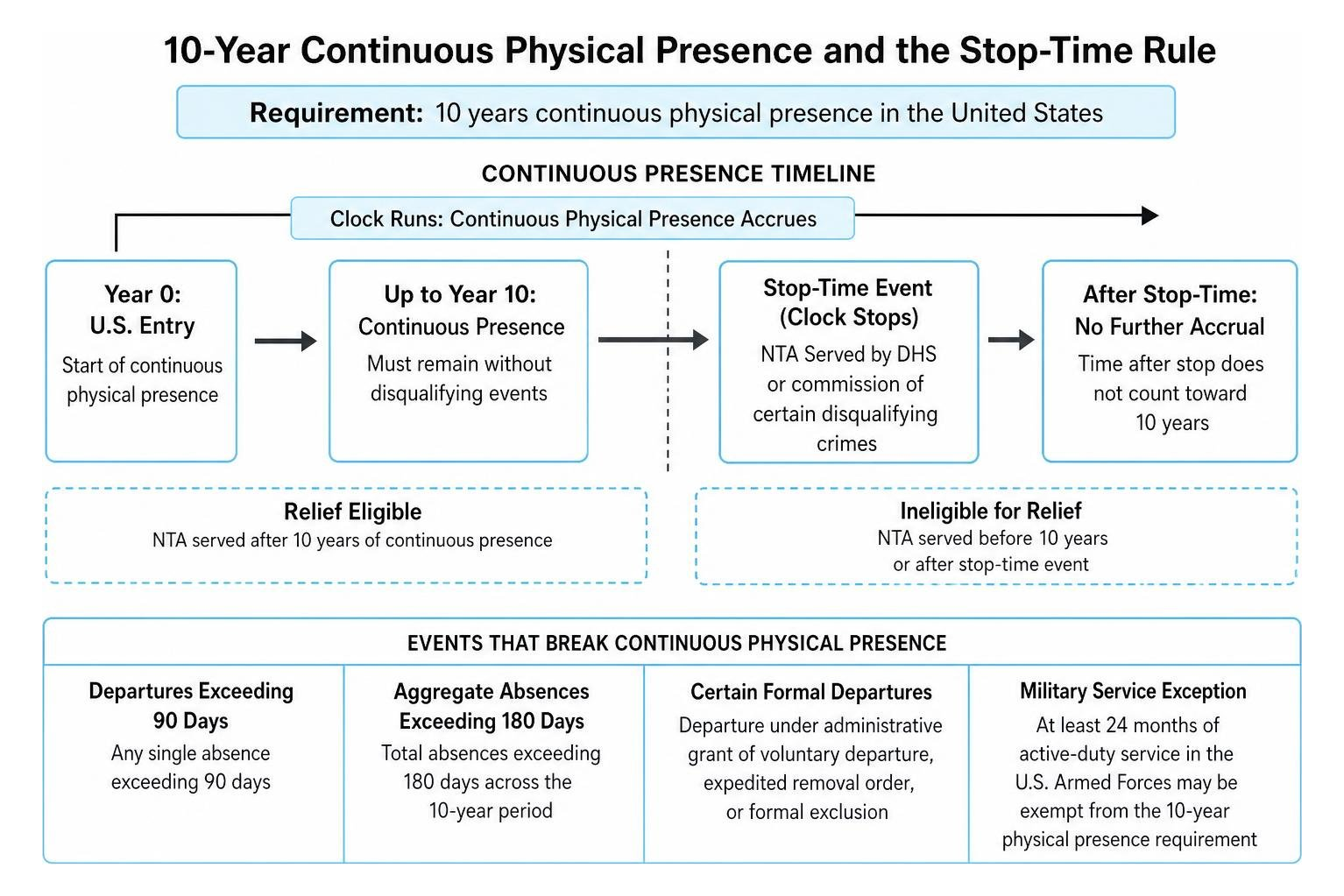
Physical presence is broken if the applicant departs the United States for:
- Any single absence exceeding 90 days.
- An aggregate total of absences exceeding 180 days across the ten-year period.
A single departure under an administrative grant of voluntary departure, an expedited removal order, or formal exclusion also breaks continuous presence. An important statutory exception applies to individuals who served at least 24 months of active-duty service in the U.S. Armed Forces, who may be exempt from the standard ten-year physical presence requirement.
Good Moral Character and Criminal Bars to Cancellation of Removal for Non-LPRs
Applicants must prove Good Moral Character (GMC) throughout the statutory ten-year period under INA § 101(f). Demonstrating GMC requires showing consistent tax compliance, active community ties, and reliable employment records.
Certain statutory bars under INA § 101(f) automatically defeat GMC, including convictions for illegal gambling, false testimony to obtain immigration benefits, incarceration for 180 days or more, or being classified under statutory provisions such as a "habitual drunkard."
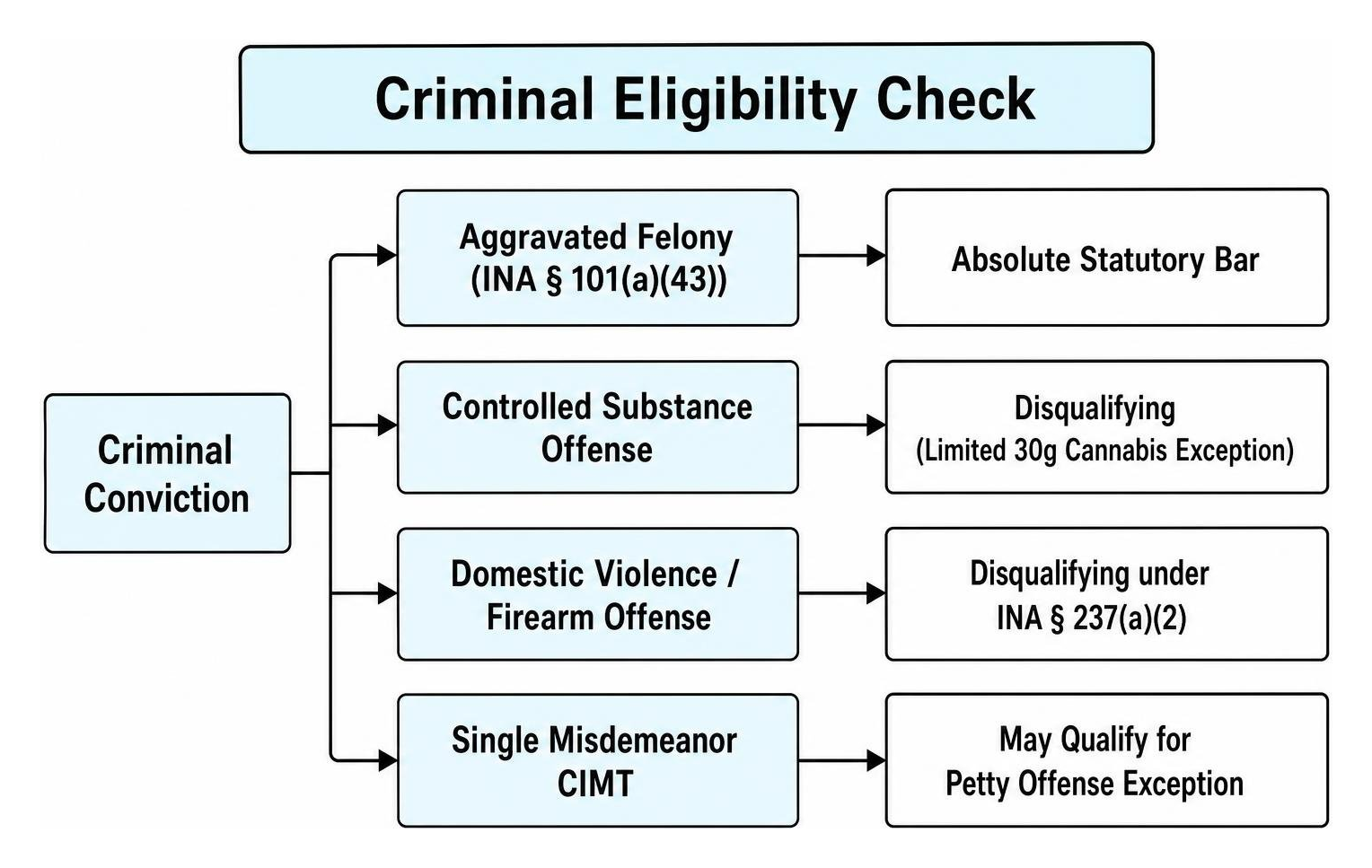
Under INA § 240A(b)(1)(C), an applicant is statutorily barred if convicted of offenses referenced in INA §§ 212(a)(2), 237(a)(2), or 237(a)(3), as detailed in the ILRC practice advisory on non-LPR cancellation. Disqualifying crimes include:
- Aggravated Felonies: Automatic bar without waiver options.
- Crimes Involving Moral Turpitude (CIMT): Disqualifying unless the offense meets the strict petty offense exception (maximum possible sentence under 1 year, and actual sentence imposed not exceeding 6 months).
- Controlled Substances Offenses: Disqualifying, subject to narrow exceptions.
- Domestic Violence & Firearms Violations: Triggers statutory ineligibility.
Defining Qualifying Relatives and Statutory Hardship Standards
A core element of the case is proving hardship to a statutory qualifying relative. The statute recognizes only:
- U.S. Citizen (USC) or LPR Spouse
- U.S. Citizen (USC) or LPR Parent
- U.S. Citizen (USC) or LPR Child (must be unmarried and under 21 years of age)
Hardship suffered directly by the applicant does not satisfy the statute. However, hardship affecting non-qualifying relatives (such as an older child over 21 or an undocumented spouse) can be framed by demonstrating how their suffering directly impacts the qualifying relative.
The legal threshold is not ordinary emotional distress or basic financial strain; the law requires showing an exceptional and extremely unusual hardship standard.
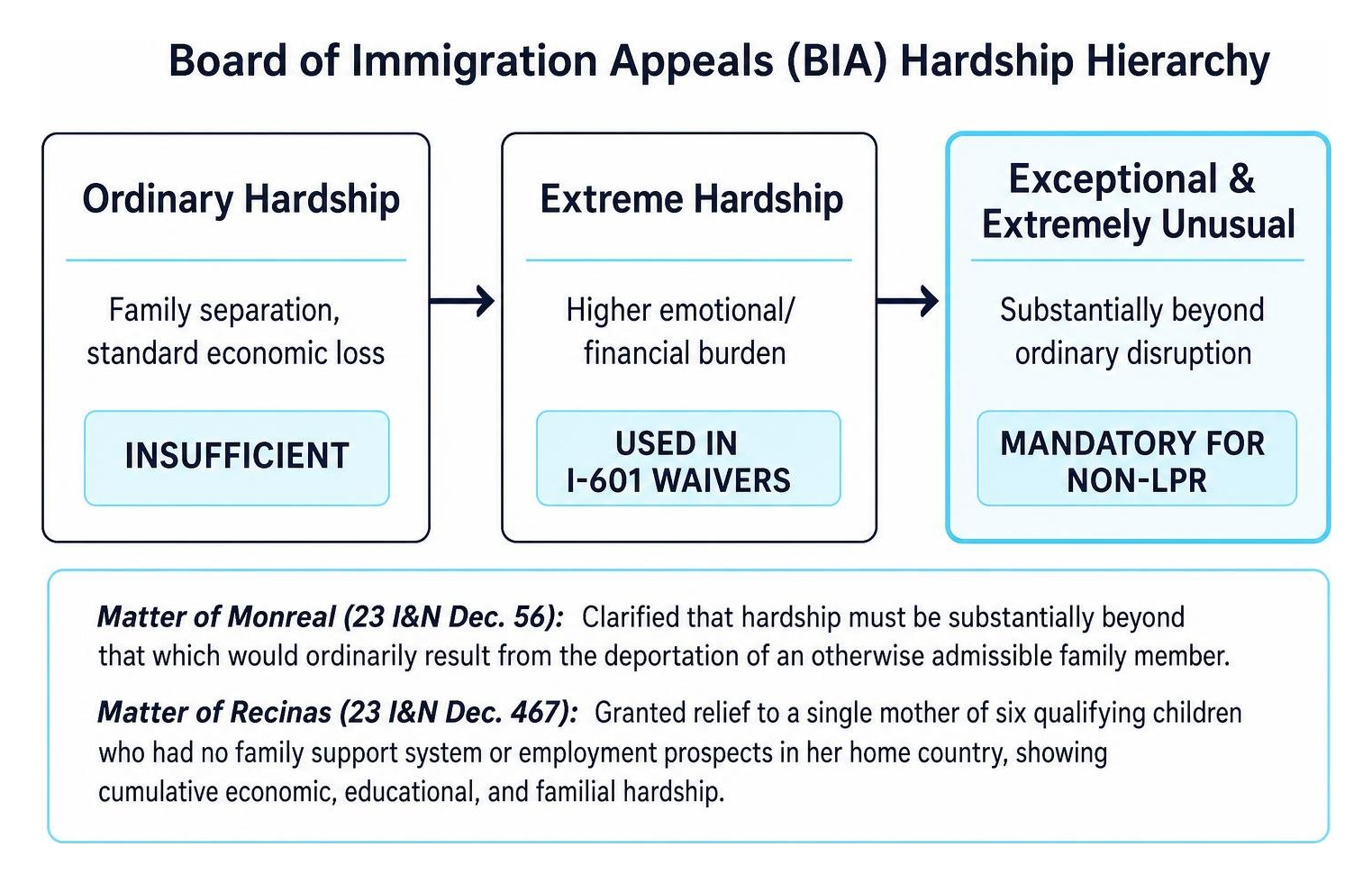
Key Board of Immigration Appeals (BIA) precedents define this standard:
- Matter of Monreal (23 I&N Dec. 56): Clarified that hardship must be substantially beyond that which would ordinarily result from the deportation of an otherwise admissible family member.
- Matter of Recinas (23 I&N Dec. 467): Granted relief to a single mother of six qualifying children who had no family support system or employment prospects in her home country, showing cumulative economic, educational, and familial hardship.
The Evidentiary Burden: Proving Exceptional and Extremely Unusual Hardship

Winning a cancellation claim requires an evidentiary record that documents family circumstances with precision. When assembling defensive removal strategies, practitioners must present clear documentation of financial dependence, specialized healthcare, country conditions, and family stability.
The burden of proof rests entirely on the respondent. Unsupported claims are routinely rejected by immigration judges.
Medical, Educational, and Psychological Evaluation Evidence
Documenting clinical needs provides concrete evidence for an immigration judge's legal evaluation:
- Medical Records: Documenting severe chronic illnesses, complex medical regimens, or conditions requiring specialized U.S. hospital infrastructure.
- Educational Accommodations: Individualized Education Programs (IEPs), 504 plans, and neuropsychological assessments showing a child requires U.S. special education services unavailable in the home country.
- Clinical Psychological Evaluations: A comprehensive immigration psychological evaluation offers objective diagnostic insight into severe major depressive disorders, generalized anxiety, complex trauma, and neurodevelopmental conditions.
At District Counseling, we conduct detailed bilingual evaluations across our Texas offices in Houston, Katy, Cypress, and Sugar Land (as well as supporting families across Texas, Florida, California, New York, Utah, Virginia, and Idaho). We provide Spanish-language clinical evaluations translated into English for immigration court, along with six complimentary therapy sessions post-report to ensure families have continuous emotional support throughout their proceedings.
Strategic Hardship Arguments: Accompanying the Respondent vs. Remaining in the U.S.
To build an effective hardship defense, practitioners evaluate two scenarios (Matter of Ige):
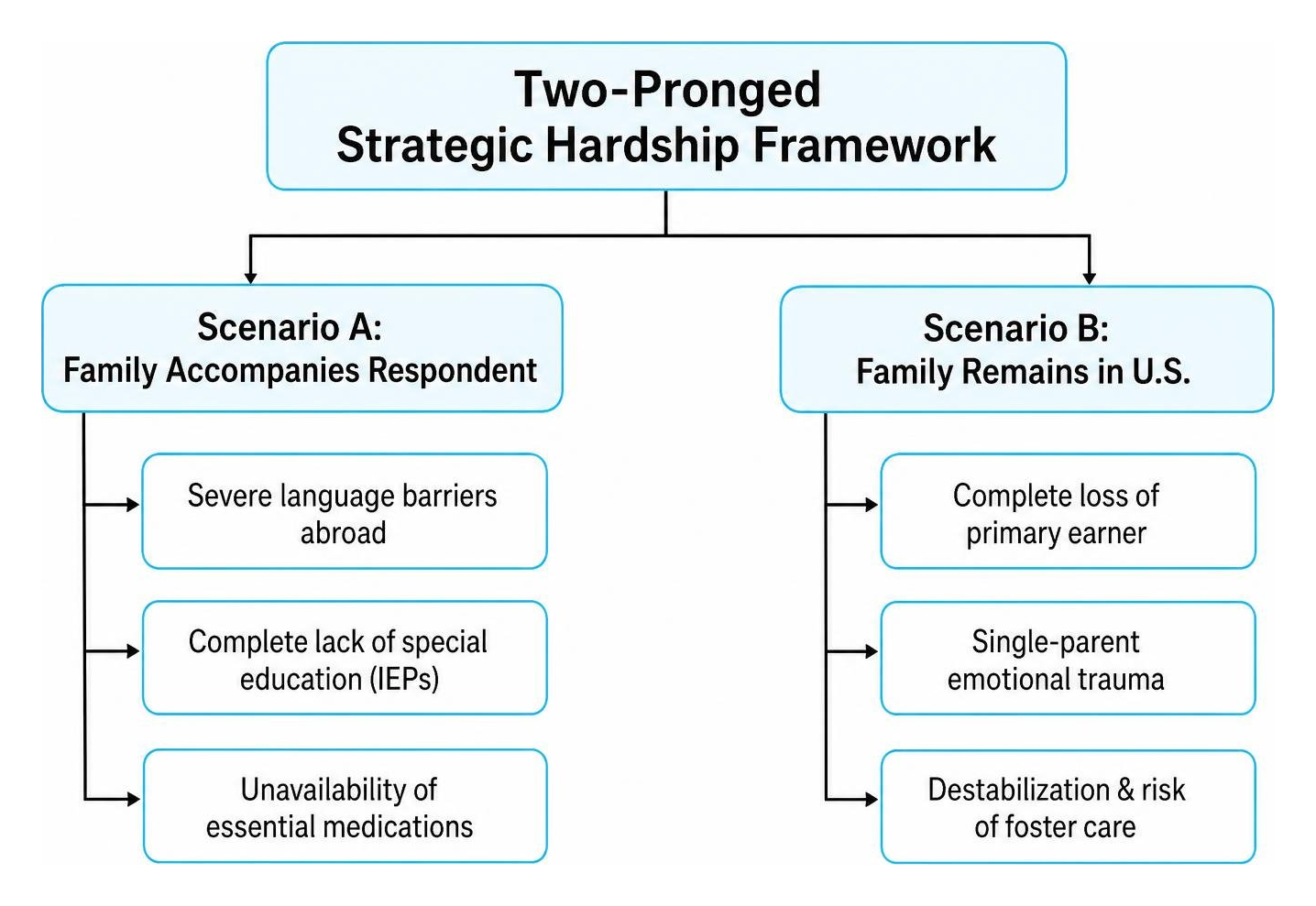
If Qualifying Relatives Accompany the Respondent Abroad:
- Severe linguistic and cultural barriers for children raised in the United States.
- Complete unavailability of critical medical treatments, specialized medications, or psychiatric infrastructure.
- Economic instability and lack of educational support systems in the country of origin.
If Qualifying Relatives Remain in the United States:
- Severe psychological trauma caused by family separation.
- Financial collapse resulting from the deportation of the household's primary wage earner.
- Inability of the remaining caregiver to provide round-the-clock support for medically or psychologically vulnerable children.
Step-by-Step Immigration Court Process for Form EOIR-42B

Applying for cancellation of removal requires filing Form EOIR-42B directly with the immigration court having jurisdiction over your proceedings.
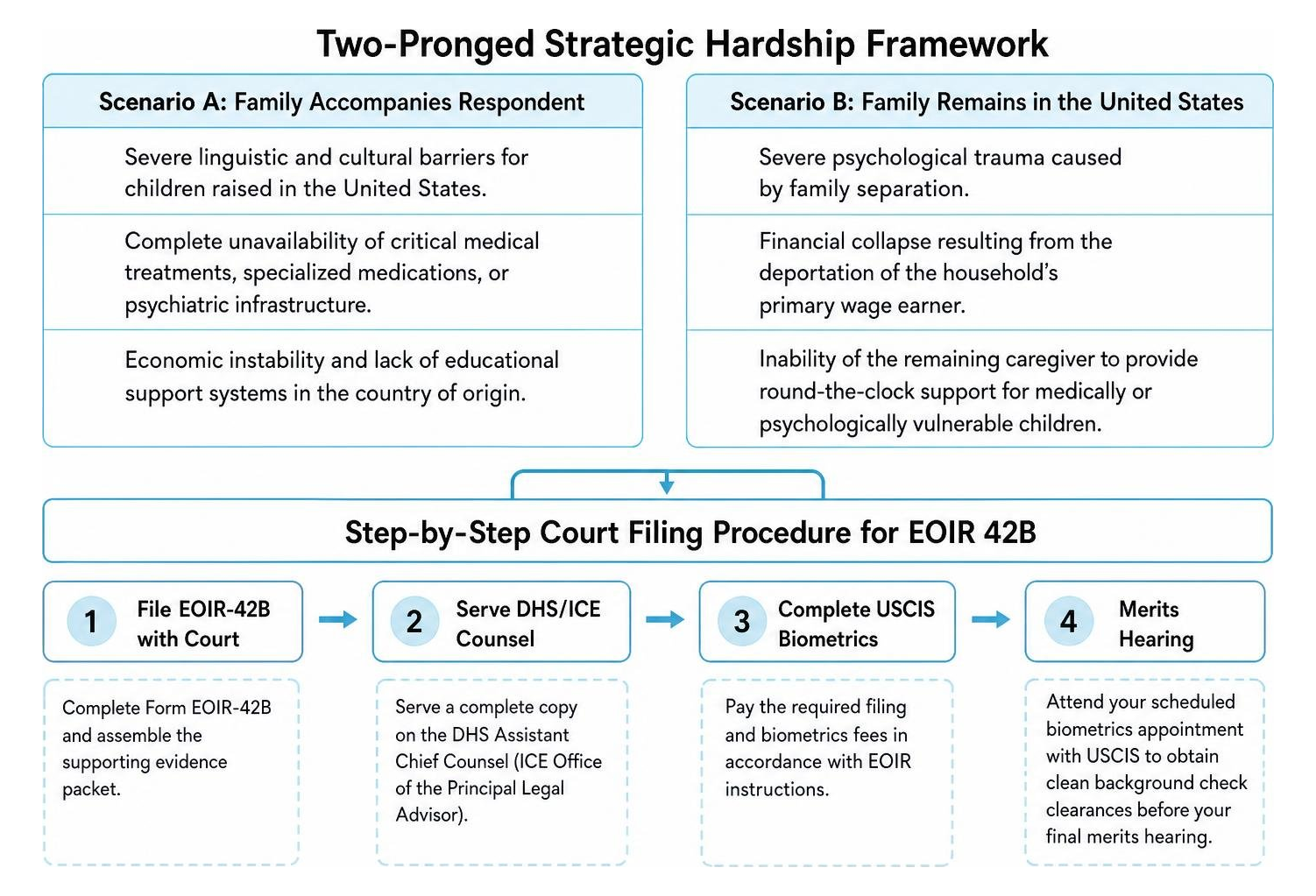
The application steps include:
- Complete Form EOIR-42B and assemble the supporting evidence packet.
- Serve a complete copy on the DHS Assistant Chief Counsel (ICE Office of the Principal Legal Advisor).
- Pay the required filing and biometrics fees in accordance with EOIR instructions.
- Attend your scheduled biometrics appointment with USCIS to obtain clean background check clearances before your final merits hearing.
From Master Calendar to Individual Merits Hearing
The immigration court process unfolds across two primary hearing types:
- Master Calendar Hearing (MCH): Preliminary scheduling hearings where the respondent responds to the factual allegations in the Notice to Appear, concedes or contests deportability, and formally designates cancellation of removal under INA § 240A(b) as their requested relief.
- Pre-Hearing Submissions: The court establishes strict filing deadlines (often 30 to 60 days before trial) to submit all documentary evidence, expert witness reports, character affidavits, tax transcripts, and medical records.
- Individual Merits Hearing: The formal trial where the respondent and supporting witnesses testify under oath. The applicant's attorney conducts direct examination, followed by cross-examination by the ICE trial attorney. The immigration judge evaluates credibility and weighs the evidence before issuing a decision.
Navigating the 4,000 Annual Grant Cap and Reserved Decisions
Under INA § 240A(e)(1), Congress established an annual statutory cap of 4,000 grants per fiscal year for non-LPR cancellation of removal and suspension of deportation.
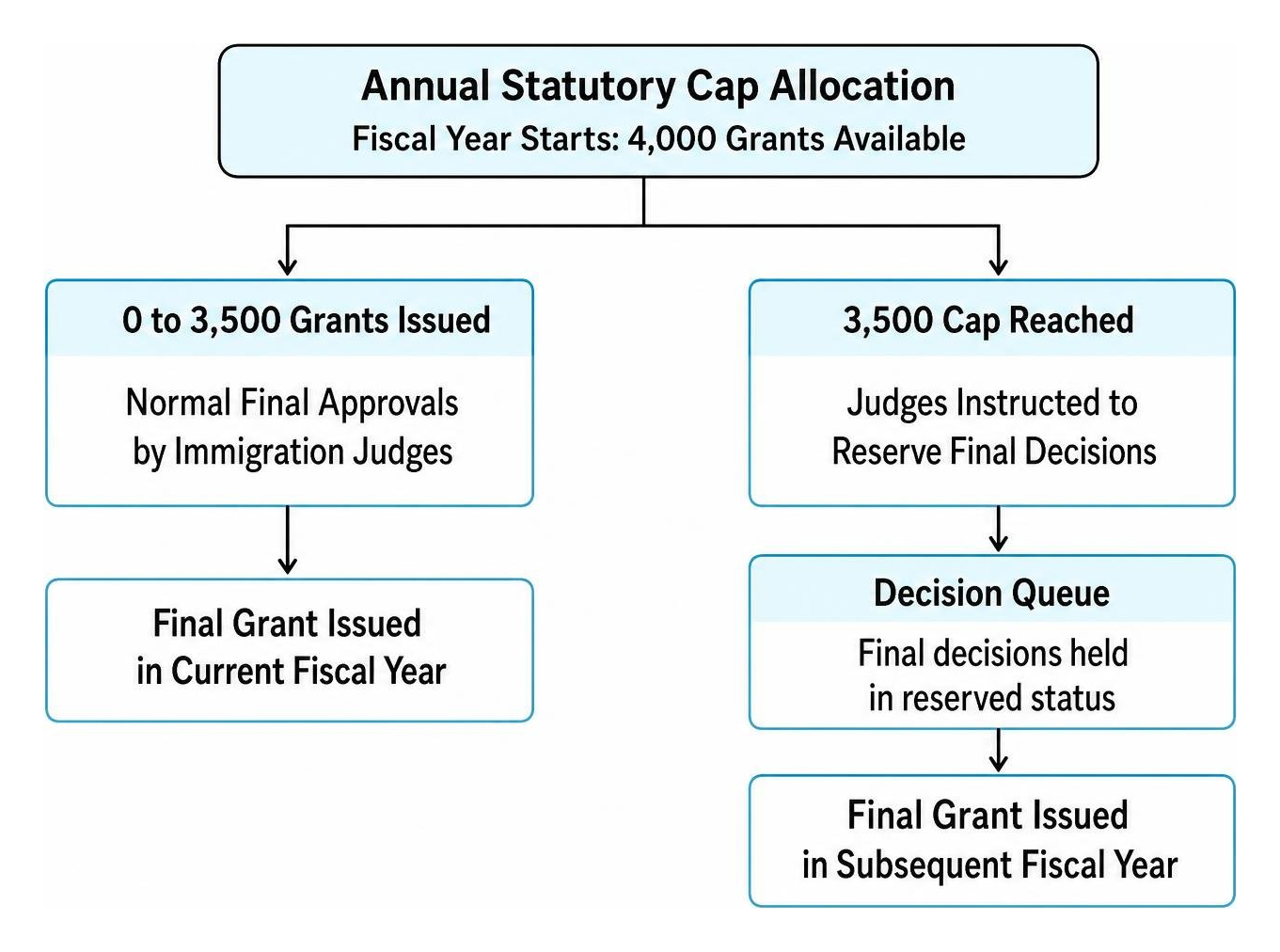
When approvals approach 3,500 cases within a fiscal year, immigration judges are instructed by EOIR leadership to reserve final decisions until numbers reset in the next fiscal year. Understanding this mechanism is essential when navigating the immigration court backlog and annual caps. While a case remains pending or in reserved status, the applicant is eligible to apply for and renew an Employment Authorization Document (EAD) via Form I-765 under category (c)(10). Once a grant is finalized, the respondent adjusts status to a Lawful Permanent Resident and receives their green card.
Strategic Pitfalls and Risks in Cancellation of Removal for Non-LPR Cases
Cancellation of removal is an effective defensive remedy, but pursuing it requires careful evaluation of potential procedural risks. In some cases, exploring alternative avenues—such as seeking prosecutorial discretion (PD) from ICE trial attorneys to dismiss or administratively close proceedings—may be a safer choice.
Procedural Risks: Why Seeking Cancellation of Removal for Non-LPR Status Affirmatively Is Dangerous
A dangerous misconception is that non-citizens can apply for the "10-year law" affirmatively to obtain a green card. Non-LPR cancellation cannot be filed affirmatively with USCIS.
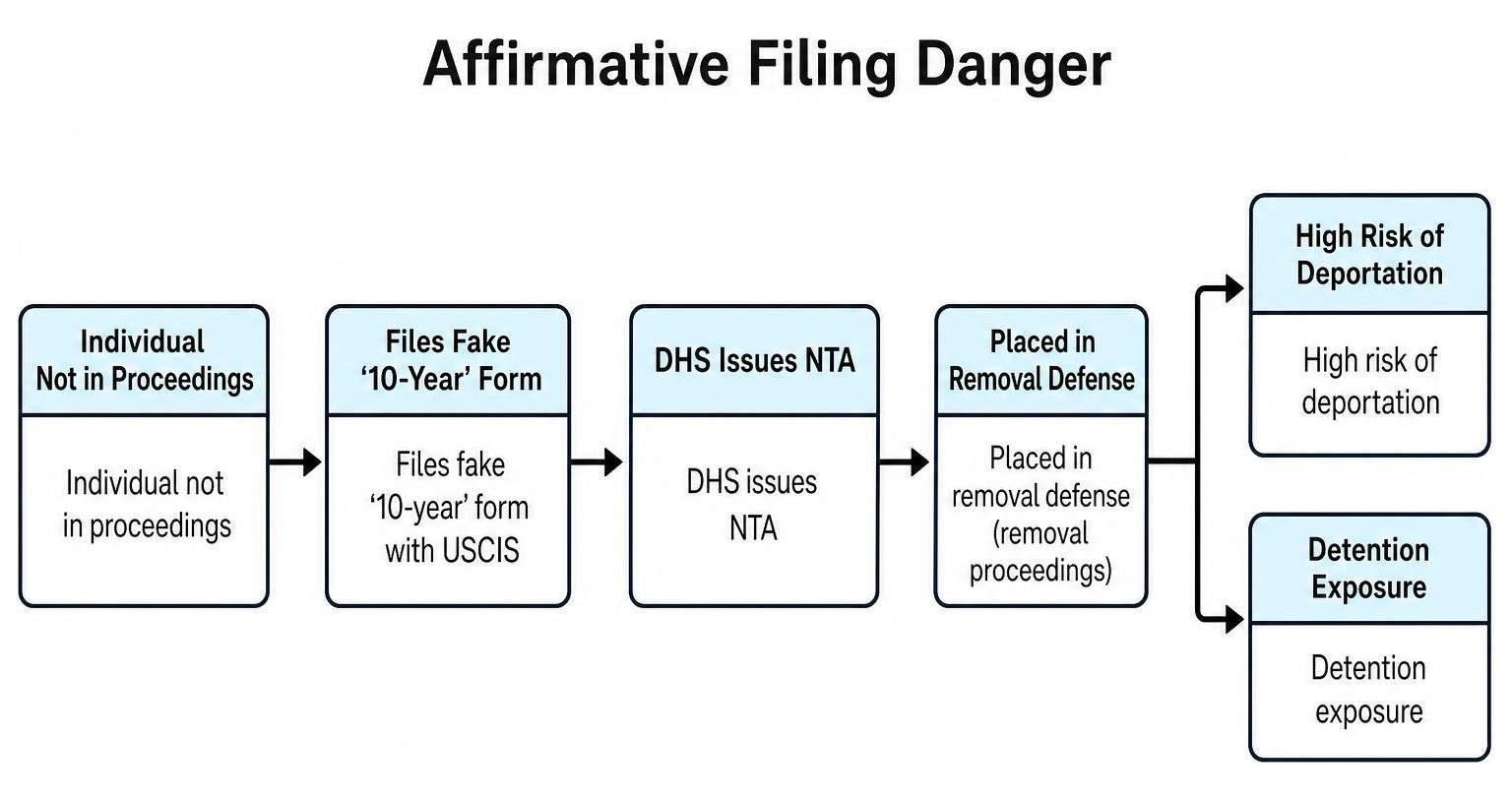
Unscrupulous notarios sometimes promise work permits by submitting unauthorized applications to USCIS. Doing so triggers the issuance of an NTA, placing an otherwise unencountered individual directly into removal proceedings. If the cancellation claim is ultimately denied by the immigration judge, the respondent faces a final order of deportation with immediate removal consequences.
Frequently Asked Questions About Non-LPR Cancellation
How long does a non-LPR cancellation case take in immigration court?
Due to significant EOIR court backlogs, non-LPR cancellation proceedings often take between two and four years from the initial Master Calendar Hearing to the final Individual Merits Hearing. Applicants remain eligible to renew their interim work authorization while proceedings are pending.
What happens if an immigration judge grants non-LPR cancellation?
Once granted, the immigration judge orders the removal proceedings terminated and adjusts the respondent's status to that of a Lawful Permanent Resident. The respondent receives a green card and becomes eligible to apply for U.S. citizenship through naturalization after five years of continuous residence.
Can hardship to the applicant be considered directly by the judge?
No. Hardship experienced personally by the applicant is not a statutory factor under INA § 240A(b)(1)(D). However, severe physical, financial, or mental health burdens on the applicant can be evaluated indirectly if they directly cause significant distress to qualifying U.S. citizen or LPR family members.
Conclusion
Successfully defending a non-LPR cancellation of removal case in immigration court requires establishing continuous presence, good moral character, and a well-documented record of family hardship.
At District Counseling, we provide forensic psychological evaluations for immigration proceedings across Houston, Austin, Dallas, and San Antonio, as well as our offices in Katy, Cypress, and Sugar Land. Whether you need evaluations for cancellation of removal, asylum, or U visa and humanitarian immigration evaluations, our bilingual team delivers objective, culturally sensitive clinical assessments with Spanish-to-English translations and six complimentary therapy sessions post-report. Reach out to our clinical team today to support your family's defense.