
Why an Immigration Lawyer Matters in Deportation Proceedings
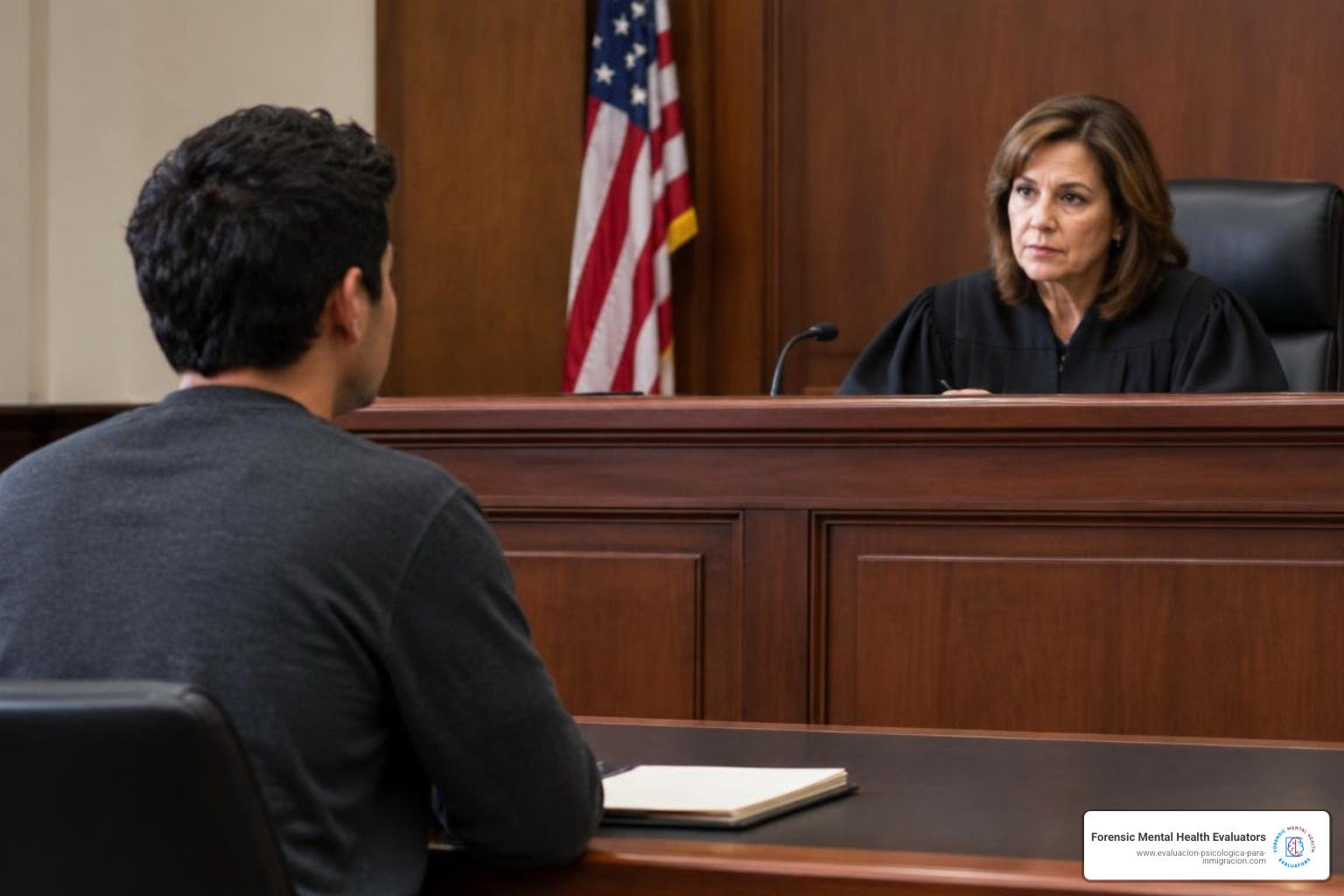
If you face deportation in Texas, contact a licensed immigration lawyer as soon as you receive a Notice to Appear. Bring the notice, your hearing date, and any records about your family. A lawyer can review possible defenses, help prepare evidence, and represent you in immigration court.
You can represent yourself, but a missed hearing, deadline, or key piece of evidence can put your case at risk. If removal could harm your family, a psychological evaluation may help document the mental health effects when relevant to your case. It does not replace legal advice.
I’m Francisco Ortiz, a forensic mental health evaluator who prepares psychological evaluations for immigration cases, including cancellation of removal. My work focuses on clear mental health evidence that an immigration lawyer can assess as part of a legal strategy.
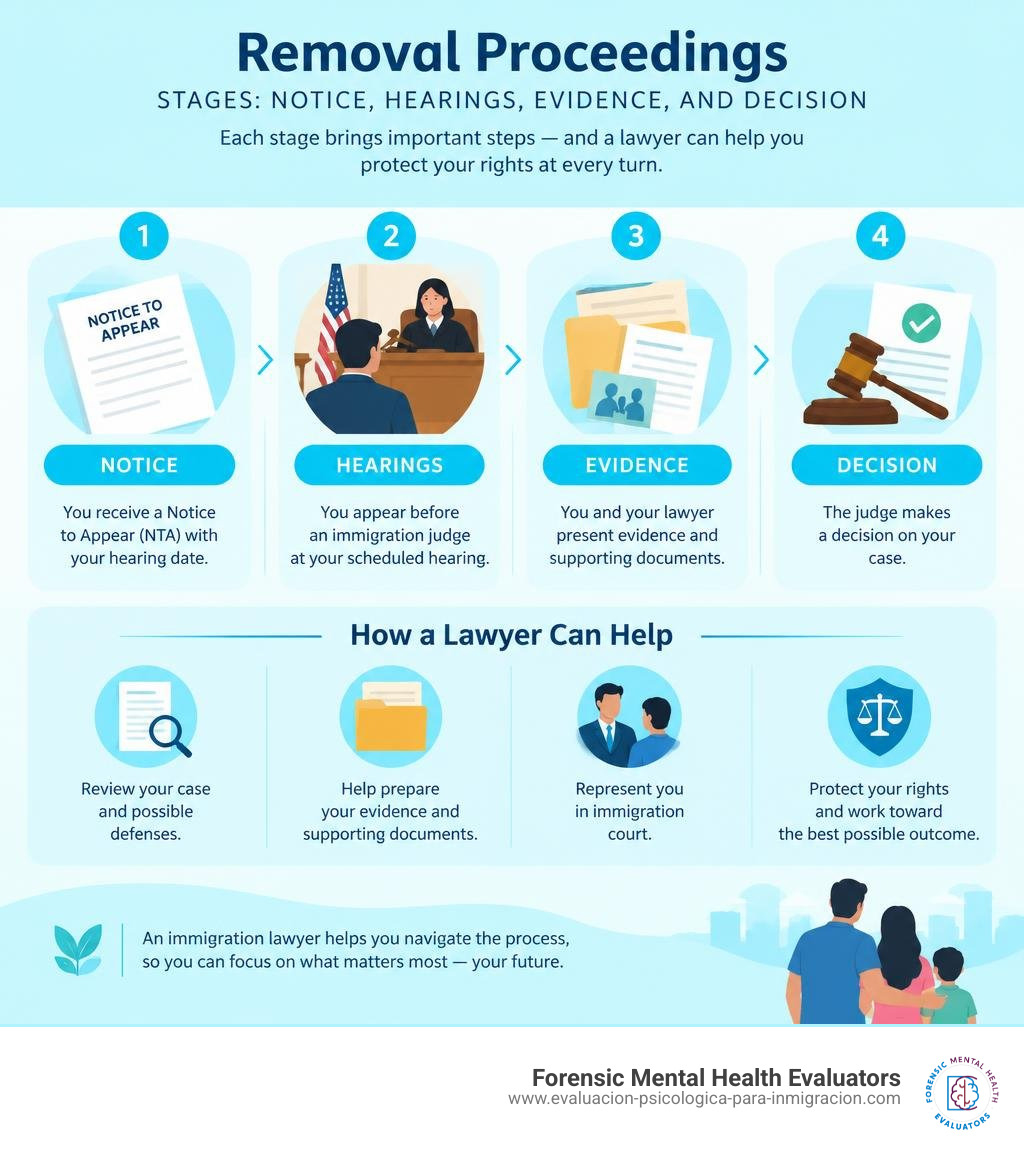
As of 2026, foreign-born residents make up nearly 14% of the United States population. Despite their vital contributions to our communities across Texas, California, Florida, and beyond, thousands find themselves facing the complex machinery of the Executive Office for Immigration Review (EOIR). Entering an immigration courtroom without qualified counsel is one of the most perilous gambles an individual can make.
What an Immigration Lawyer Does During Removal Proceedings
Facing deportation is rarely as straightforward as filling out government forms. When you are served a Notice to Appear (NTA) by the Department of Homeland Security (DHS), removal proceedings formally begin. These proceedings take place before an immigration judge in an adversarial courtroom where a government attorney actively argues for your expulsion from the country.

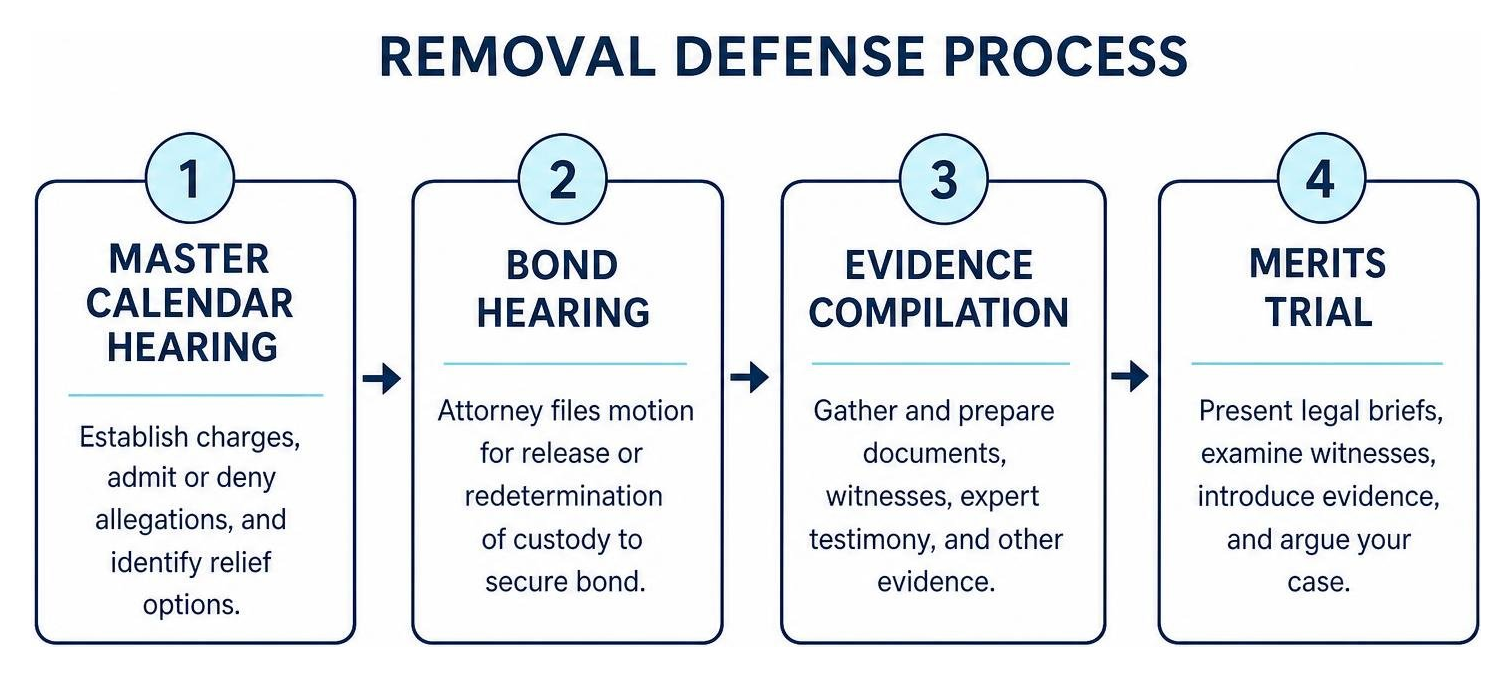
A licensed attorney specializing in removal defense manages every critical phase of your case:
- Master Calendar Hearings: These preliminary hearings establish the charges against you, determine whether you admit or deny the allegations in the NTA, and identify which forms of relief you plan to pursue.
- Individual Merits Hearings: Similar to a full trial, this is where your attorney submits legal briefs, examines witnesses, presents expert testimony, and introduces objective evidence.
- Custody and Bond Hearings: If you or a family member are detained by ICE, an attorney files motions for redetermination of custody to secure release on bond, allowing you to fight your case from home.
- Negotiating Prosecutorial Discretion: Attorneys can negotiate with DHS counsel to dismiss, terminate, or administratively close proceedings when appropriate.
Working with a skilled immigration lawyer for deportation ensures your statutory and constitutional rights are protected at every juncture.
Critical Defenses and Relief Available in Immigration Court
Qualified attorneys evaluate your background to identify specific avenues of humanitarian and statutory relief from removal. Common forms of relief include:
- Non-LPR Cancellation of Removal: Available to certain individuals who have resided continuously in the U.S. for at least 10 years, maintain good moral character, and can prove that their deportation would cause "exceptional and extremely unusual hardship" to a qualifying U.S. citizen or lawful permanent resident spouse, parent, or child. Review our cancellation of removal guide for details on qualifying criteria.
- Asylum, Withholding of Removal, and CAT Protection: Individuals who have suffered past persecution or have a well-founded fear of future persecution based on race, religion, nationality, political opinion, or membership in a particular social group can seek asylum. Documenting the psychological aftermath with an asylum assessment provides essential evidentiary support for these claims.
- VAWA Self-Petitions: Immigrants who have suffered battery or extreme cruelty by a U.S. citizen or LPR spouse, parent, or adult child may qualify for independent status. An objective VAWA evaluation corroborates the psychological impact of domestic abuse.
- Crime Victim Protections (U and T Visas): Victims of qualifying crimes who assist law enforcement can pursue status through the U visa program. Survivors of severe human trafficking can seek protection supported by a T visa evaluation.
- Hardship Waivers of Inadmissibility: When past unlawful presence or specific immigration violations bar an individual from adjusting status, an extreme hardship waiver can forgive the ground of inadmissibility.
- Emergency Interventions: When an immediate removal order is pending, attorneys can file emergency motions or administrative stays outlining how to stop ICE deportation.
Why Handling Your Case Alone vs. Hiring an Immigration Lawyer Rarely Succeeds
The immigration court system does not provide court-appointed public defenders for respondents who cannot afford counsel. Representing yourself (pro se) places you at a severe disadvantage against trained government prosecutors.
Immigration judges must adhere to rigorous procedural rules and statutory deadlines. Failing to submit an application on time or failing to properly paginate and index evidence can result in your claim being deemed abandoned. In high-stakes cases involving severe trauma or family separation, documenting mental health factors in immigration court through structured forensic evaluations often makes the difference between an approval and a removal order.
| Factor | Self-Representation (Pro Se) | Retaining an Immigration Lawyer |
|---|---|---|
| Knowledge of Immigration Law | Relies on internet research; high risk of misapplying complex federal statutes | Deep command of the Immigration and Nationality Act (INA) and precedent decisions |
| Courtroom Procedure | Prone to missing court deadlines, improper filings, and evidentiary rejections | Strict adherence to EOIR Practice Manual rules, proper filings, and timely motions |
| Direct & Cross-Examination | Must navigate aggressive cross-examination by DHS trial attorneys alone | Prepared by counsel; protected against improper questions through formal legal objections |
| Evidence Development | Often submits unorganized or legally insufficient personal declarations | Collaborates with forensic evaluators, country condition experts, and character witnesses |
| Appellate Preservation | Frequently waives critical appeal rights inadvertently during hearings | Creates a solid evidentiary record for the Board of Immigration Appeals (BIA) |
Understanding Legal Fees, Costs, and Case Structures
Legal fees vary depending on case complexity, geographic market, and the attorney's level of experience. Immigration attorneys generally use one of two fee models:
- Hourly Rates: Typically ranging between $150 and $350 per hour. Hourly billing is standard for complex litigation, federal court appeals, or cases with unpredictable timelines.
- Flat Fees: Many firms offer predictable flat fees for specific services. For example, straightforward matters such as DACA renewals may cost between $140 and $250, while affirmative family petitions range from $650 to $3,000 in attorney fees.
Complex, high-stakes matters such as affirmative and defensive asylum applications or contested removal defense trials generally range from $1,000 to nearly $10,000 in professional legal fees.
When budgeting for your case, distinguish between attorney legal fees and mandatory government filing fees charged by USCIS or EOIR (such as fees for Form I-130, Form I-485, or biometric services). Always review directories and professional standards through resources like the Expertise legal directory to compare fee structures and service models in your area.
Typical Legal Costs Across Family Visas, Green Cards, and Citizenship
Different immigration pathways carry distinct procedural requirements and legal considerations:
- Family-Based Petitions (Form I-130): Sponsoring a spouse, child, or parent involves establishing bona fide family relationships and satisfying strict financial requirements through the Affidavit of Support (Form I-864).
- K-1 Fiancé Visa vs. Marriage-Based Adjustment of Status: A K-1 visa allows a foreign fiancé to enter the U.S. to marry a citizen within 90 days. If the couple is already legally married, filing for adjustment of status (or consular processing abroad) is often more direct and cost-effective.
- Naturalization & Citizenship (Form N-400): General eligibility requires five years of continuous lawful permanent residence (or three years if married to a U.S. citizen), physical presence, good moral character, and passing basic English and U.S. civics examinations.
- Waivers for Inadmissibility (Section 212(h)): Individuals with certain criminal convictions or past immigration infractions require specialized waivers demonstrating rehabilitation and extreme hardship to qualifying relatives.
- Adam Walsh Act Defense: Strict statutory bars apply to U.S. citizens or residents convicted of specific offenses against minors who attempt to sponsor family members, requiring complex legal strategies to overcome mandatory petition denials.
How to Verify Credentials and Avoid Legal Scams
Because immigration law is federal, an attorney licensed in any U.S. state can represent clients before USCIS and immigration courts nationwide. However, this creates opportunities for bad actors and non-lawyers to exploit vulnerable immigrant communities.

To protect yourself and your family:
- Beware of "Notario" Fraud: In many Latin American countries, a "notario" holds quasi-legal authority. In the U.S., a notary public is only authorized to witness signatures. Non-attorney notarios are legally prohibited from providing legal advice or selecting immigration forms.
- Watch for AI and Impersonation Scams: Fraud rings increasingly use spoofed phone numbers, artificial intelligence, and manipulated websites to impersonate real attorneys and demand urgent wire transfers.
- Verify State Bar Admissions: Always confirm that your attorney holds an active license in good standing. You can search verified listings such as Justia Texas Immigration Counsel or Justia California Immigration Counsel.
- Confirm Professional Memberships: Look for active membership in organizations like the American Immigration Lawyers Association (AILA).
For additional fraud prevention tools and multilingual consumer advisories, consult the California State Bar's official resources for immigrants.
Essential Questions to Ask an Immigration Lawyer During Your Consultation
Prepare thoroughly for your initial consultation. Treat the meeting as an interview to ensure the attorney is the right fit for your case:
- What percentage of your daily practice is dedicated specifically to removal defense and immigration court proceedings?
- How many cases similar to mine have you represented before our local immigration court?
- What is your strategy for developing evidence and collaborating with forensic mental health experts?
- Who will handle my case day-to-day, and what is your policy for answering phone calls and client messages?
- Do you provide a written representation agreement that clearly details all flat fees, hourly rates, and potential extra costs?
- Do you or your staff speak my native language fluently, or do you provide certified translation and interpretation services?
Frequently Asked Questions About Hiring Legal Counsel
Can an attorney expedite my deportation or green card case?
While an attorney cannot force USCIS or the immigration court to skip standard administrative processing queues, they prevent errors, rejections, and Requests for Evidence (RFEs) that cause months of delay. In cases of unreasonable administrative delays, attorneys can file formal Motions to Advance or pursue federal court litigation (such as a Petition for Writ of Mandamus) to compel an agency decision.
What should I do if I already received a final order of removal?
A final removal order requires immediate legal action. Depending on the timing and circumstances of your case, an attorney can file a Motion to Reopen or a Motion to Reconsider with the immigration court or the Board of Immigration Appeals (BIA). Grounds for reopening include newly discovered evidence, changes in country conditions, ineffective assistance of prior counsel, or lack of proper notice regarding your hearing date.
Do I need separate criminal and immigration attorneys if I have a criminal record?
If you have past arrests or pending criminal charges, immigration and criminal law intersect directly ("crimmigration"). Even minor state-level offenses can trigger mandatory immigration detention or constitute an aggravated felony under immigration statutes. You should ensure your criminal defense attorney consults directly with an immigration lawyer before entering any plea agreement or guilty plea.
Conclusion
Facing deportation or navigating complex immigration relief is among the most consequential challenges a family can experience. The procedural rules governing immigration courts leave no room for trial and error. Securing competent legal representation, supported by objective and well-documented forensic evidence, protects your rights and ensures your story is heard.
At District Counseling, we provide comprehensive psychological evaluations for immigration cases—including cancellation of removal, asylum, VAWA, U-Visas, and extreme hardship waivers. We serve families across Texas (including Houston, Austin, Dallas, San Antonio, Katy, Cypress, and Sugar Land), as well as Florida, California, New York, Utah, Virginia, and Idaho. We conduct culturally sensitive evaluations in Spanish with certified English translations, prioritize your comfort, and provide up to six free therapy sessions post-report.
To understand how legal strategy and mental health evaluations work together to protect you from deportation, explore our comprehensive removal defense immigration guidance. Consult with a qualified immigration attorney today to protect your future in the United States.