
How a T Visa Psychological Evaluation Can Document Trafficking Trauma

A psychological evaluation for a T visa can document the effects of trafficking and explain how those effects relate to your continued presence in the United States or the harm you could face if removed. It is not required in every case. Ask your immigration attorney whether a focused report would help with your initial application or would be more useful in response to a Request for Evidence (RFE) or Notice of Intent to Deny (NOID).
A careful evaluation can explain symptoms that may be hard to show through other records, including fear, memory gaps, or delayed reporting. It should focus on the questions your case needs to answer, rather than every painful detail of your life.
I'm Francisco Ortiz, a forensic mental health evaluator with training in assessing survivors of human trafficking. My work includes conducting an immigration psychological evaluation for T visa cases and documenting trauma for legal proceedings.
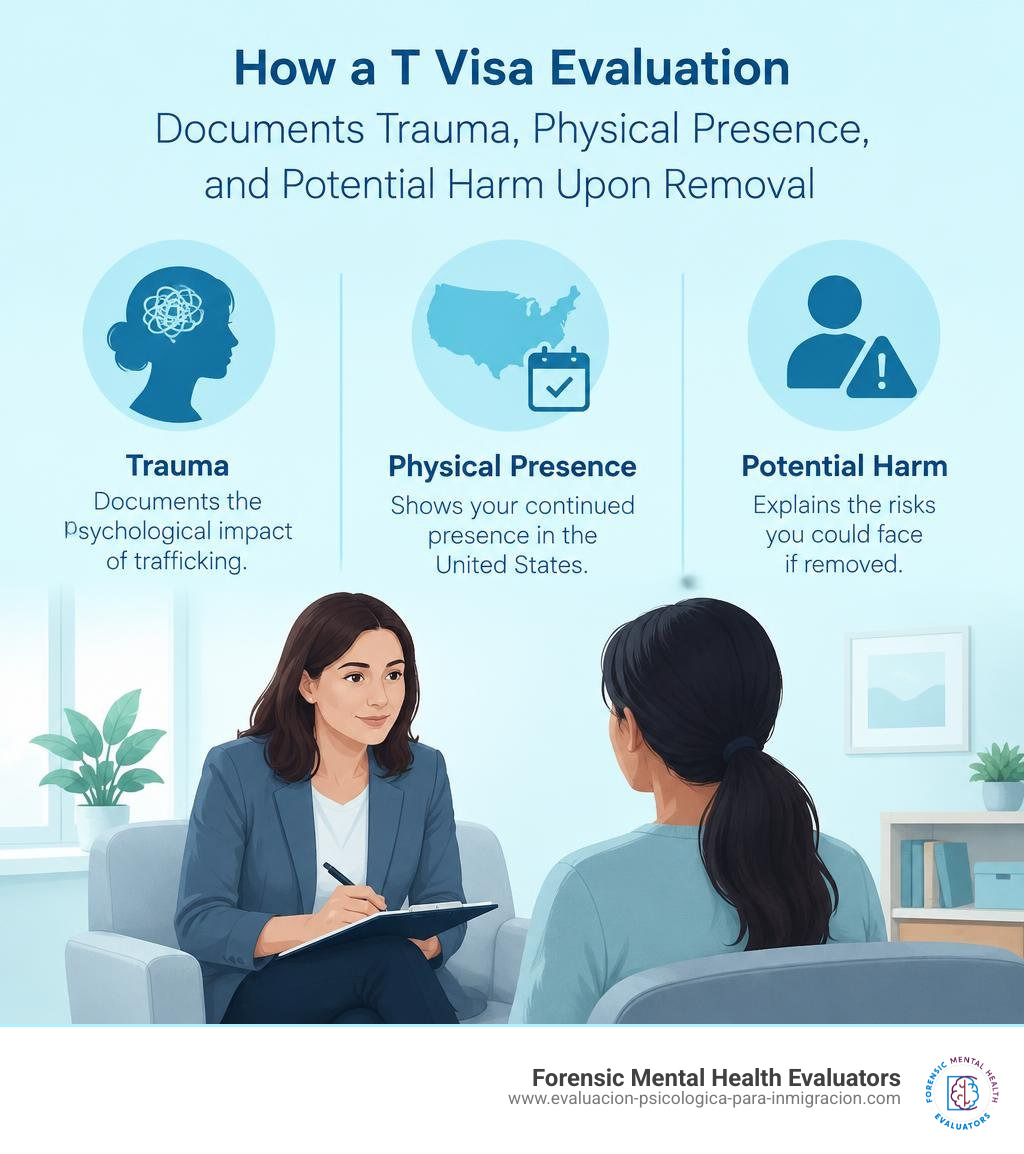
What Is an Immigration Psychological Evaluation for T Visa Applicants?
An immigration psychological evaluation is a formal, objective clinical assessment designed to document the mental health consequences of human trafficking. When applying for nonimmigrant status through a T visa, an applicant must demonstrate that they were a victim of a severe form of trafficking in persons—either sex trafficking or labor trafficking—involving force, fraud, or coercion.
Because human trafficking often occurs behind closed doors, paper trails can be scarce. Traffickers rarely provide pay stubs, contracts, or written admissions of their abuse. In these situations, The Importance of Mental Health Documentation in Immigration Proceedings cannot be overstated. A licensed mental health clinician uses diagnostic instruments, structured clinical interviews, and standardized symptom inventories to evaluate how the survivor's psychological functioning has been altered by the severe trauma they endured.
Forensic Assessment vs. Ongoing Therapy
It is important to distinguish a forensic clinical assessment from supportive, ongoing counseling. In regular therapy, the clinician's role is to build a therapeutic alliance, offer coping tools, and facilitate healing over time. The therapist acts as an advocate for the client's well-being.
In contrast, a forensic psychological evaluation requires professional neutrality. As forensic evaluators, we do not act as the applicant's legal advocate. Instead, we perform an independent, objective examination to evaluate the credibility, severity, and diagnostic nature of reported symptoms. Adjudicators at U.S. Citizenship and Immigration Services (USCIS) place significant weight on forensic neutrality because it ensures the clinical conclusions are grounded in standardized diagnostic science rather than emotional advocacy.
Establishing Physical Presence and Delayed Reporting
To qualify for T nonimmigrant status, an applicant must establish that they are physically present in the United States on account of trafficking. This requirement can be difficult to satisfy if years have passed since the applicant escaped their trafficker, or if they did not immediately report the abuse to law enforcement.
Trauma alters memory encoding and emotional regulation. Survivors frequently experience trauma-induced memory fragmentation, intense fear of retaliation, and the lasting psychological effects of coercive control. A detailed trauma evaluation immigration report helps explain these responses. It provides a clinical framework showing that a survivor's delayed reporting or inability to leave the country stems directly from ongoing post-traumatic stress, deep fear of their trafficker, or a lack of safe resources, rather than a voluntary choice to remain.
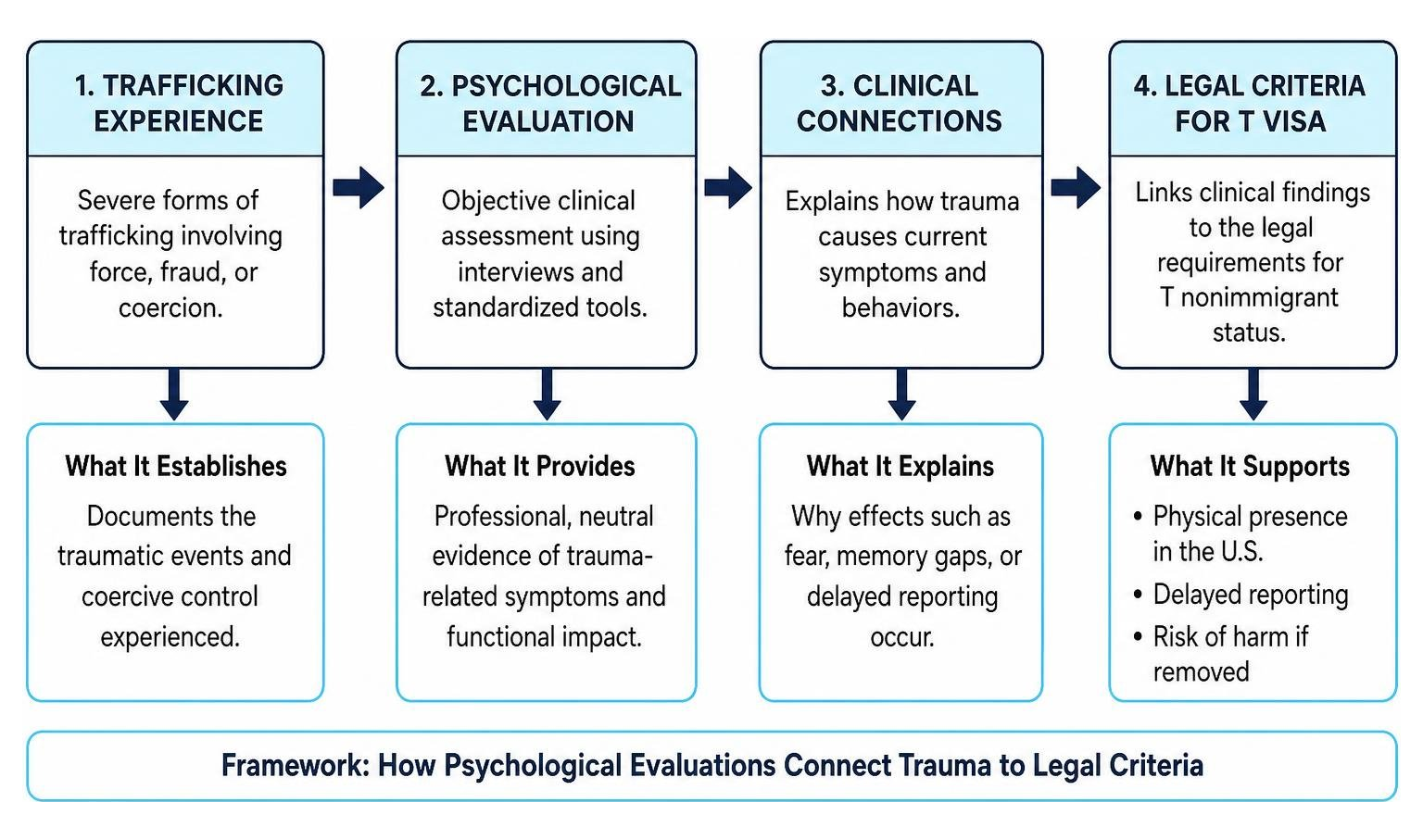
Strategic Timing: Initial Filing vs. Responding to an RFE or NOID
When navigating the application process, timing is critical. While it might seem intuitive to submit every possible piece of supporting evidence upfront with your I-914 form, major legal guidance organizations, such as the Center for Abuse and Trafficking Victims (CAST), often advise against including an unprompted psychological evaluation in the initial submission.
Submitting an evaluation too early can create unnecessary vulnerabilities if the report addresses issues USCIS was not questioning. The table below outlines the strategic considerations of initial filing versus responding to official agency notices:
| Timing Strategy | Potential Advantages | Strategic Risks | Best Practice Recommendation |
|---|---|---|---|
| Initial Filing | Provides immediate medical context for uncorroborated trafficking narratives. | Can accidentally reveal extraneous details, raise admissibility flags, or introduce inconsistencies before knowing the officer's concerns. | Reserve only for cases with obvious memory gaps, severe psychological distress affecting direct testimony, or explicit attorney guidance. |
| RFE or NOID Response | Allows the evaluator to craft a targeted clinical rebuttal addressing the exact evidentiary doubts of the USCIS officer. | Shorter turnaround deadlines require fast coordination with an experienced clinician. | Recommended standard strategy. Direct the clinical assessment strictly to the questions raised by USCIS. |
Navigating Risks of Premature or Overly Broad Submissions
Submitting an overly broad mental health evaluation can inadvertently undermine an otherwise solid application. When clinicians conduct wide-ranging evaluations without understanding immigration legal standards, they may include unrelated disclosures, such as uncharged minor offenses, past substance use, or extraneous relational trauma.
These details can trigger inadmissibility questions or cause the adjudicating officer to doubt the applicant's credibility. An effective evaluacion psicologica para caso de tvisa maintains a tight clinical focus on the trafficking experience, explaining how specific symptoms link directly to the statutory requirements of the case without drifting into non-essential history.
Overcoming Requests for Evidence with Clinical Documentation
If USCIS issues an RFE or a NOID questioning whether the applicant suffered severe physical or psychological harm, or questioning whether they would face extreme hardship upon removal, a targeted psychological evaluation serves as a powerful rebuttal.
Following our immigration psychological evaluation guide, we tailor the assessment to directly answer the adjudicator's specific concerns. For instance, if an RFE challenges whether an applicant's continued presence is tied to the original exploitation, the clinical report can highlight how trauma bonding, ongoing hypervigilance, and agoraphobia prevented the survivor from navigating everyday legal or social systems independently.
What Is Included in a Comprehensive T Nonimmigrant Status Clinical Assessment?
A properly formatted forensic psychological report is a comprehensive document that typically spans 10 to 15 pages. It is structured to provide an objective, detailed profile of the applicant's mental health while remaining fully transparent about diagnostic methodology.
Core Sections of a Forensic Immigration Psychological Evaluation for T Visa Petitions
A complete T visa psych report incorporates several standardized sections:
- Identifying Information and Procedural History: Background information, legal representatives involved, and the stated purpose of the evaluation.
- Clinical Methodology and Diagnostic Testing: Documentation of clinical interview hours, diagnostic testing tools administered (such as the PCL-5 for PTSD, PHQ-9 for depression, and GAD-7 for anxiety), and behavioral validity indicators.
- Psychosocial and Pre-Trafficking History: A brief overview of the applicant’s life prior to exploitation, establishing a baseline of psychological health and functioning.
- Trafficking Experience Narrative: A focused summary of the force, fraud, or coercion endured, detailing the psychological tactics the trafficker used to maintain control.
- Mental Status Examination: Objective behavioral observations recorded during the clinical interviews, including affect, speech, thought processes, mood, and cognitive functioning.
- Diagnostic Impressions: Formal diagnoses using DSM-5 criteria, clearly distinguishing pre-existing conditions from trauma directly caused by trafficking.
- Prognosis and Treatment Recommendations: Practical recommendations for trauma-informed psychotherapy, psychiatric support, and community stabilization.
Documenting Extreme Hardship Involving Unusual and Severe Harm
T visa applicants must show that they would suffer extreme hardship involving unusual and severe harm if removed from the United States. This goes far beyond the normal economic or emotional distress associated with deportation.
Our immigration mental health evaluation documents how removal would cause severe psychological deterioration. We assess factors such as:
- Severe Deficits in Mental Health Infrastructure: The total absence of specialized, trauma-informed care in the applicant's home country to manage complex PTSD.
- Risk of Re-Trafficking: How profound psychological vulnerability, shame, and community ostracization increase the risk of being targeted again by traffickers.
- Retaliation and Safety Fears: The psychological toll of returning to an environment where the original perpetrators or their associates operate without law enforcement accountability.
How to Prepare and Choose the Right Evaluator
Preparing for an immigration evaluation can feel daunting, but being organized helps ensure a smooth, low-stress experience. Gathering relevant background materials before your clinical appointments allows the evaluator to review your history and verify dates.
Before your evaluation, consider collecting:
- A clear timeline of personal history, including arrival dates and key events during the trafficking period.
- Medical and hospital records related to physical injuries sustained during exploitation.
- Previous counseling, therapy, or psychiatric records, if any exist.
- Police reports, restraining orders, or communications from law enforcement, if applicable.
- Contact information for your immigration attorney to allow coordination between legal and clinical teams.
During the interview, our priority is your emotional safety. Working with a bilingual psychologist immigration eval specialist ensures that you can share your story comfortably in your primary language without the barrier of third-party interpretation. For many applicants, obtaining relief also opens doors to stability, such as securing a T visa work permit to rebuild their lives with dignity.
Selecting a Qualified Provider for an Immigration Psychological Evaluation for T Visa Cases
Not every licensed therapist has the background required to conduct forensic evaluations. When selecting an immigration psychologist or clinical specialist, consider the following factors:
- State Licensure: The clinician must be actively licensed to practice within your state. We maintain licensure across Texas, Florida, California, New York, Utah, Virginia, and Idaho.
- Forensic Training: The evaluator should have specific training in forensic assessments, standardized psychometric testing, and the evidentiary standards used by USCIS.
- Bilingual and Culturally Competent Care: Evaluations conducted directly in the client's native language eliminate translation misunderstandings and foster trust.
- Telehealth Flexibility: Secure, HIPPA-compliant video evaluations are legally accepted by USCIS nationwide. Review our guide to evaluaciones psicolgicas de inmigracin por telehealth tu gua en tx ca id ut y fl to learn how remote evaluations work.
- Post-Evaluation Care: Quality providers care about your long-term stabilization. At District Counseling, every evaluation client receives 6 free therapy sessions after their report is complete, helping them begin their healing journey in cities like Houston, Katy, Cypress, and Sugar Land.
Frequently Asked Questions About T Visa Psychological Evaluations
Should I submit a psychological evaluation with my initial T visa application?
In most cases, legal experts recommend waiting to submit a psychological evaluation until USCIS issues an RFE or NOID. This allows the evaluator to address the adjudicating officer's exact legal concerns. However, if your direct testimony is limited by severe memory fragmentation or severe dissociation, consult your attorney about whether an upfront evaluation is necessary.
How does an evaluation prove physical presence on account of trafficking?
The evaluation demonstrates how ongoing trauma, such as severe PTSD, hypervigilance, and trauma-bonding mechanisms, impaired your ability to leave the country or navigate official systems. It clinically validates that your continued presence in the United States is directly connected to the trauma you survived.
Can a telehealth evaluation be used for a T visa psychological assessment?
Yes. USCIS accepts psychological evaluations conducted via secure telehealth platforms, provided the mental health professional is fully licensed in the state where the client is physically located during the assessment. Telehealth allows survivors to complete their evaluation from the safety and privacy of their own home.
Conclusion
A thoroughly conducted clinical assessment provides clear, objective evidence documenting the psychological impact of human trafficking. By working closely with your immigration attorney and timing your evaluation strategically, you can present a compelling case that clearly communicates your trauma and legal eligibility to USCIS.
At District Counseling, we stand beside survivors, providing bilingual forensic evaluations across Texas, Florida, California, New York, Utah, Virginia, and Idaho. If your case involves complex legal hurdles or removal defense immigration proceedings, reach out to our team today to schedule an evaluation and take the next step toward legal status and long-term recovery.